
Is summer over and is your hedge hanging over the path again? Then it's time to get the shears out. Autumn is a good time for a final shape trim, as long as you do it at the right time and in the right way. In this guide you'll read when to trim a hedge in autumn, how to go about it step by step, which hedges need what, and which hedge trimmer suits your hedge. And how to take account of birds that live in your hedge.
In brief: trim your hedge in autumn preferably in September or early October, on a dry day without frost. First check that there is no nest in use in it. Trim in a trapezium shape, narrower at the top than at the bottom, and choose a hedge trimmer that suits the length, height and branch thickness of your hedge.
When should you trim a hedge in autumn?
Most hedges are trimmed twice a year: once in early summer, when the first growth is there, and once in late summer or early autumn. That second trim keeps your hedge neat going into winter. Timing matters: if you trim too late, the hedge will produce new shoots that freeze at the first night frost.
| Timing | What to do | Watch out |
|---|---|---|
| Late August and September | The regular shape trim | Best time for most hedges |
| Early October | Final light tidy-up | Only in mild, dry weather |
| Late October and November | Better not to trim any more | New growth can freeze |
| Winter dormancy (frost-free) | Hard cutting back of deciduous hedges | Not in frost, check for nests |
Always trim on a dry, overcast day. In bright sun, leaves that suddenly find themselves in the light can scorch, and in wet weather fungi can more easily get into the wounds. If frost is forecast, wait a few days.
The best autumn trimming day is grey, dry and mild. Not too warm, not too wet and certainly not right before a frosty night.
Check first: birds and nests
A dense hedge is a favourite spot for birds. In the Netherlands and Belgium you may not disturb or destroy a nest that is in use, and that applies all year round, not just in spring. As a guideline, the breeding season runs from roughly mid-March to mid-July, but some birds breed earlier or later. In autumn the chance of an occupied nest is smaller, but not zero.
- First take a calm look in and along the hedge. Watch for birds that keep flying in and out of the same spot.
- If you see an occupied nest, skip that section. Trim the rest and come back later.
- Empty nests from this year can usually be left alone; they won't get in the way of trimming if you only tidy up the outside.
- If you're unsure about the rules in your municipality, check the website of your local council or a bird protection organisation.
Leave something behind too
Berries on firethorn or holly are food for birds in winter. With such shrubs, only trim what hangs over the path and leave the rest until spring. You can read more ideas for a lively garden at this time of year in 10 tips for a cosy autumn garden.
Trimming by type of hedge
Not every hedge responds to trimming in the same way. These are the most common types and what to look out for when trimming in autumn:
| Hedge | Autumn trim | Watch out |
|---|---|---|
| Privet | Shape trim in September | Grows fast, tolerates heavy trimming |
| Hornbeam and beech | Shape trim in August or September | Brown leaves often stay on through winter |
| Yew | Shape trim in September | Usually regrows from old wood |
| Conifer | Light tidy-up | Don't cut into bare wood |
| Cherry laurel | Tidy-up in September | Better with hand shears, so leaves stay whole |
| Box | Tidy-up until mid-September | Trim on an overcast day |
With conifer hedges, it's important to stay within the green: most conifers don't regrow from bare, brown branches. With cherry laurel, an electric trimmer cuts many leaves in half, and those develop brown edges. For a neat laurel hedge, it's best to work with hand shears or pruning shears, such as the Felco 2.
Quiz: which hedge trimmer suits you?
Length, height and branch thickness determine which trimmer works best. Answer four questions and see which type of hedge trimmer suits your hedge.
Which hedge trimmer suits your hedge?
How long is your hedge roughly?
- Short: a few metres or a few shrubs
- An ordinary garden hedge along the fence or path
- Long, or all the way around the garden
How tall is your hedge?
- Low, up to about hip height
- Up to about shoulder height
- Higher than my shoulders
What kind of hedge is it?
- Box, laurel or a decorative shape I want to cut precisely
- Privet, hornbeam or another common hedge
- A wide or tall hedge of conifer, yew or beech
How do you want to work?
- Calmly and precisely, without a motor
- Quick to finish, without a cable
- Safely from the ground, without a ladder
A manual hedge shears suits you. For a short hedge, box or laurel, you work precisely and quietly. Add a pair of pruning shears for thicker twigs.
A battery hedge trimmer suits you. Quick, light and cable-free. Choose a blade length of around 45 to 55 cm and check whether you already have a battery from the brand.
A pole hedge trimmer or telescopic model suits you. You reach the top from the ground and need to use the ladder less often.
Which hedge trimmer should you choose?
There are roughly four types of hedge trimmers. Which works best depends on your hedge and how much you want to lug around.
| Type | Strong in | Watch out |
|---|---|---|
| Manual | Precise, quiet, no motor maintenance | Hard work on a long hedge |
| Battery | Free movement, quick to grab | Runtime depends on the battery |
| Corded | No battery that runs flat | Keep an eye on the cable all the time |
| Pole or telescopic | Tall and wide hedges from the ground | Heavier, takes some practice |
Blade length
A short blade (around 40 to 45 cm) is light and manoeuvrable, good for small hedges and shape trimming. A long blade (55 to 60 cm or more) removes more per stroke on a long or wide hedge, but is heavier. For most garden hedges, a blade of around 50 cm is a comfortable middle ground.
Branch thickness and tooth spacing
The distance between the teeth determines how thick a branch can be. The product information often states the tooth spacing or the maximum branch thickness. Cut thicker branches with loppers, such as the Felco 20 bypass branch shears, not with the hedge trimmer: that blunts the blades.
Battery: check what you already have
Do you already own battery tools from Bosch, Makita, Einhell or Greenworks? A battery-less ("bare tool") hedge trimmer from the same system is then considerably cheaper. You can read about the systems available and how they differ in which battery system should you choose?
How to trim your hedge: step by step
With the right order, your hedge will be neat and you'll have less clearing up to do. Here's how to go about it:
Make sure there is no occupied bird nest in it, and remove wires, toys or plant stakes. Lay a sheet or an old cloth under the hedge: that saves a lot of raking.
If you want a straight top, stretch a string between two stakes at the height you want. That keeps the line straight, even along a long hedge.
Work from the bottom up, in calm strokes. Hold the blade slightly angled so the hedge is wider at the bottom than at the top.
Hold the blade flat and move calmly along the string. Don't cut away too much in one go: you can always trim more, but you can't put it back.
Shake the trimmings out of the hedge, roll up the sheet and clean the blades before you put the trimmer away.
The trapezium shape is the secret to a hedge that stays dense at the bottom: if the base is wider than the top, the lowest leaves also get light. A hedge that is wider at the top becomes bare underneath.

Safety above all
Wear gloves and safety glasses, and always hold a hedge trimmer with two hands. With a corded trimmer, keep the cable over your shoulder and behind you, away from the blade. Never trim from a wobbly ladder.
Cleaning after the final trim
After the autumn trim, the trimmer often spends months in the shed. Clean the blades and lightly oil them. You can read how to get all your garden tools through the winter in getting garden tools ready for winter.
Six hedge trimmers from the comparison
Below are six hedge trimmers available to buy for different hedges: battery, corded, pole and a manual branch shears. The specs come from the title and product information; you can see the current price and shop on the cards.
| Hedge trimmer | Type | Blade |
|---|---|---|
| Bosch EasyHedgeCut 18-45 | Battery 18V, with battery | 45 cm |
| Makita DUH523Z | Battery 18V, bare tool | 52 cm |
| Einhell GE-CH 18/60 Li | Battery 18V, bare tool | 60 cm |
| Bosch UniversalHedgePole 18 | Battery 18V, pole | 43 cm |
| Bosch EasyHedgeCut 55 | Corded, 420 W | 55 cm |
| Felco 20 | Manual branch shears | Bypass |
Bosch EasyHedgeCut 18-45: light and complete
A compact battery hedge trimmer with a 45 cm blade, supplied with an 18V battery and charger from the POWER FOR ALL system. A good choice for an ordinary garden hedge and as your first battery machine.

EasyHedgeCut 18-45 with battery
Makita DUH523Z: bare tool for the LXT system
An 18V hedge trimmer with a 52 cm blade, without battery and charger. Interesting if you already have Makita LXT batteries. If you want one with a battery, look at the DUH523RF set with 3.0 Ah battery.
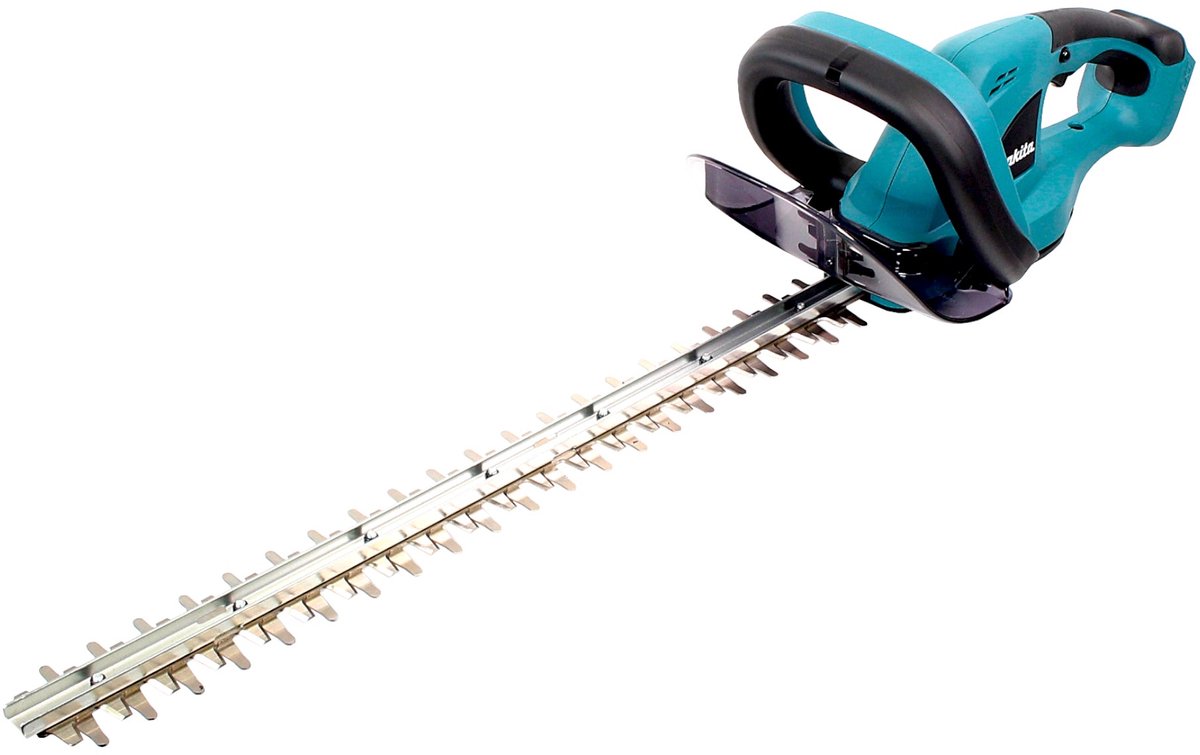
Einhell GE-CH 18/60 Li: long blade for wide hedges
A hedge trimmer with a 60 cm blade on Einhell's Power X-Change system. With a long blade you remove more per stroke on a wide or long hedge. Bare tool, so without battery.

GE-CH 18/60 Li Solo
Bosch UniversalHedgePole 18: the top from the ground
A hedge trimmer on a telescopic pole, for tall hedges and the top of a wide hedge. Runs on the 18V POWER FOR ALL system. If you want more reach, also look at the Greenworks 40V long-reach.

Bosch EasyHedgeCut 55: corded, no battery needed
An electric 420 W hedge trimmer with a 55 cm blade. No battery that runs flat, but a cable you'll need to keep behind you all the time. A good choice for a hedge close to an outdoor socket.

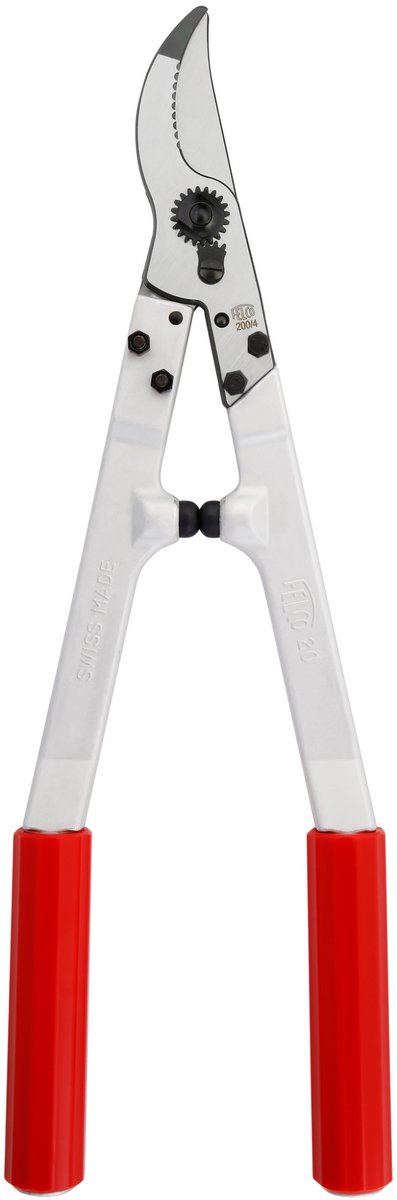
Felco 20: for the thicker branches
A manual bypass branch shears for hedges and trees. Ideal for branches that are too thick for your hedge trimmer, and for thinning a hedge from the inside.
Also worth a look:

Einhell GE-HH 18/45 telescopic
View trimmer →
Greenworks 40V long-reach
View trimmer →
Felco 2 pruning shears
View shears →How to choose quickly
- Short hedge, box or laurel: hand shears
- Ordinary garden hedge: battery hedge trimmer with a blade of around 45 to 55 cm
- Hedge close to a socket: a corded model works just as well
- Higher than your shoulders: pole or telescopic
- Thick branches: loppers, not the hedge trimmer
Common mistakes
Trimming too late in the year
If you still trim heavily in late October or November, the hedge will produce new shoots that freeze at the first frost. During that period, keep it to a light tidy-up at most.
Not checking for nests
A bird nest in use can be in your hedge in autumn too. A few minutes of looking prevents you from disturbing a nest.
Wider at the top than at the bottom
A hedge that is wider at the top lets no light through at the bottom and becomes bare there. Always trim in a trapezium shape.
Cutting conifers back into bare wood
Most conifers don't regrow from brown wood. Stay within the green and prefer to trim a little more often.
Forcing thick branches into the hedge trimmer
Branches that are too thick for the teeth blunt the blades or make the trimmer jam. Use loppers or a pruning saw instead.
Checklist for trimming day
- Dry, overcast day without frost chosen
- Hedge checked for occupied bird nests
- Battery charged or extension cable laid out
- Gloves and safety glasses at hand
- Sheet laid under the hedge
- String stretched for a straight top
- Sides trimmed in a trapezium shape, then the top
- Blades cleaned and lightly oiled afterwards
Is there also a layer of leaves on the lawn after trimming? Read buying a leaf blower: battery, corded or petrol? You can compare all hedge trimmers, pruning shears and other machines at garden tools. If you want a good start in spring, read getting your garden ready for spring.
Frequently asked questions
Is it OK to trim a hedge in autumn?
Yes. A light shaping trim in September and early October, in dry weather and without frost, is fine for most hedges. Preferably don't trim just before or during a frost, and always check first that there is no occupied bird's nest in the hedge. Major rejuvenation pruning of deciduous hedges is best left until the winter dormancy period.
Until when can I trim my hedge?
For a regular shaping trim, many gardeners keep to around mid-October, so that new shoots can harden off before the frost. A hard cutback of deciduous hedges such as hornbeam, beech and privet can be done during winter dormancy, on a frost-free day. Nests in use must not be disturbed at any time of the year.
When is the bird nesting season?
As a guideline, mid-March to mid-July is often cited, but some birds nest earlier or later in the year. That is why there is no date on which trimming is always safe: look carefully into the hedge before you start and leave an occupied nest undisturbed. In autumn the chance of an occupied nest is smaller, but not zero.
What hedge trimmer do I need?
For a short, low hedge or a few shrubs, a manual hedge shears will do. For a longer hedge, an electric hedge trimmer, either battery or corded, is much quicker. If your hedge is taller than your shoulders or very wide, you will work more safely with a pole hedge trimmer or a telescopic model. Also look at the blade length and the maximum branch thickness.
Can I cut a conifer back into the old wood?
With most conifers, no: bare, brown branches often do not sprout again. So trim a conifer hedge lightly and regularly, and stay within the green growth. Yew is an exception: it usually does sprout again after a hard trim.