
A fire pit is cosy, until the smoke gets into your clothes, your hair and your neighbours' living room. A low-smoke fire pit promises to help with that. But how does that double wall actually work, why do you sometimes still see smoke and is the difference with an ordinary open fire basket worth the extra money? In this guide you will read how a low-smoke fire pit works, what you can expect from it and when it does or doesn't suit you. With a quiz, a comparison table and available models from Solo Stove, Höfats and Petromax.
In short: a low-smoke fire pit has a double wall that draws in air at the bottom, heats it up and blows it back in above the flames. As a result, part of the smoke still burns. It is never completely without smoke: lighting, damp wood and the fire dying down all release smoke. Burn dry, untreated wood, put it on a stand if the surface can't handle heat and check the pros and cons to see whether the extra cost suits you.
How does a low-smoke fire pit work?
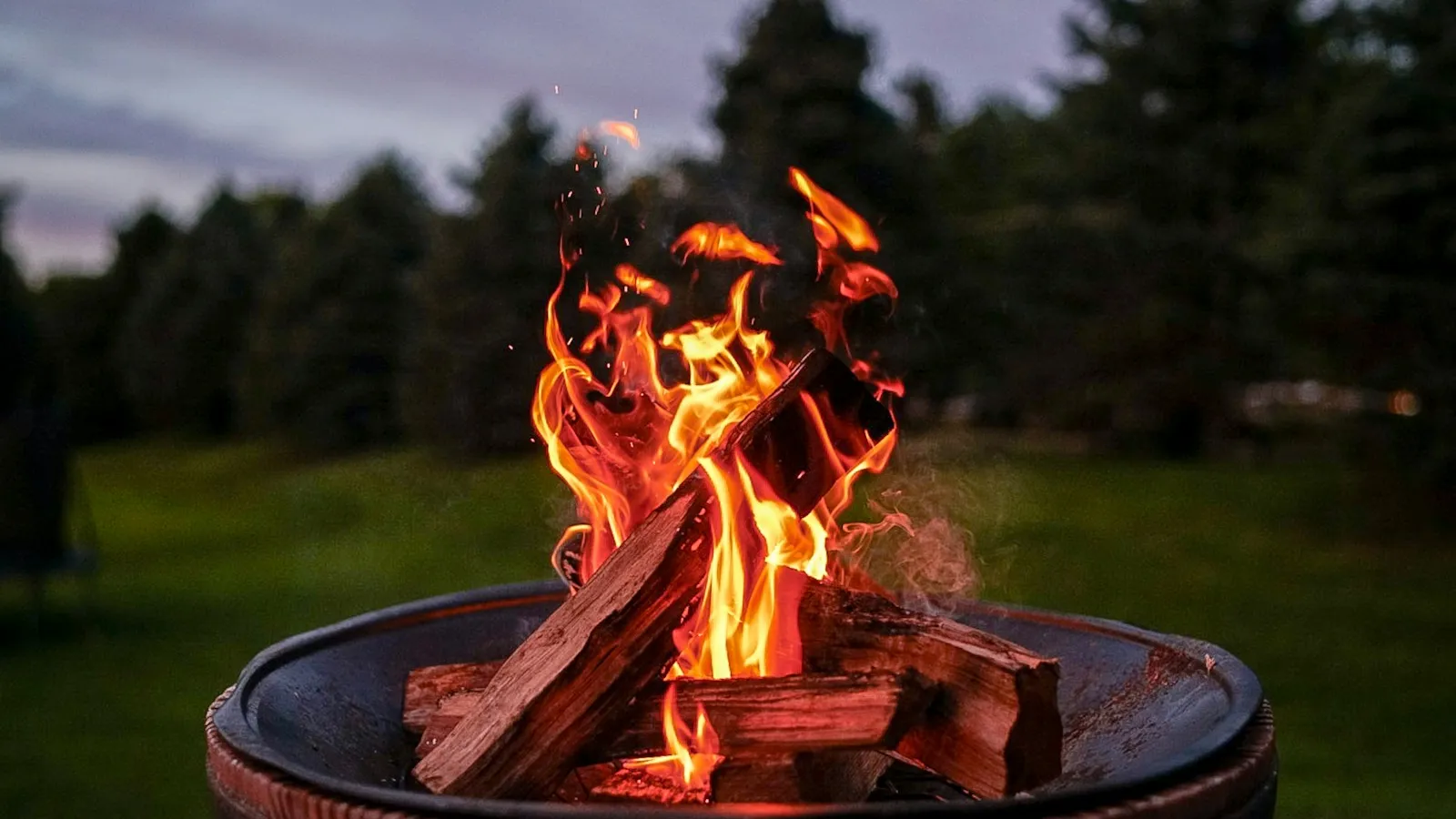
With an ordinary fire pit, air reaches the fire from all sides at once. The wood burns, but part of the gases and particles it releases does not burn and rises as smoke. A low-smoke fire pit deliberately guides the air in two stages. Manufacturers call it a double-wall design, two-stage combustion or wood gasification. The principle is always the same:
Cool air flows in through holes at the bottom of the outer wall. Part of it goes through the base plate directly under the fire, so the wood gets oxygen from below.
Another part of the air rises through the space between the inner and outer wall. Because the inner wall is hot, that air heats up considerably on the way.
Near the top of the inner wall there are small holes. The preheated air flows back in there, just above the flames.
Solo Stove describes it like this in the product information of the Bonfire 2.0: air flows through vents at the bottom to the fire and warm air is led back between the walls to the flame. For the Höfats Moon it is a double wall with split air supply, so that combustion takes place in two phases. For the Petromax Tyropit it is a double-walled construction with ventilation holes. The result is a fire that burns hotter and cleaner than an open basket, with less smoke. Less, not zero.
Quiz: which low-smoke fire pit suits you?
Answer three questions and see which type of low-smoke fire pit best suits your garden or patio.
Which low-smoke fire pit suits you?
Where do you mainly want to use it?
- On a small patio, and sometimes on the go
- On an average patio or in the garden
- By a table where I'd also like to grill
- In a sleek garden, as a centrepiece
How many people usually sit around the fire?
- Two to four
- Four to six
- A group that also comes to eat
- It varies, design matters more to me
What do you want to burn?
- Small pieces of wood
- Logs, maybe pellets later
- Wood, and I want to grill on it
- Wood or pellets
A compact low-smoke fire pit suits you: small enough for a patio and easy to move.
A medium-sized low-smoke fire pit suits you: enough fire for a circle of chairs, with a pellet adapter as an option.
A low-smoke fire bowl for grilling suits you: wide, tiltable and with a grill grate.
A design fire pit for wood or pellets suits you: a striking shape and both fuels possible.
Why does a low-smoke fire pit sometimes still smoke?
People lighting a low-smoke fire pit for the first time are sometimes surprised: it still smokes. That is normal. The secondary burn only works well once the inner wall is hot and the fire gets enough air. These are the moments when you will still see smoke:
- When lighting. The walls are still cold, so the air at the top isn't hot enough. After the fire has burned for a while, the smoke decreases.
- With damp or fresh wood. The moisture in the wood has to evaporate first. That costs heat and gives white, acrid smoke. This is the biggest cause of smoke.
- If you add too much wood at once. If you stack wood above the small air holes, you block the hot air at the top. The fire chokes and starts to smoke.
- When adding wood. A new log cools the fire for a moment. Rather add one or two logs regularly than a whole pile at once.
- When the fire dies down. As the fire goes out, the temperature drops and the last wood smoulders. Smoke is released then as well.
A low-smoke fire pit does not turn bad wood into a clean fire. Dry wood and a fire that is properly up to temperature make the difference.
A low-smoke fire pit does not turn bad wood into a clean fire. Dry wood and a fire that is properly up to temperature make the difference. Also keep the wind in mind: even a little smoke can end up at the neighbours' if the wind is blowing their way.
Which wood should you burn, and can you use pellets?
Use dry, untreated wood. Painted, varnished or impregnated wood, demolition wood, chipboard and waste do not belong in a fire pit, low-smoke or not. Wood you split yourself needs to dry properly before you burn it. Here is how to go about it:
| Fuel | Suitable? | Watch out |
|---|---|---|
| Dry logs | Yes, the standard fuel | Logs that stay below the air holes; smaller pieces for the small models |
| Kindling and firelighters | Yes, for lighting | No methylated spirits or petrol |
| Wood pellets | Only if the model or an adapter is designed for it | Without an adapter, pellets fall through the base plate into the ash pan |
| Damp, fresh or treated wood | No | Lots of smoke or harmful substances |
For the Bonfire there is a pellet adapter that, according to the product information, sits on the base plate and helps prevent pellets falling into the ash pan before they have burned. Similar adapters exist for the Ranger and the Yukon. According to the product information, the Höfats Moon is suitable for logs or pellets. For the small Solo Stove Mesa tabletop model, the product information mentions a pellet capacity and a maximum wood size of 12 cm.
Solo Stove, Höfats or Petromax: which designs are there?
Low-smoke fire pits come in a few shapes: a tall cylinder to sit around, a wide bowl to grill on and small tabletop models. The models below are on the low-smoke fire pits page; the data comes from the product information.
| Model | Shape | According to the product information | Suits |
|---|---|---|---|
| Solo Stove Ranger 2.0 | Compact cylinder | Diameter 38 cm, double wall, with stand | Small patio, taking along |
| Solo Stove Bonfire 2.0 | Medium cylinder | Double-walled, ash pan that also acts as a heat shield, with stand | Average patio or garden |
| Solo Stove Yukon 2.0 | Large cylinder | Diameter 69 cm, double-walled, with stand | Large garden, bigger group |
| Höfats Moon 45 | Spherical basket | Double wall, two-phase combustion, wood or pellets | Design garden, wood or pellets |
| Höfats Bowl 57 | Tiltable bowl | Two-stage air supply, grill grate included | Fire and grilling |
| Petromax Tyropit | Bowl on a frame | Double-walled, diameter 50.6 cm, frame with wheels | Moving around the patio |
Petromax also has the Pyron, which according to the manufacturer gives off little smoke. For the outdoor table there is the Solo Stove Mesa, a small ambient fire that, according to the product information, you place on a sturdy, non-combustible surface. Still unsure whether you want a basket or a bowl? Read fire basket or fire bowl: which suits your garden? first.
Solo Stove Ranger 2.0: compact and portable
The smallest of the three Solo Stove floor models. According to the product information it is portable, with a diameter of 38 cm, a removable base plate with ash pan and a stand for heat-sensitive surfaces.

Solo Stove Bonfire 2.0: the middle size
According to the product information, the double wall leads air through openings at the bottom to the fire and guides warm air between the walls back to the flame. The ash pan also acts as a heat shield and reduces heat transfer to the surface. There are plenty of accessories for it, from a spark screen to a pellet adapter.

Solo Stove Bonfire 2.0 with stand
Höfats Moon 45: wood or pellets
A spherical fire pit with an inner bowl of stainless steel and an outer shell of enamelled steel. According to the product information you burn logs or pellets in it and use it with or without the high base.
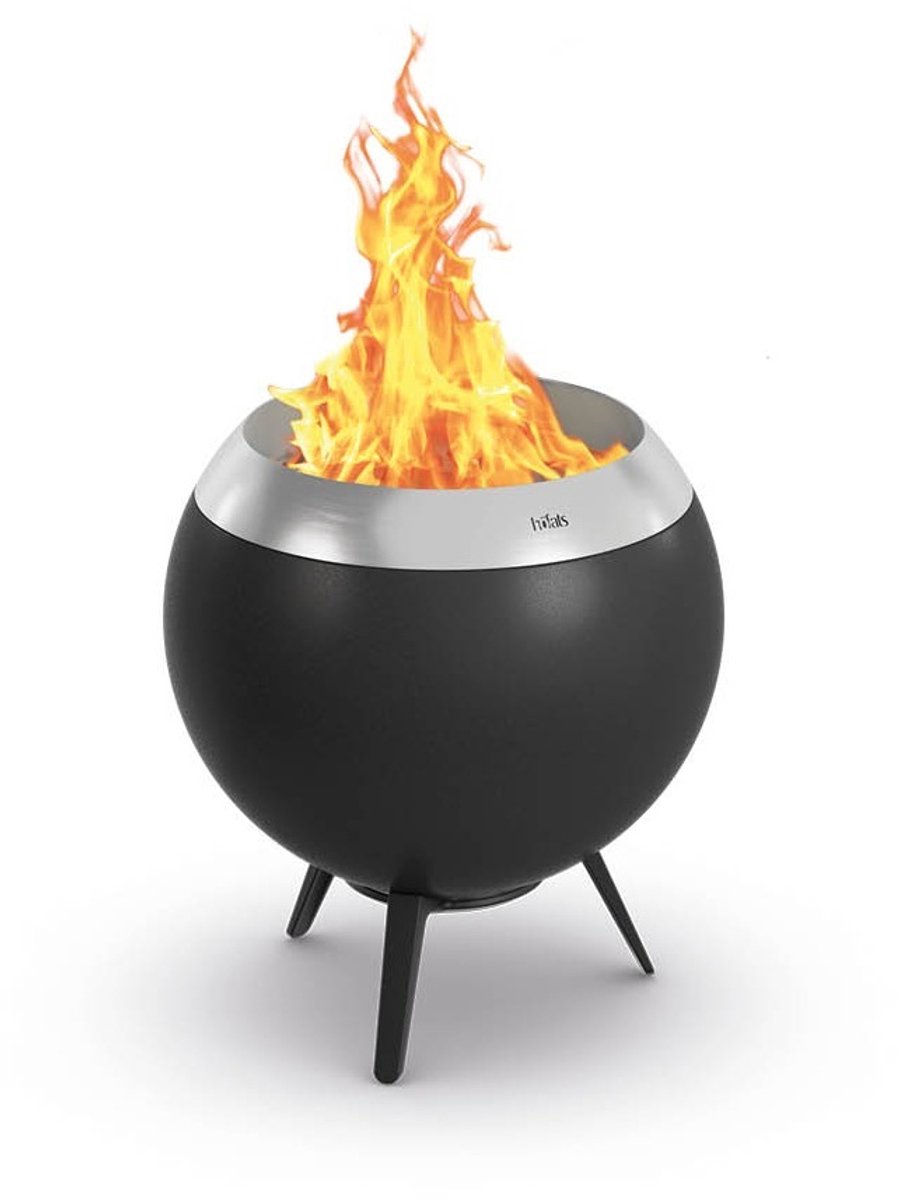
Höfats Bowl 57: a fire bowl to grill on
A half sphere you can tilt, so it keeps the flames out of the wind and directs the heat. According to the product information, a two-stage air supply makes for a low-smoke fire and a grill grate is included. Plancha and warming ring are accessories.
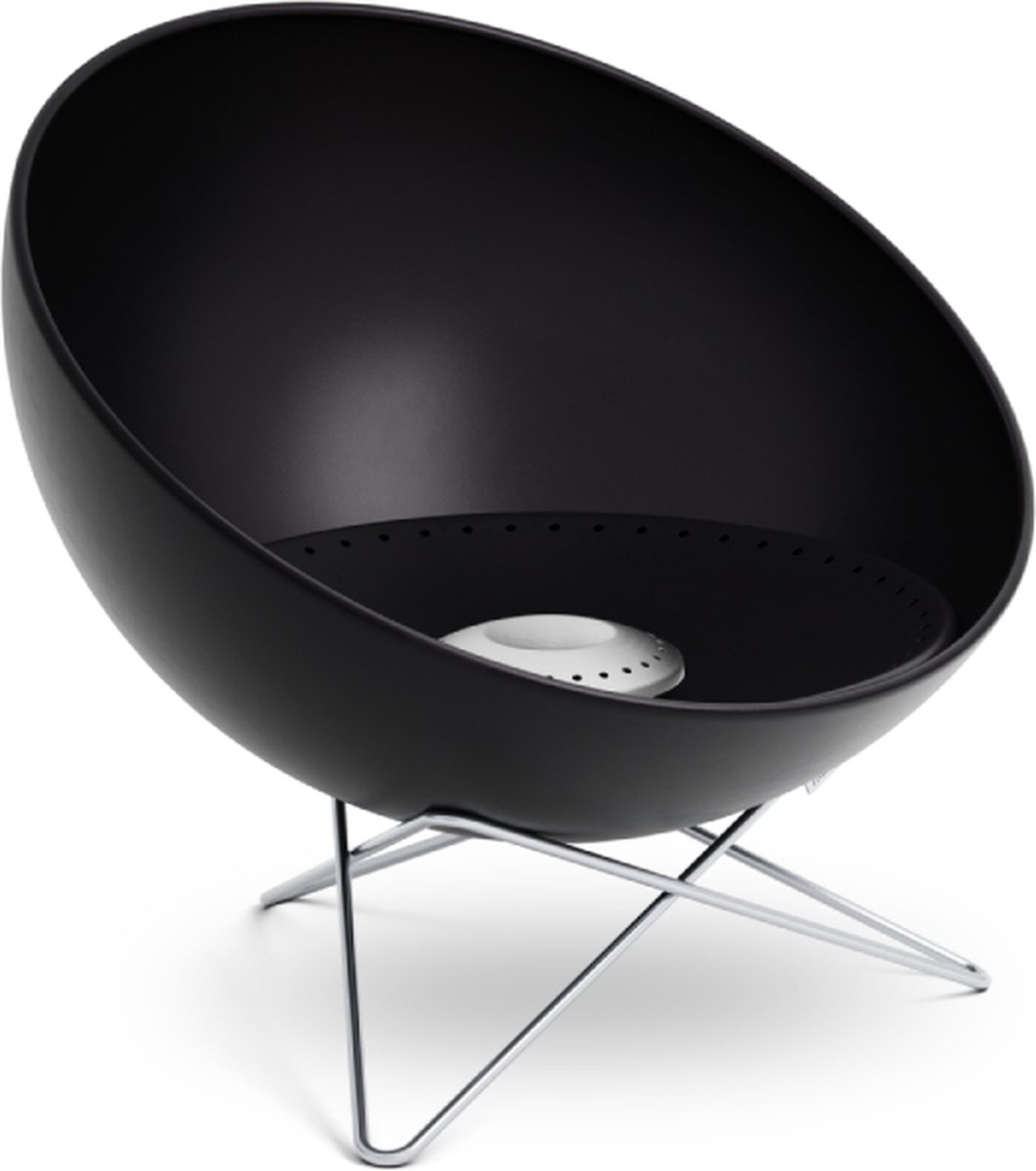
Höfats Bowl 57 fire bowl
Petromax Tyropit: on wheels
A stainless steel fire bowl in an industrial style. According to the product information it is double-walled with ventilation holes, with a removable ash pan, a spark guard and a frame with wheels to move it across the patio.
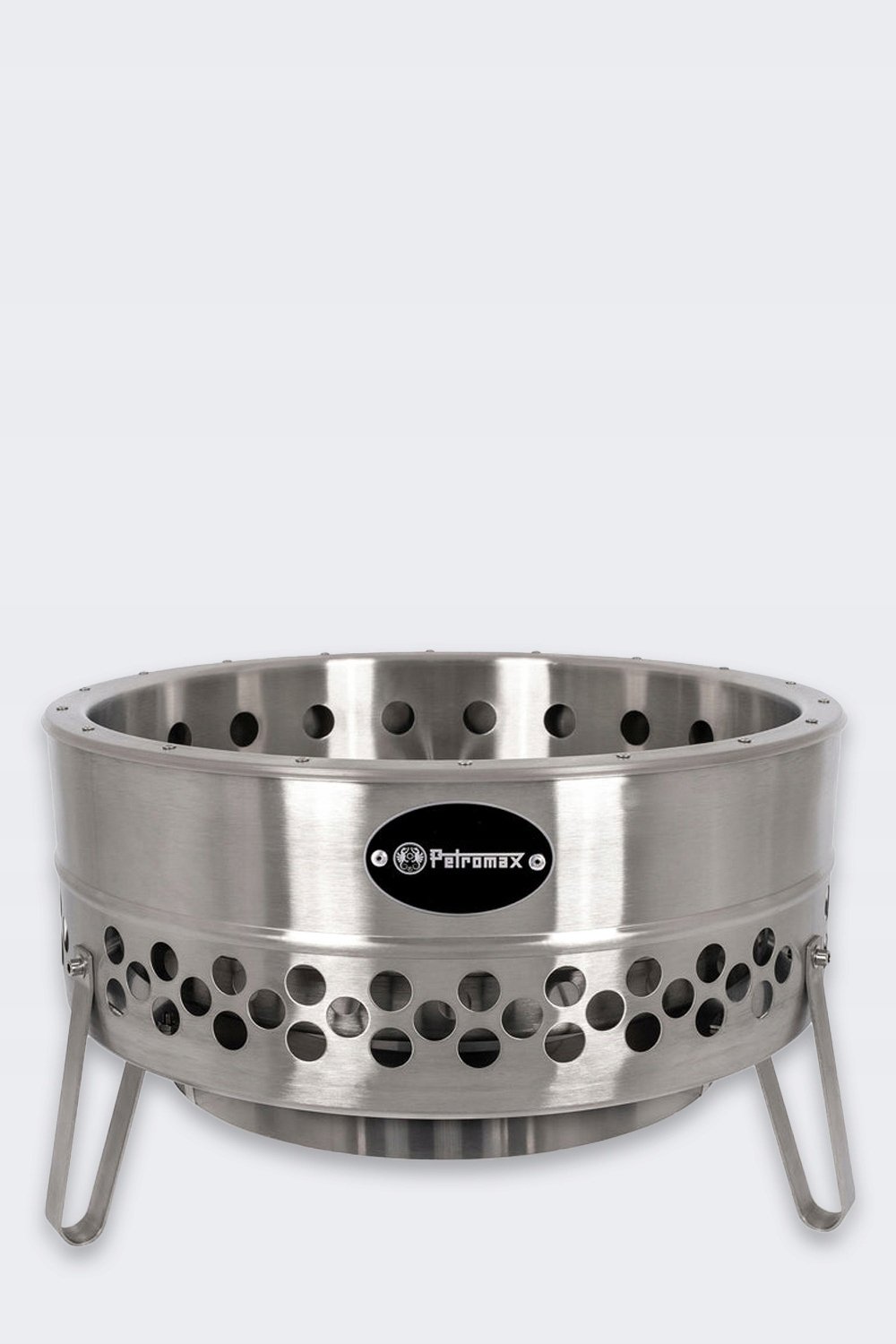
Does the bottom get hot? Stand and surface
Yes. In a low-smoke fire pit the fire sits close to the bottom and the heat also radiates downwards. That's why most brands offer a stand or base. According to the product information, the Ranger, Bonfire and Yukon in this guide come with a stand, so you can also use them on more heat-sensitive surfaces. The Höfats Bowl stands on a star base, the Moon can go on a high base.
A stand is no guarantee
Even with a stand, a wooden deck, artificial grass or a composite deck is not the ideal spot. Rather put the fire pit on tiles, pavers or gravel, away from anything that can burn. On a wooden surface, a non-combustible base plate is sensible.
Also pay attention to the spot itself. Always place the fire pit outdoors, in an open area, at a good distance from your house, fence, hedge and trees, and never under a canopy, pergola or parasol. Keep a means of extinguishing at hand and never leave the fire unattended, especially with children or pets around. How to handle distance, surface and burning rules is explained in using a fire pit safely.
Spark screen, lid or heat deflector: what do you need?
You can use a low-smoke fire pit perfectly well without extras. A few accessories do make it safer or more versatile:
- Spark screen or spark guard: keeps sparks and embers inside. According to the product information the Bonfire spark screen comes in two parts, so you can add wood without removing the whole screen. For the Moon there is a dedicated spark guard.
- Lid and cover: keep rain and leaves out. According to the product information the Bonfire lid is not meant to put out a fire; you only place it once the fire is out.
- Heat deflector: the Bonfire heat deflector catches the rising hot air and directs it more to the sides, where you sit.
- Pellet adapter: if you also want to burn pellets, see which wood.
- Grill grate or plancha: for cooking on the fire. You'll find everything for that under fire bowls and the accessories per brand.

Solo Stove Bonfire spark screen
View screen →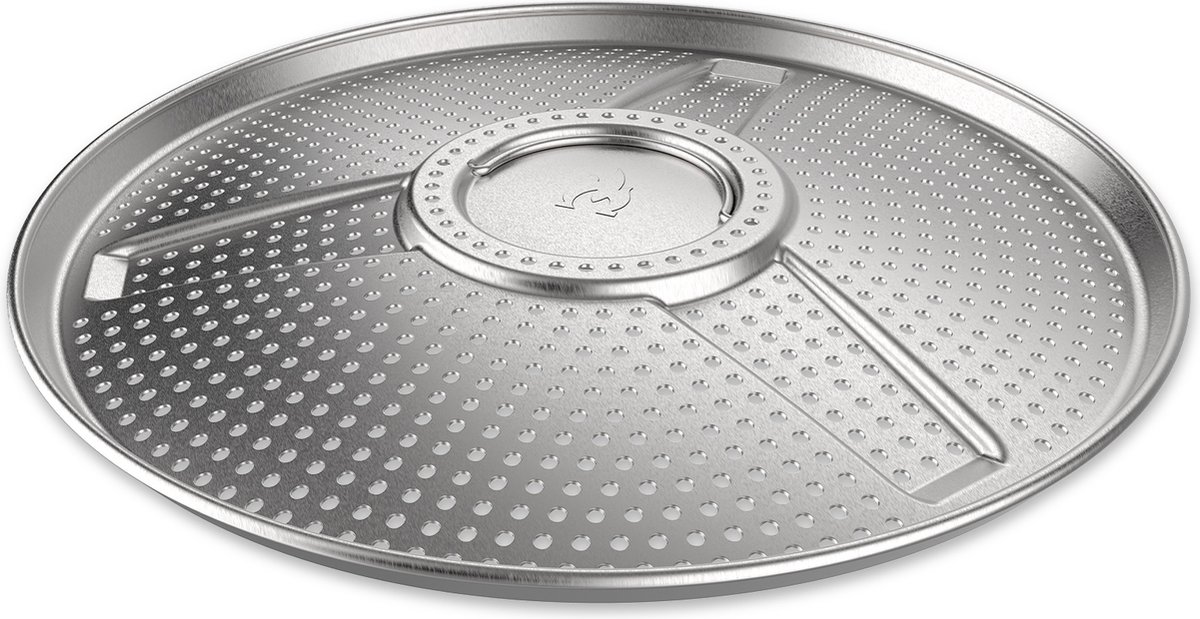
Bonfire pellet adapter
View adapter →
Bonfire heat deflector
View heat deflector →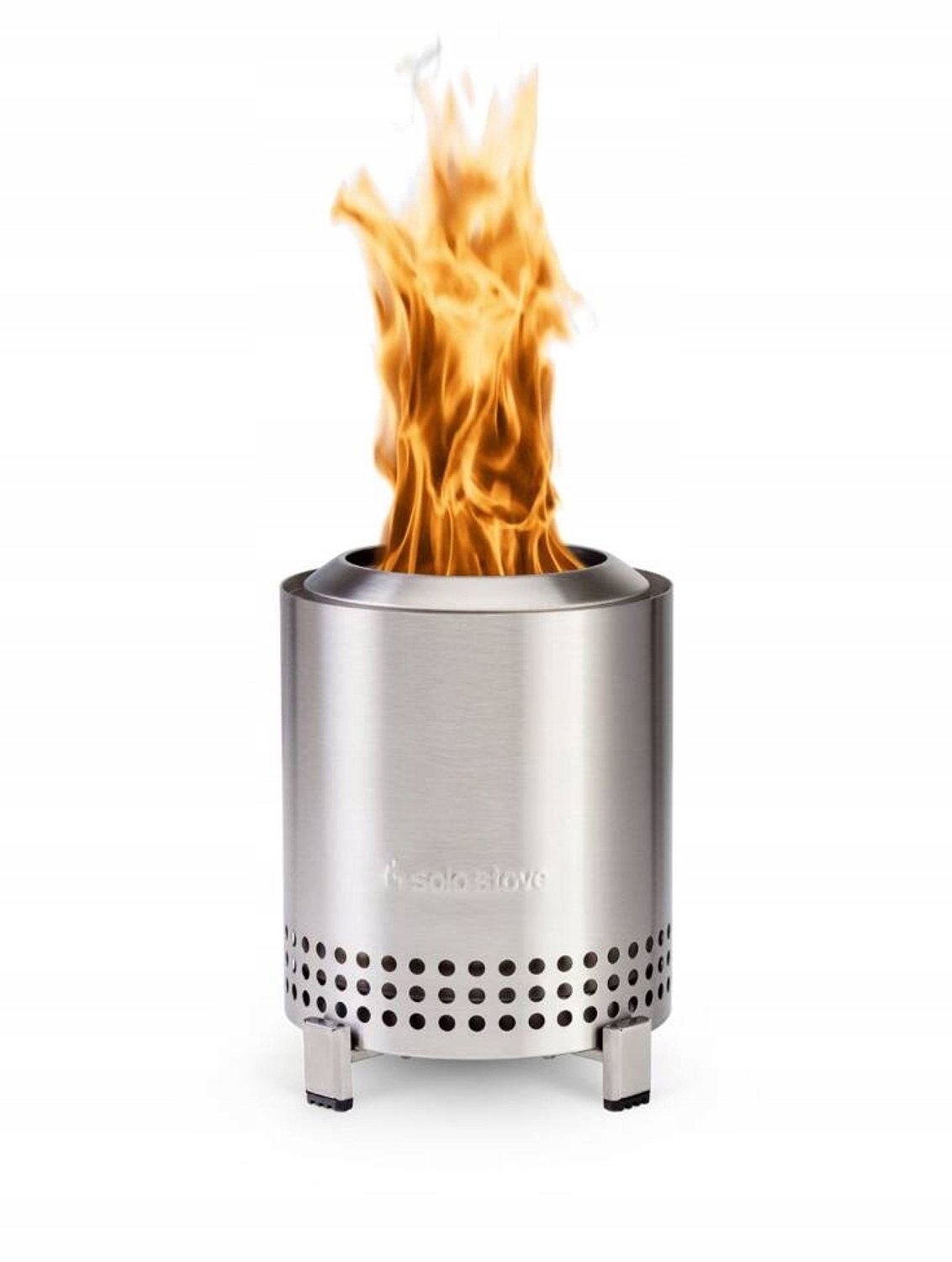
Solo Stove Mesa tabletop
View tabletop fire pit →Is a low-smoke fire pit worth it? Pros and cons
A low-smoke fire pit is usually considerably more expensive than a simple open fire basket or fire bowl. What do you get in return, and what do you give up?
| Pros | Cons |
|---|---|
| Less smoke around the fire and towards the neighbours | Higher price level than an open basket |
| Wood burns brighter and more completely, with little residue | Smaller fire chamber: shorter logs, adding wood more often |
| Sleek design, often in stainless steel | Bottom gets hot: stand needed on many surfaces |
| Removable ash pan makes cleaning easy | Accessories such as screen and lid usually come separately |
It is worth it if you light a fire often, if your garden is close to the neighbours', if you don't want to smell of smoke every time or if you like a sleek design on the patio. It is less worthwhile if you want a campfire a few times a year, if you want to put long logs in a large bowl or if it's mainly about lots of heat for little money. Then have a look at fire baskets and fire bowls.
Really don't want any smoke? Then a wood fire is not the right choice. A fire table on gas or bioethanol gives flames without wood smoke, see buying a fire table: gas, bioethanol or wood? If it's mainly about warmth, read fire table or patio heater and the section on the fire pit in buying patio heaters.
Choose quickly
- Small patio or on the go: a compact cylinder like the Ranger
- A circle of chairs on an average patio: a middle size like the Bonfire
- Fire and grilling in one: a low-smoke bowl like the Höfats Bowl
- Switching between wood and pellets: a model with pellet adapter or the Höfats Moon
- Small budget or big logs: rather an open fire basket or fire bowl
Common mistakes with a low-smoke fire pit
Click each pitfall you already avoid.
Thinking there will be no smoke at all
When lighting, adding wood and as the fire dies down, there is always smoke. Take the neighbours and the wind direction into account.
Burning damp or treated wood
Damp wood gives lots of smoke and treated wood releases harmful substances. The double-wall principle does not change that.
Stacking wood above the air holes
That blocks the hot air at the top and the low-smoke effect disappears. Keep the wood below the level of the small holes.
No stand on grass or wood
The underside gets hot. Use the manufacturer's stand and choose a non-combustible surface.
Walking away while it still glows
Even without flames, the wood and the wall stay hot for a long time. Stay with the fire until it is out, put it out as the manual describes and only empty the ash pan once everything has cooled down.
Checklist before your first fire
Tick off what you have sorted; your browser remembers it.
- The fire pit is outdoors in an open spot, not under a canopy, pergola or parasol
- There is enough distance to the house, fence, hedge and trees
- The surface can handle heat, or the stand is underneath
- I have dry, untreated wood ready, in logs that fit
- I have checked the Stookwijzer and the rules of my municipality
- The wind isn't blowing straight at the neighbours' house
- A means of extinguishing is ready, such as a bucket of sand or a fire blanket
- Someone always stays with the fire, especially with children or pets around
- The ash pan is only emptied once everything has fully cooled down
Making an evening of it? Put up a windbreak and for the rest of the seating area see setting up an outdoor living room and a sheltered spot in the autumn garden. You'll find all models together under fire pits and fire bowls.
Frequently asked questions
Does a low-smoke fire pit give off no smoke at all?
No. A low-smoke fire pit burns part of the smoke that escapes from an open fire, but when lighting, with damp wood, when adding wood and when the fire dies down you will still see and smell smoke. With dry, untreated wood and a fire that is properly up to temperature, it usually stays limited.
Can you burn pellets in a low-smoke fire pit?
Only if the model or an accessory is designed for it. For the Solo Stove Bonfire, Ranger and Yukon there is a pellet adapter that sits on the base plate. According to the product information, the Höfats Moon is suitable for logs or pellets. Check the manual for your model.
Can a low-smoke fire pit stand on grass or a wooden deck?
The underside of a low-smoke fire pit gets hot. On grass and on other surfaces that cannot handle heat, use the stand the manufacturer offers for that model. On a wooden or composite deck, a non-combustible base plate is also sensible. Always follow the manual.
Can you light a low-smoke fire pit during a stookalert?
A low-smoke fire pit is still a wood fire. If the Stookwijzer from the Dutch RIVM issues a stookalert (a burning alert), the advice is not to burn wood, not even in a low-smoke fire pit. Also check the rules of your own municipality and the wind direction towards the neighbours.
Can you cook on a low-smoke fire pit?
With some models, yes, using the right accessory. According to the product information the Höfats Bowl comes with a grill grate, there are planchas for the Moon and the Bonfire, and Solo Stove offers a cooking station for the Bonfire. Only use parts made for your model.