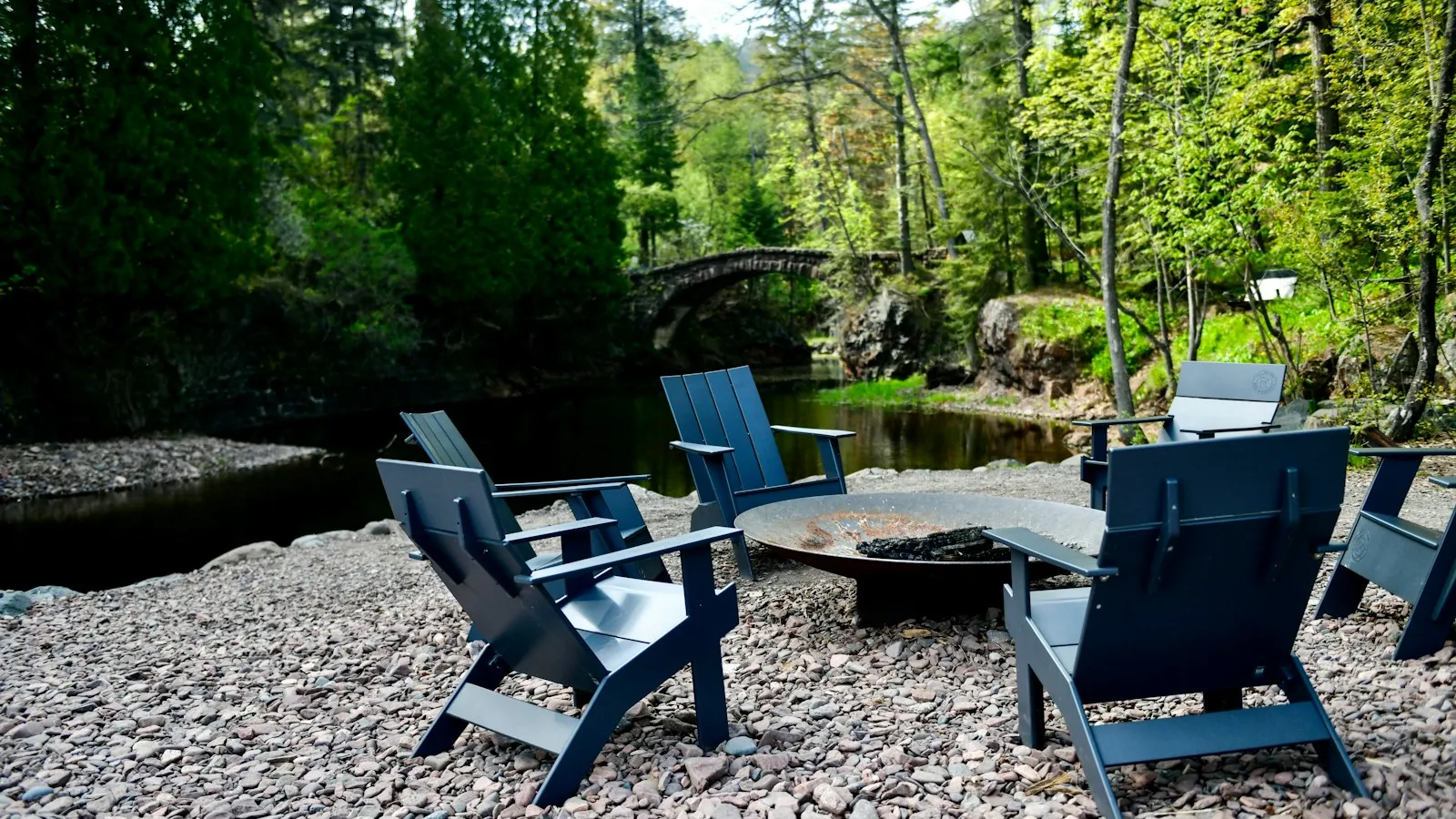
A light that switches on by itself when it gets dark, lights the path as soon as you get home, and changes from warm white to a soft colour with one tap in the app: that is smart garden lighting. Philips Hue is the best-known name, but there are more ways to light your garden smartly, from Steinel lights with a built-in sensor to solar lights with an app. In this buying guide you'll read what smart lighting can do in the garden, when you need a bridge, how 230V and low voltage compare for smart lights, and which light suits your garden.
In short: smart means control via an app, schedules, sensors or your voice. Philips Hue is the most complete system, but for sensors, schedules and control when you're away from home you need the Hue Bridge. If you only want light that responds to movement, a sensor light from Steinel, for example, is simpler. Where there's no power, choose solar with a sensor. And always keep a smart light switched on at the mains: the wall switch stays on.
What makes garden lighting smart?
Ordinary garden lighting is switched on and off with a switch or a timer clock. With smart lighting, the light controls this itself, or you operate it remotely. That can be done in a few ways:
| Function | What it does | Useful for |
|---|---|---|
| App | Switch on and off, dim and choose the light colour with your phone | Controlling everything from the sofa |
| Schedule | Light comes on at set times or at sunset | Light every evening, without having to think about it |
| Motion sensor | Light comes on when someone walks past | Driveway, front door, path to the shed |
| Dusk sensor | Light comes on when it gets dark | Facade and path from sunset to bedtime |
| Voice control | Switch lights via a smart speaker | Hands-free at the back door |
| Colour and brightness | From warm white to a colour, or softer for the evening | Atmosphere for a dinner or a party |
Not every smart light can do everything. A Steinel sensor light is smart because it responds to movement by itself, but it doesn't have coloured light. A Philips Hue light can do much more, but only gets the full benefit with a bridge. So first work out what you really want, then choose the system. You'll find all smart lights together at smart garden lighting.

Choice test: which smart lighting suits you?
Answer four questions and see which direction suits you best. Afterwards, you can read what to look out for with each type.
Which smart garden lighting suits you?
What do you mainly want from your garden lighting?
- Atmosphere: dimming, choosing light colours and creating scenes
- Security: light when someone comes to the door or onto the driveway
- A few light points in a place without power
Do you already have smart lights at home?
- Yes, Philips Hue or another smart home system
- No, and I don't want an extra app or hub
- No, an app on my phone is enough
Is there power where you want the light?
- Yes, or I'll have a cable run there
- Yes, there's already a light on the facade
- No, there's no power there
How do you want to control the lights?
- With the app, schedules and my voice
- Preferably not at all: they should do it themselves
- Now and then with the app or a remote control
Philips Hue suits you. It's the most complete system for atmosphere, colour and schedules. Plan on a Hue Bridge for sensors and control when you're away from home.
A sensor light suits you, for example from Steinel. The sensor is built into the light and handles everything itself; you don't need a bridge.
Solar with a sensor and an app suits you. No cables, but smart features. Place the light in a sunny spot and expect fewer burning hours in winter.
Five types of smart garden lighting
"Smart" covers more than you might think. This overview shows which types you'll come across and what you need for them. The brand names come from the product titles and product information.
| Type | Example | Extra needed | Strong point |
|---|---|---|---|
| Smart system with bridge | Philips Hue | Hue Bridge for all functions | Colour, scenes, schedules, sensors |
| App light without bridge | Nordlux, Eglo, Lutec | Only the brand's app | Easy to get started |
| Sensor light | Steinel | Nothing, the sensor is built in | Light on movement, no app needed |
| Smart 12V lighting | Garden Lights | Gateway and 12V transformer | Expanding a 12V system |
| Solar with sensor | Lutec Connect | A sunny spot | Light without cables |
Don't start with the light, but with the question of what the light needs to do. Atmosphere calls for an app and colour, security for a good sensor.
Philips Hue outdoors: bridge, app and the outdoor lights
Philips Hue is a complete system of smart lights, sensors and switches that you control with the Hue app. For outdoors there are wall lights, pedestal lights, garden spotlights, light strings and LED strips, most with white and coloured light.
When do you need the Hue Bridge?
Many newer Hue lights can be controlled with the app via Bluetooth, without an extra box. That only works close to the light and with fewer functions. With the Hue Bridge, a small box you connect to your router, you get everything out of the system: pairing a motion sensor, schedules for all your lights at once and controlling the lighting when you're not at home. If you want more than a few lights outside, you almost always choose the Bridge.
Mains voltage or low voltage
Hue outdoor lights come in two types. Wall lights such as the Resonate run on 230V and connect to a light point on the facade. Garden spotlights such as the Lily and pedestal lights such as the Calla come in a low-voltage version: they run on their own power supply with a plug, so you can place them in the border yourself. Note: that power supply belongs to the Hue system. You don't connect Hue low-voltage lights to a 12V transformer from another brand.
Voice and other apps
For many Hue lights, the product information lists platforms such as Google Assistant, Apple Home and Alexa, and for some also Matter. That way you can control the lights with your voice or from another smart home app. Check the product information for each light. You can compare all outdoor lights from Hue and other brands at smart garden lighting.
Start with the spots you can see from indoors
A smart light is most enjoyable in a spot you see every evening: the facade by the back door, a tree in the border or the terrace. A few well-placed lights on a schedule give more pleasure than a garden full of lights you rarely switch on. Ideas for those spots can be found in 10 garden lighting ideas.
230V or low voltage for smart lighting
With smart lights too, the first choice is the system. The basics, including IP ratings, lumens and Kelvin, are covered in buying garden lighting: what should you look out for? Here it's about what that choice means for a smart light.
| 230V smart | Low-voltage smart | Solar smart | |
|---|---|---|---|
| Installation | On a light point, often via an installer | Yourself, with power supply and plug | Standing or hanging |
| Typical lights | Wall lights on the facade | Spotlights, pedestals and light strings | Spike lights and wall lights |
| Always on at the mains? | Yes, leave the switch on | Yes, plug in at the socket | The battery charges during the day |
| Watch out for | Fixed position, moving it is a job | Power supply and lights from the same brand | Less light in winter |
The most important difference from ordinary lighting: a smart light always needs power to respond to the app, a schedule or a sensor. If you switch off a smart wall light with the ordinary switch indoors, the app can't reach it. So leave that switch on and control the light via the app, a schedule or a wireless switch.
Already working with a Garden Lights 12V system? Then you can make it smarter with a switch or gateway from the brand's smart range, or simply with the Timer + Dusk to Dawn Sensor. You can read how such a system works in installing garden lighting with the 12V system.
Motion sensor and dusk sensor
For many people, a sensor is the most useful smart feature. There are two types, and many lights have both:
- Dusk sensor: measures daylight and switches the light on when it gets dark. Handy for a facade light that needs to shine every evening.
- Motion sensor: switches the light on when someone walks past and off again after a set time. Ideal for the driveway, the front door or the path to the shed.
With Steinel, the sensor is built into the light itself, as with the ONE wall light and the XLED Home 2 Connect. For these lights the product information also mentions Bluetooth and an app, so you can adjust settings such as the follow-on time with your phone. With Philips Hue, the sensor is a separate device: the Hue outdoor motion sensor runs on batteries and switches, via the Bridge, the lights you choose, including lights a few metres away.
Sensor at the right height and direction
Aim a motion sensor at the place where people walk, not at the street or the pavement. That way the light won't come on for every passer-by or car. Shrubs moving in the wind can also set off a sensor; trim them back or angle the sensor slightly away.
Garden Lights smart and solar with a sensor
Expanding smartly with Garden Lights
Garden Lights has, alongside its ordinary 12V lights, a smart range with lights, a motion sensor and a gateway that you control via Wi-Fi with the app. It works on the same 12V system, so you can combine smart lights with the lights you already have. Not all smart models are always available; for the ones you can compare right now, see smart garden lighting.
Solar with a sensor and an app
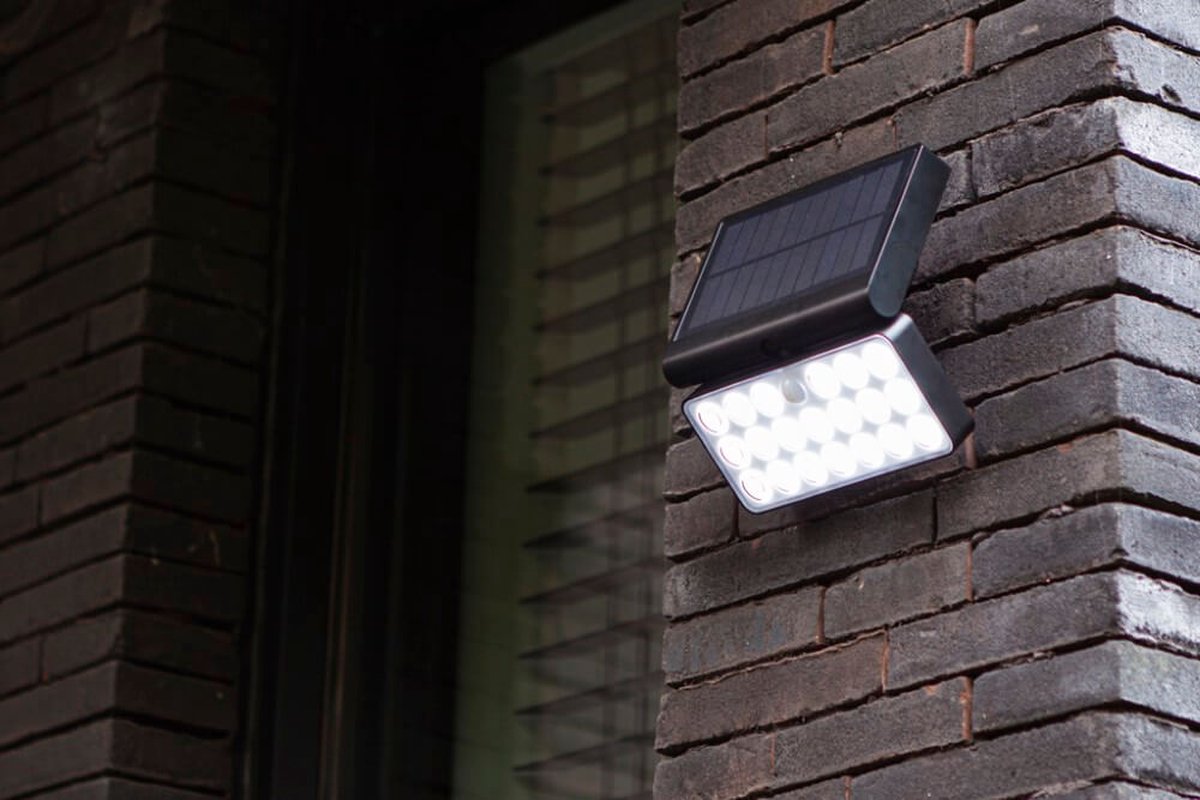
Where there's no power, solar is the way out. The smart versions from Lutec Connect combine a solar panel with a motion sensor and an app or remote control, such as the Tuda wall light and the Ginbo spike light. The advantage of the sensor: the light only shines brightly when someone comes past, which saves the battery.
Do keep the seasons in mind, though. In winter there are fewer hours of sun and the sun sits low, so the battery charges less and the light burns for less time. So place a solar light where it also gets sun in the winter months, with the panel facing south and not in the shade of a tree or fence.
Six smart lights compared
To make the choices concrete, below you'll find six available lights, each for a different situation. The specs come from the title and product information; you'll see the current price and shop on the cards.
| Light | Type | Power | Smart through |
|---|---|---|---|
| Philips Hue Lily starter set | Garden spotlights | Low voltage | Hue app, colour |
| Philips Hue Resonate | Wall light | 230V | Hue app, voice |
| Philips Hue motion sensor | Sensor | Battery | Switches Hue lights |
| Steinel ONE | Wall light | 230V | Sensor, Bluetooth |
| Lutec Connect Tuda | Wall light | Solar | Sensor, app |
| Nordlux Landon smart | Wall light | 230V | App, light colour |
Philips Hue Lily starter set: three spotlights for the border
A set of three low-voltage garden spotlights, according to the product information with 600 lumens per spotlight and IP65. You place them in the border with a ground spike and choose white or coloured light in the app. According to the title it's a starter set: that's where you begin, and single spotlights are add-ons.

Lily starter set 3 garden spotlights
Philips Hue Resonate: wall light with light up and down
A black 230V wall light that shines light upwards and downwards, so the facade itself joins in the light display. IP44, and according to the product information controllable with the Hue app, via Google Assistant, Apple Home and Alexa, with support for Matter.

Philips Hue outdoor motion sensor: smart switching
A separate battery-powered sensor that you hang by the front door, the path or the driveway. Via the Hue Bridge it switches on the Hue lights you choose in the app, even if those hang some distance away. IP54.

Steinel ONE: sensor light without a bridge
An anthracite 230V wall light with a motion sensor and a dusk sensor. According to the product information it gives 520 lumens of warm white light (3000 K), it can be turned and tilted, and you adjust the settings via Bluetooth and an app. The sensor also works without a phone.

Lutec Connect Tuda: solar with sensor and app
A black wall light that charges with a solar panel, so no cable is needed. According to the product information it has a motion sensor, 500 lumens and control via an app or remote control. Ideal for a shed or fence without power, provided there is enough sun.
Nordlux Landon smart: getting started with the app
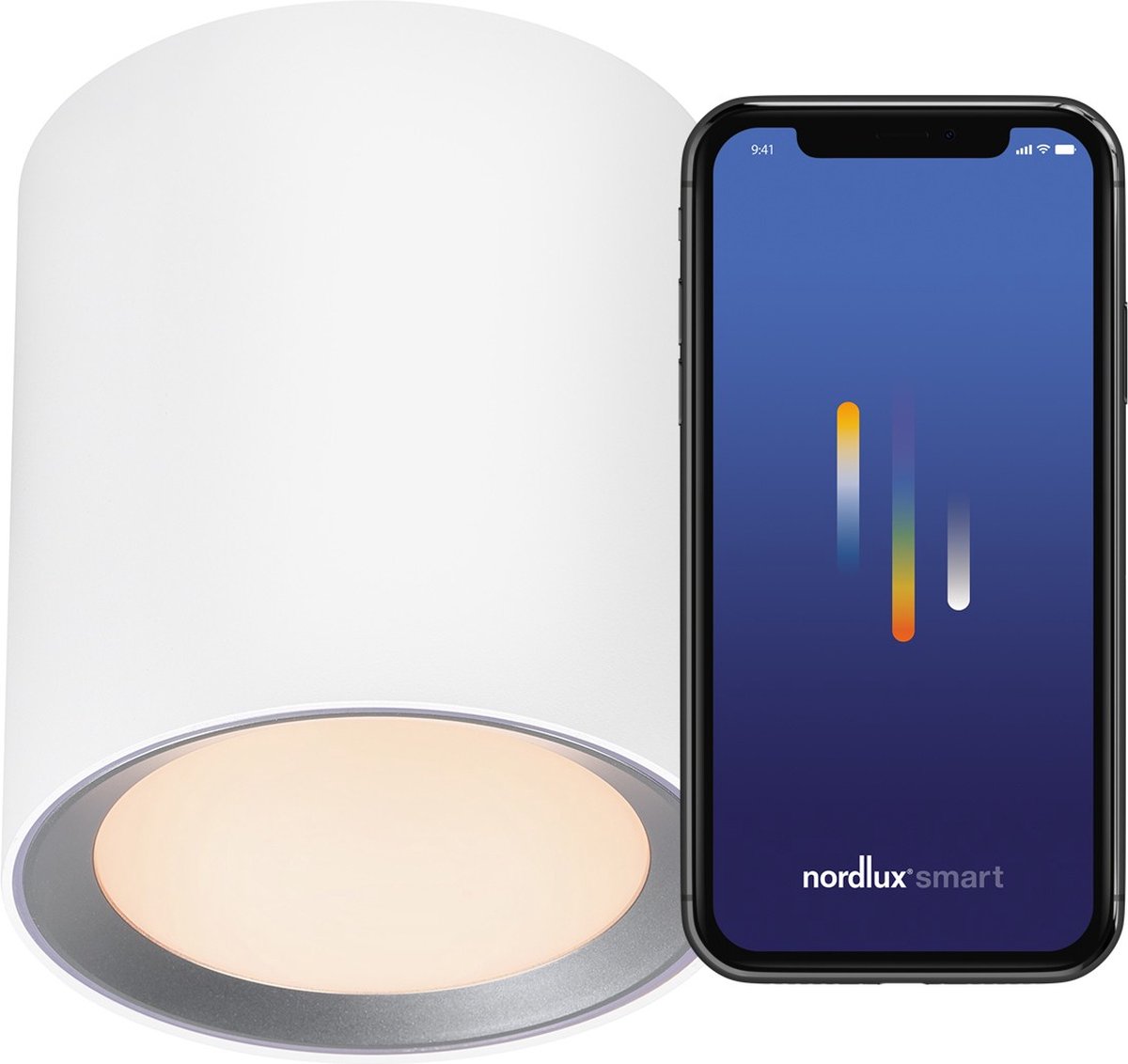
A white 230V wall light that you control with the Nordlux app via Bluetooth. According to the title, you set the light colour between 2700 and 6500 K, from warm white to cool white. No bridge needed, so it's an easy way to start with smart lighting.
Also worth a look:
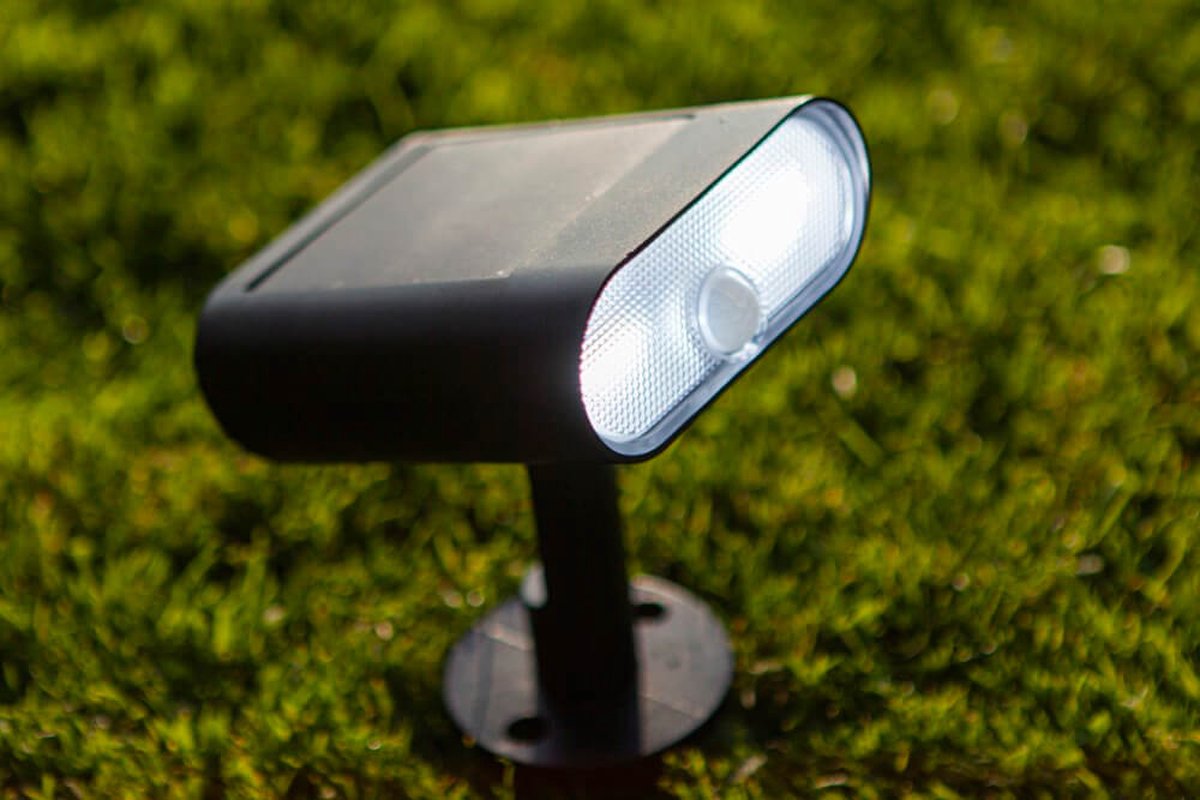
Lutec Ginbo: solar spike light
View spotlight →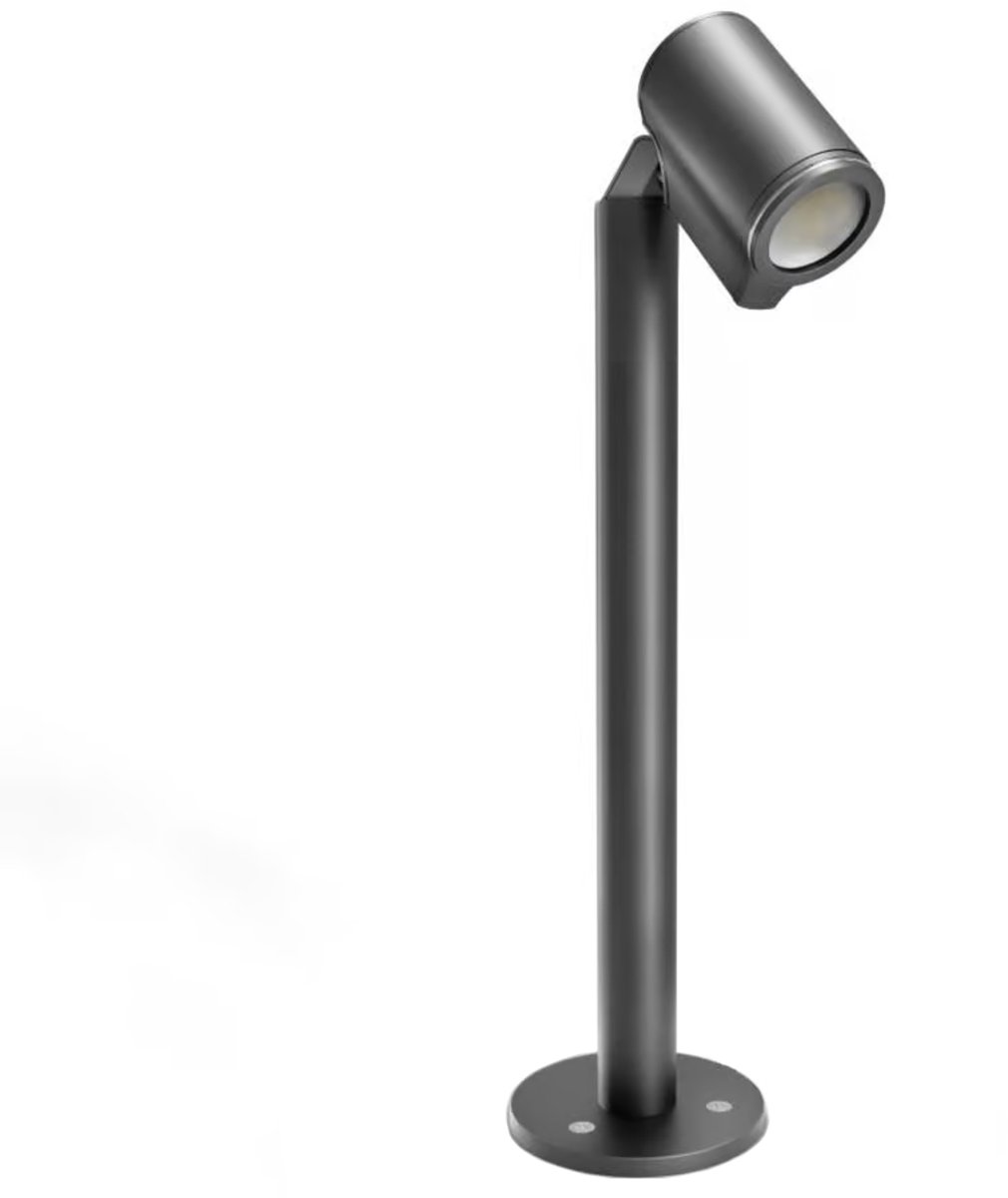
Steinel Spot Way SC: 24V
View light →
Hue Calla: low pedestal light
View light →How to choose quickly
- Atmosphere, colour and schedules: Philips Hue with the Hue Bridge
- Light on movement, no app: a Steinel sensor light
- One smart light without a hub: an app light on Bluetooth
- No power at the spot: solar with a sensor
- Always: keep the power on and check the IP rating
Common mistakes
Switching off the wall switch
A smart light without power no longer responds to the app, a schedule or a sensor. Leave the switch on and control the light another way.
A separate app for every light
Three brands with three apps quickly become confusing. Choose one system as your base, or look for lights that work with the same platform.
Mixing low-voltage lights from different brands
Low-voltage lights run on the power supply or transformer of their own system. A Hue spotlight doesn't belong on a 12V transformer from another brand, and vice versa.
Aiming the sensor at the street
A motion sensor that sees the pavement or the street will switch on for every passer-by. Aim it at your own path or driveway.
Solar in the shade
A solar light under a tree or on the north side charges too little, especially in winter. Choose a sunny spot or a light that runs on mains power.
Checklist for your smart garden
- You know what the light needs to do: atmosphere, security or both
- You've chosen one system or app as your base
- You know whether you need a bridge or gateway
- There's power at the spot, or the spot gets enough sun
- The IP rating suits the spot (IP44 or above at ground level)
- The wall switch for a smart light stays on
- A motion sensor is aimed at your own path or driveway
Ready to choose? Compare smart garden lighting, wall lights, garden spotlights and standing lights, or look at the brands Philips Hue, Steinel and Lutec. If you're mainly after atmosphere, also read creating atmosphere with garden lighting.
Frequently asked questions
Do you need a Hue Bridge for Philips Hue outdoor lighting?
For the full range of features, yes. With the Hue Bridge you can link a motion sensor, set schedules for all your lights and control the lighting even when you're not at home. Many newer Hue lights can also be controlled without a Bridge, using Bluetooth and the app, but the options are more limited and you have to be close to the light.
Can you simply operate smart garden lighting with a wall switch?
Yes, but do leave the power on. A smart light that you switch off with an ordinary wall switch loses its power supply and then no longer responds to the app, a schedule or a sensor. It's better to use a wireless switch or the app, or to leave the wall switch on permanently.
What is the difference between a motion sensor and a light sensor?
A light sensor measures how much daylight there is and switches the light on when it gets dark. A motion sensor responds to movement, for example when you walk along the path. Many sensor lights have both: the motion sensor then only works when it is dark enough.
Does smart solar garden lighting also work in winter?
Yes, but for shorter periods. In the winter months there are fewer hours of sunshine and the sun sits low, so the battery charges less. A solar light with a motion sensor uses that energy more efficiently, because it only shines brightly when someone passes by. Hang or place it somewhere that still gets sun in winter.
Can you combine Philips Hue with other brands of garden lighting?
Partly. More and more lights support Matter, which means you can combine them in a single smart home app. Check the product information for each light to see whether it mentions Matter or a platform such as Google Assistant or Apple Home. Hue's low-voltage lights use their own power supply, so you cannot connect them to a 12V transformer from another brand.