
A pizza with a light, slightly charred crust and a base that crackles when you break it: that is almost never achieved in an ordinary kitchen oven. An outdoor pizza oven gets much hotter and bakes a pizza in a few minutes. But which one should you choose? In this buying guide you'll read about the difference between gas, wood and multi-fuel, which size suits your family, how to get a pizza oven hot, which accessories you really need and where to place it safely. With a choice test, comparison tables and available ovens from Ooni and Witt.
In short: first choose the fuel: gas is the easiest, wood gives atmosphere and a multi-fuel oven lets you choose. Then choose the size: 12 inch for a couple or small family, 16 inch if you want larger pizzas or more guests. Factor in a pizza peel and an infrared thermometer and place the oven outdoors, on a sturdy, non-combustible spot. Never indoors, in a garage or in a tent.
Why a pizza oven and not just your barbecue?
A good pizza needs heat from two directions: a hot stone from below for the base and fierce heat from above for the toppings and the crust. A pizza oven is built for exactly that. The low dome reflects the heat back onto the pizza and the stone retains a lot of warmth, so you can bake a pizza in a few minutes.
You can also bake pizza on a barbecue. On a kamado this works very well with a heat deflector and a pizza stone; you can read how to set that up in baking pizza on the kamado. On a kettle or gas barbecue, use a loose pizza stone from the barbecue accessories. The difference lies mainly in how quickly and how often you can bake one after another.
| Method | Heat | Pizzas per batch | Suits |
|---|---|---|---|
| Pizza oven (gas or wood) | Very high, often up to around 500 °C according to the product information | One, in a few minutes | Regular pizza baking, pizza nights with guests |
| Kamado with pizza stone | High, needs time to heat up | One, a little slower | Those who already have a kamado or also want to grill and smoke |
| Gas or charcoal barbecue with stone | Medium to high | One, slower | An occasional pizza in between |
| Kitchen oven | Usually up to around 250 °C | One or two, takes a long time | Ready-made pizza from the tray, no crispy crust |
If you bake pizza a few times a summer, a pizza stone on your barbecue is a perfectly good start. For regular pizza nights, a dedicated pizza oven is worth the investment. You'll find them on the pizza ovens page.
Choice test: which pizza oven suits you?
Answer four questions and see which type of pizza oven suits you best.
Which pizza oven suits you?
How would you like to fire the oven?
- As easy as possible: turn the knob and you're ready
- With wood, for the flames and the experience
- I want to be able to choose
- Gas, but I don't want to turn the pizza myself
How many people do you usually cook for?
- Two or three, often spontaneously
- Two to four, on a quiet evening
- Four or more, often with guests
- The whole family, a few times a month
Will you also take the oven with you when you're out and about?
- Yes, light and compact is handy
- Sometimes, to the campsite or a holiday home
- No, it'll have a permanent spot
- No, it stays at home
What else do you want to make besides pizza?
- Mainly pizza
- Flatbreads and something in a pan
- Meat, fish and bread too
- Mainly pizza, without fuss
A compact gas pizza oven suits you. Quick to heat up, easy to control and light enough to take with you.
A small multi-fuel oven suits you: firing with wood or charcoal, with real flames in the oven.
A large multi-fuel oven suits you. More space, a thermometer and room for pizza, bread and dishes in a pan.
A gas oven with a rotating pizza stone suits you. The stone turns by itself, so your pizza bakes evenly without you having to keep turning it.
Pizza ovens on gas, wood or multi-fuel: what's the difference?
The fuel determines how you work with the oven. On the gas and wood pizza ovens page you'll find three types.
| Fuel | How it works | Advantages | Watch out for |
|---|---|---|---|
| Gas | Burner behind or under the stone, on a gas bottle | Heats up quickly, temperature controlled with a knob, no ash | Needs a gas bottle, hose and pressure regulator |
| Wood | Small wood fire at the back of the oven | Flames, atmosphere, light smoky aroma | Constantly adding wood, clearing ash, smoke |
| Charcoal | Coals in the fire basket | More even than wood, long burn time | Less fierce than wood, clearing ash |
| Multi-fuel | Choose between wood and charcoal, sometimes gas too | Flexible, you can try both | For gas a separate component is often needed |
With Ooni you can tell the difference from the name: the Koda models run on gas, while the Karu models are multi-fuel and fired with wood or charcoal. The pizza ovens from Witt on this site all run on gas. Besides Ooni and Witt there are other well-known brands, such as Gozney, but those aren't included in the product comparison here.
Torn between gas and wood? Then choose mainly based on what you want the evening to look like. If you mostly want to bake pizzas and chat with your guests, gas is more relaxed. If lighting the fire is the best part for you, wood will never feel like a chore.
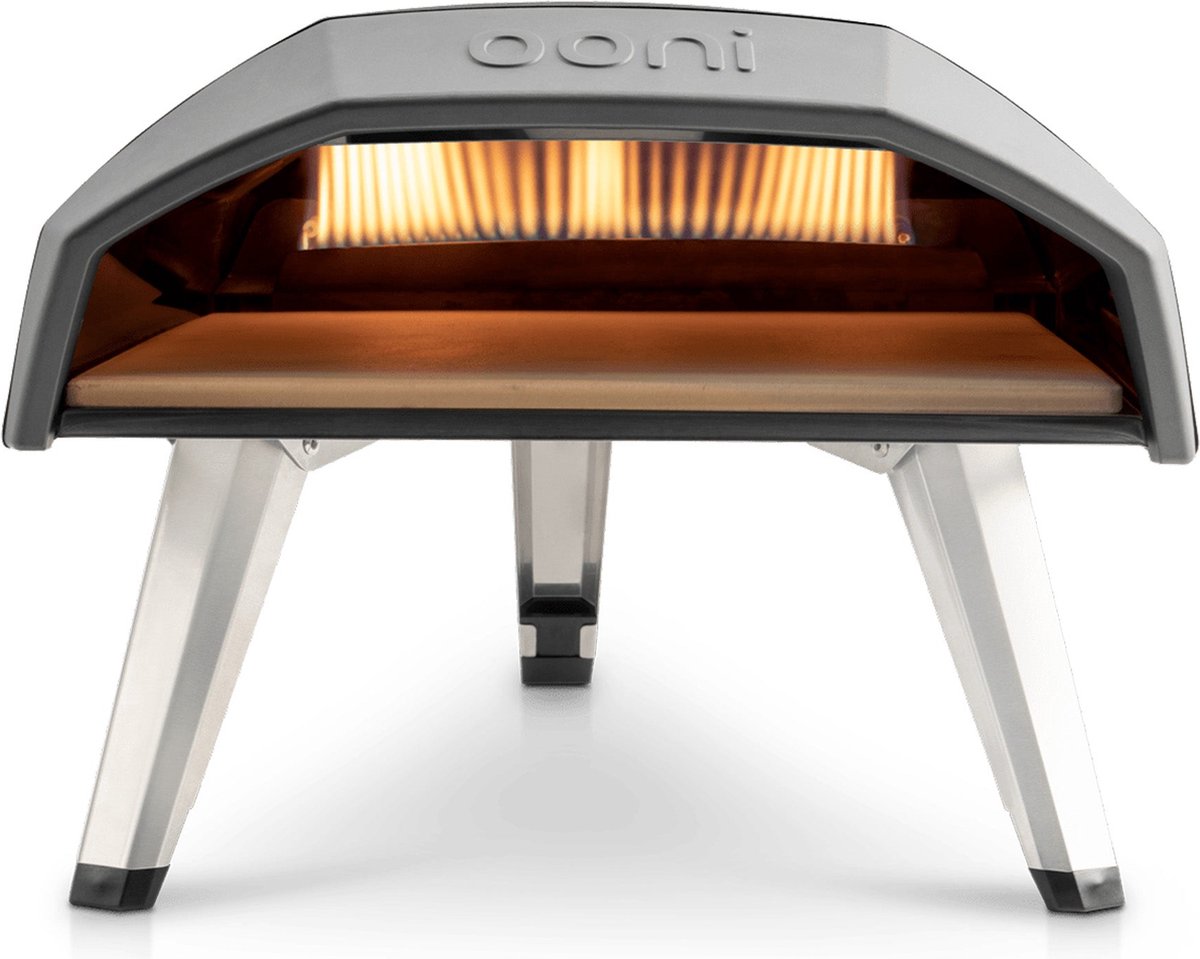
Ooni Koda: compact gas pizza oven
The Ooni Koda is a compact gas oven with folding legs. According to the product information it measures 29 x 40 x 29 cm, weighs 9.3 kg and has a baking surface of 34 cm, with a heat-up time of around 10 minutes. Light enough to take with you.
Is a gas pizza oven easier?
Yes, for most people it is. You connect the oven to a gas bottle with a hose and pressure regulator, turn the knob and light it. Once it has heated up, you control the heat with the same knob: high for a thin Neapolitan pizza, a little lower for a thicker base or a dish in a pan.
A few things to watch out for with gas:
- Pressure regulator: a gas oven works with a pressure regulator that suits both the oven and the gas bottle. Some ovens come in two variants. The Ooni Koda 2 Max, for example, is listed on the site in a version for 30 mbar and one for 37 mbar. In the Netherlands 30 mbar is usual; in Belgium 37 mbar is often used for propane. If you're unsure, check with the shop or your gas supplier.
- Hose and regulator: according to the product information, most ovens don't come with a hose. Use a hose and regulator that are suitable for your oven, and replace any hose that is hard, cracked or discoloured.
- Cold: butane evaporates poorly at low temperatures. If you also bake in winter, propane generally works better. Check the manual for the gas the manufacturer specifies for your oven.
- Leak check: after connecting, check the couplings with soapy water to make sure they're tight. Bubbles mean a leak: turn off the gas and reconnect.
A spare gas bottle saves a lot of hassle
Nothing is more annoying than a bottle running out halfway through the evening. A spare bottle, stored upright and outdoors, stops your pizza night ending at pizza number four. To find out more about gas from a bottle, read camping kitchen and cooking stove: what do you need?
Witt Etna Rotante Control 16: gas with rotating stone
Witt calls its ovens with a rotating pizza stone Rotante. The Etna Rotante Control 16 is a gas oven for pizzas up to 16 inch; according to the product information it reaches 500 °C, has heating from above and below and a heat-up time of around 15 minutes. Because the stone turns, the pizza bakes evenly all round without you having to keep turning it yourself.

What does multi-fuel mean for a pizza oven?
A multi-fuel pizza oven can be fired with more than one fuel. For the Ooni Karu models these are wood and charcoal. For the Karu 2, the product information also lists gas as an option; this usually requires a separate gas burner, so check carefully what is and isn't included.
Firing with wood isn't difficult. You start with a small fire, let the oven heat up properly and add a small log every few minutes so the flame above the pizza stays lively.
Use bone-dry, untreated hardwood in small pieces and firelighters; never painted wood, pallet wood or lighter fluid. Wood fires produce smoke and smell. So think about your neighbours and the rules in your municipality. In the Netherlands you can consult the Stookwijzer to see whether it's a good time to burn wood. If you want flames but little smoke, let the fire burn well before you start baking: a hot fire with dry wood smokes far less than a smouldering one.
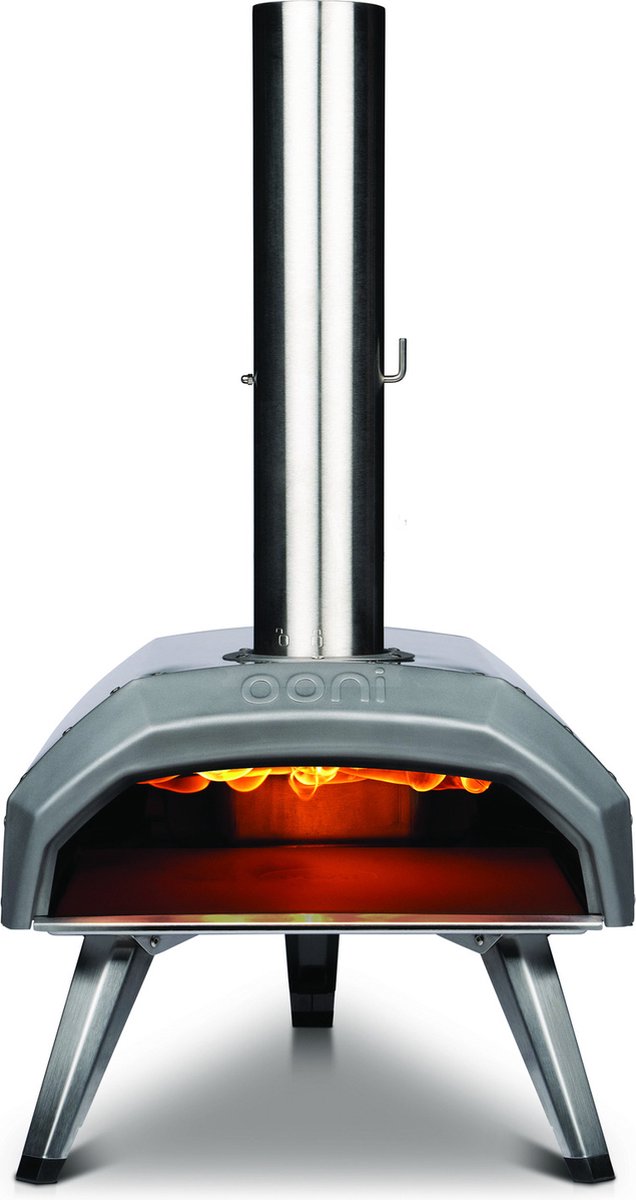
Ooni Karu 12: small multi-fuel oven
The Karu 12 is the smallest multi-fuel oven from Ooni on the site. According to the product information it is designed for 12 inch pizzas, with a baking surface of 33 cm, a weight of 12 kg and a heat-up time of around 15 minutes. It runs on wood or charcoal and has a chimney on top.
Which pizza oven size do you need: 12 or 16 inch?
Pizza ovens are often described in inches: that is the largest pizza that fits in them. A 12 inch pizza is roughly 30 cm, a 16 inch pizza roughly 40 cm. That may seem a small difference, but a larger oven also gives you more room to slide the pizza in and turn it, and more space for a pan.
| Size | Pizza | Suits | Examples |
|---|---|---|---|
| 12 inch | Around 30 cm | Couple or small family, taking it along | Ooni Karu 12, Ooni Koda |
| 13 inch | Around 33 cm | Small family, compact set-up | Witt Piccolo Rotante 13 |
| 16 inch | Around 40 cm | Family, guests, larger pizzas | Witt Etna Rotante Control 16, Ooni Karu 2 Pro |
| Extra large | Two pizzas side by side | Large groups, lots of pizzas one after another | Ooni Koda 2 Max, with a 60 cm baking surface |
A larger oven isn't automatically better. It's heavier, uses more fuel and takes longer to heat up. For two to four people, 12 or 13 inch is plenty: you're baking one pizza at a time anyway. To see how the larger gas models from Ooni and Witt compare, read Ooni or Witt: which pizza oven suits you?
Ooni Karu 2 Pro: large multi-fuel oven
The Karu 2 Pro is Ooni's large multi-fuel oven. According to the product information it has a baking surface of 40 cm, a built-in thermometer and room to roast a whole chicken or bake a large loaf of bread. It weighs 30 kg according to the product information, so this is an oven for a permanent spot.

Karu 2 Pro multi-fuel pizza oven
How hot does a pizza oven get and how long does it take to heat up?
For the Witt ovens, the product information gives a maximum of 500 °C. You need that heat mainly for a thin Neapolitan pizza, which then bakes in roughly one to two minutes. A thicker pizza is baked at a lower temperature, so the base is cooked before the top burns.
The heat-up time depends on the model. The product information gives figures from around 10 minutes for a compact gas oven up to 30 minutes for the largest models. Important: the air inside the oven heats up faster than the stone. If you start too early, the top will be done and the base still pale. That's why an infrared thermometer is one of the most useful accessories: you point it at the centre of the stone and see immediately whether you can start.
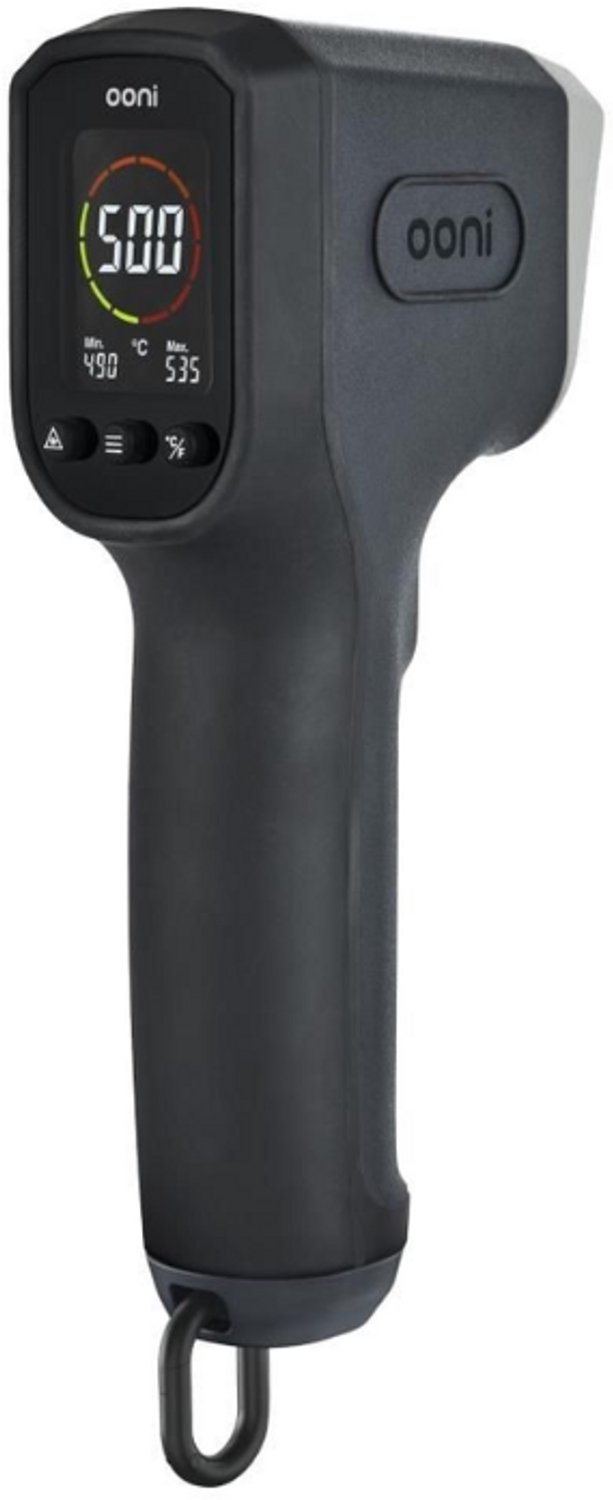
Ooni infrared thermometer: measure the stone
According to the product information, this thermometer measures up to 550 °C, with a digital display and an alert when the set temperature is reached.
Which pizza accessories do you really need?
A pizza oven comes with a handful of tools. You don't need to buy everything at once, but you won't get far without a peel. You'll find everything in one place in the pizza accessories section.
| Accessory | What it's for | Essential or handy |
|---|---|---|
| Pizza peel (wood, bamboo or aluminium) | Topping the pizza and sliding it into the oven | Essential |
| Perforated peel | Excess flour falls through the holes; taking the pizza out of the oven | Handy |
| Turning peel | Small round peel for turning the pizza in the oven | Essential without a rotating stone |
| Infrared thermometer | Measuring the temperature of the stone | Very handy |
| Table or stand | A sturdy, heat-resistant spot for the oven | Handy, sometimes essential |
| Protective cover | Keeping the oven dry and clean once it has cooled | Handy |
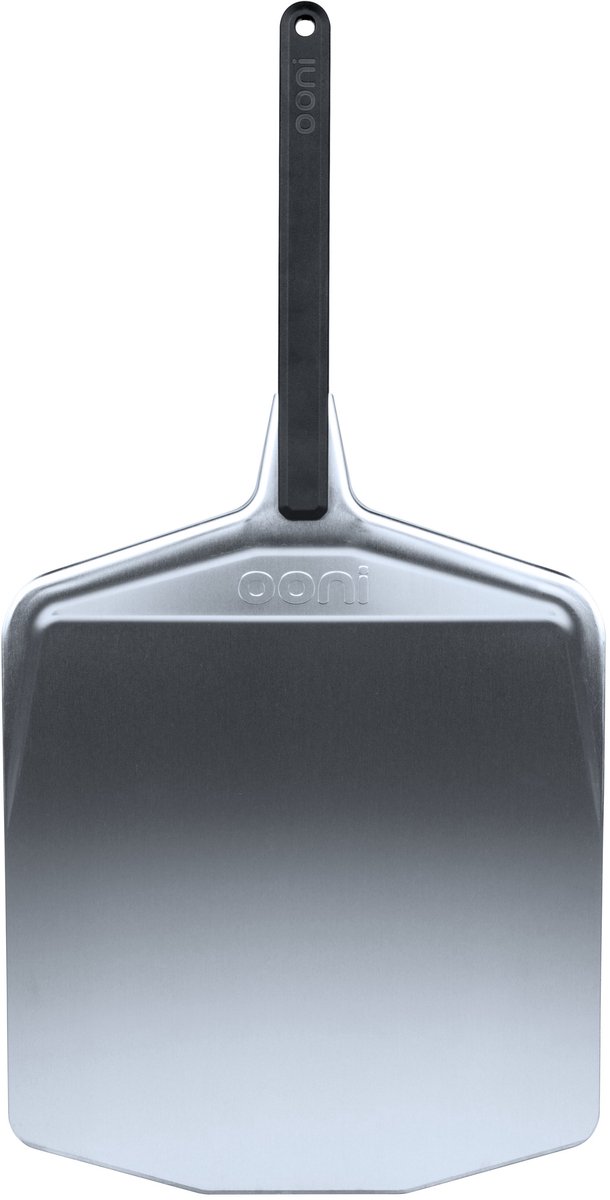
Ooni aluminium pizza peel 30 cm
View peel →
Ooni turning peel
View turning peel →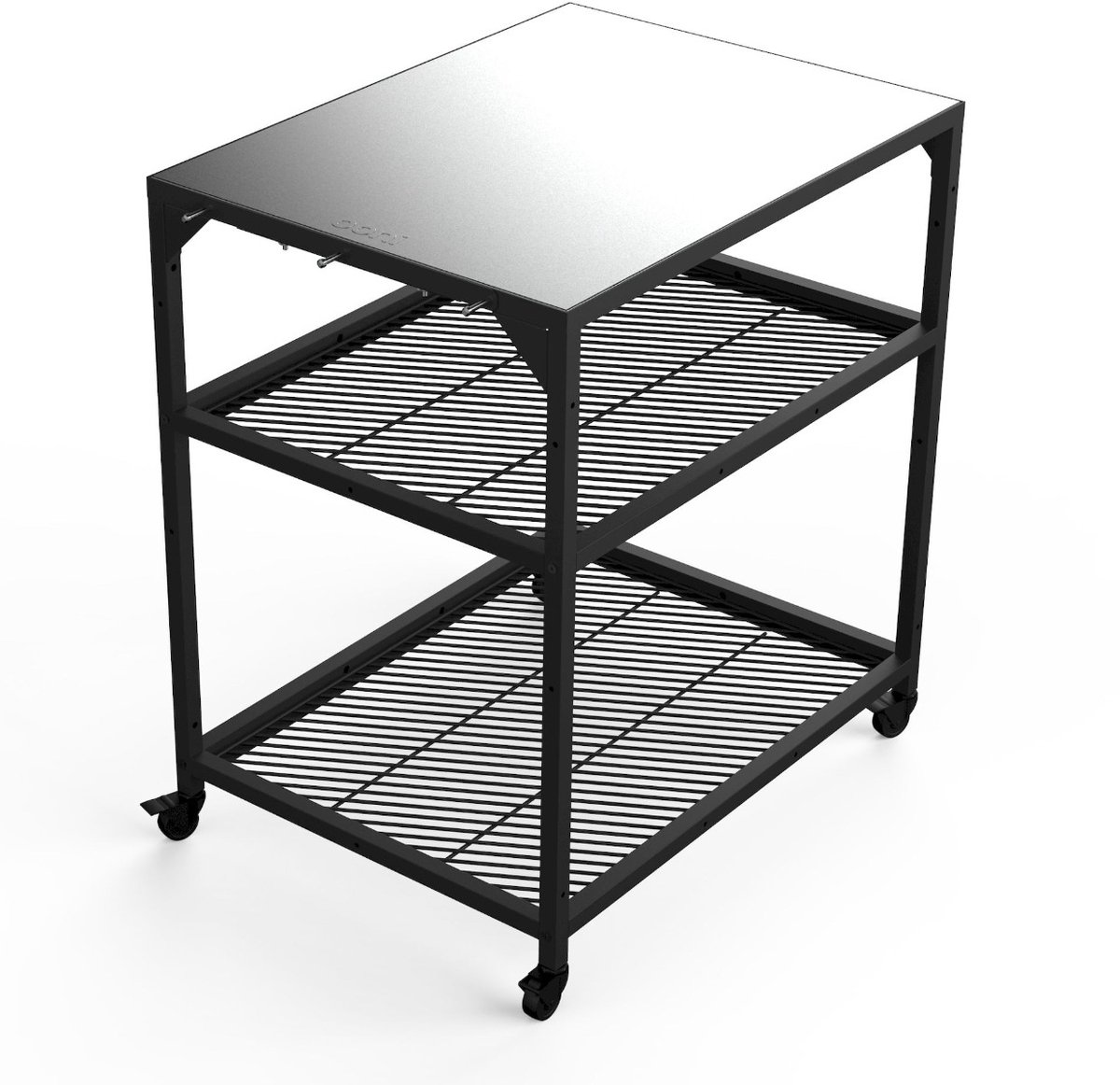
Ooni medium table
View table →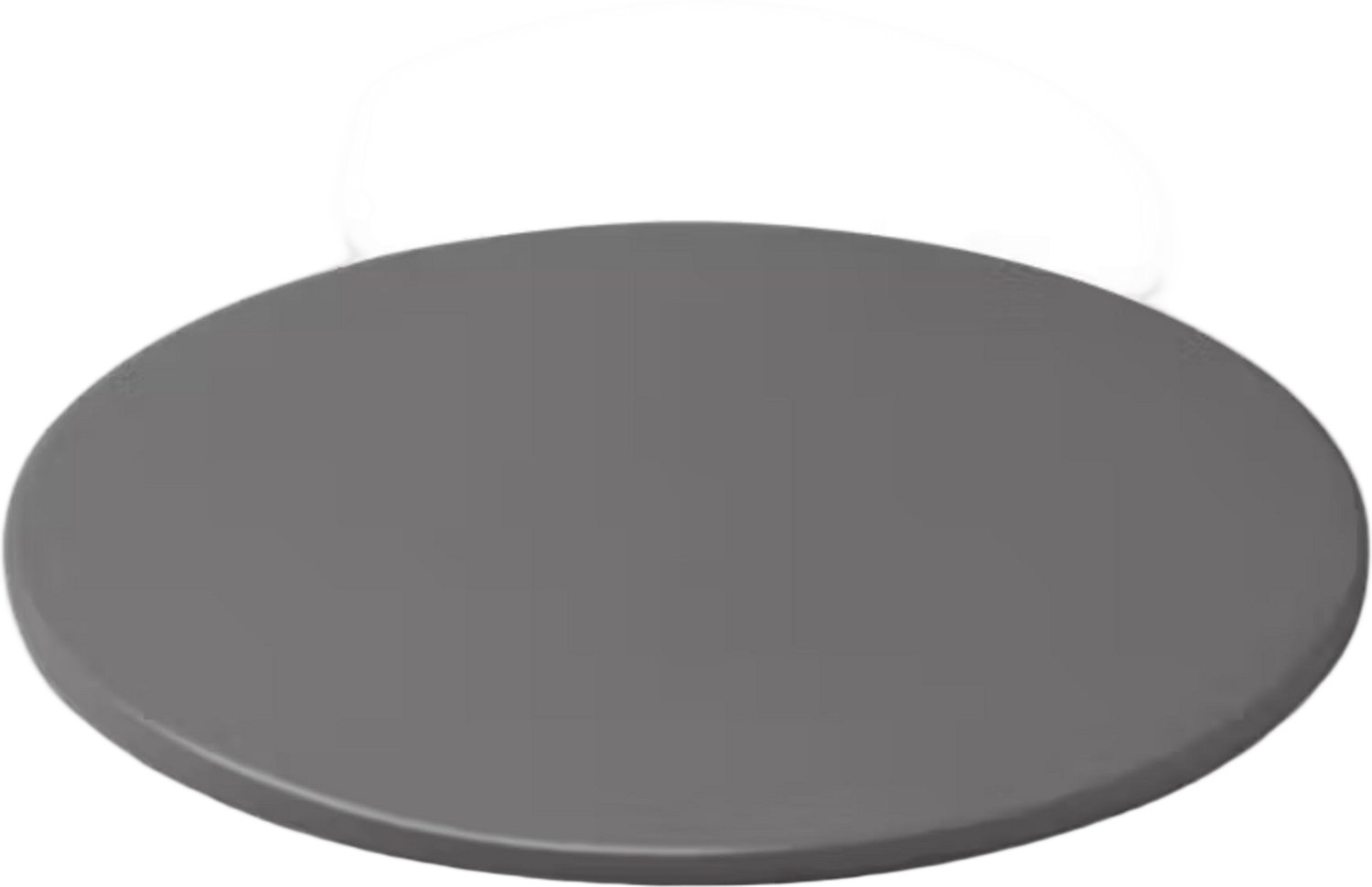
Weber pizza stone 36 cm
View pizza stone →If you have a barbecue and want to find out first whether baking pizza is for you, a loose pizza stone, such as the one from Weber, is a cheaper first step. To learn which accessories fit a kamado, read kamado accessories: what do you really need?
Where do you place a pizza oven and how do you use it safely?
A pizza oven gets hot on the outside too, and a gas oven or wood fire should always be in the open air. Choose a fixed, level spot on a sturdy, non-combustible surface, such as a stone table, a metal stand or a table the manufacturer offers for the oven. Keep a good distance from the house wall, fence, parasol and canopy.
- Always outdoors: never use a pizza oven indoors, in a garage, a shed, under a closed canopy or in a tent. Burning can produce carbon monoxide, a gas you can't smell and which can be fatal.
- Stable and clear: the oven must stand firmly, with space all around and nothing above the chimney or opening.
- Children and pets: the outside gets hot. Keep them at a distance, even when the oven is cooling down.
- Manual: always follow the instructions for your oven for distances, gas and maintenance.
A pizza oven under a canopy or awning
Even when it's raining: don't place a pizza oven under a closed canopy, awning or parasol. Heat and flames can damage fabric or wood, and combustion gases build up. Choose an open spot and, in bad weather, bake another time instead.
A pizza oven fits nicely in an outdoor kitchen. If you want to create a permanent spot for one, read how to build your own outdoor kitchen or find out what's involved in what is an outdoor kitchen? Ready-made modules can be found in the outdoor kitchens section.
Four pizza ovens compared
Below are the four ovens from this article side by side. The details come from the product information; for the current price and shop, see the cards and the Ooni and Witt pages.
| Oven | Fuel | Size | Heat-up time | Special feature |
|---|---|---|---|---|
| Ooni Koda | Gas | 34 cm baking surface | Around 10 min | Compact, 9.3 kg |
| Witt Etna Rotante Control 16 | Gas | 16 inch | Around 15 min | Rotating stone |
| Ooni Karu 12 | Wood and charcoal | 12 inch | Around 15 min | Smallest multi-fuel |
| Ooni Karu 2 Pro | Wood and charcoal | 40 cm baking surface | Around 15 min | Thermometer, 30 kg |
How to choose quickly
- As easy as possible: a gas pizza oven
- Don't want to turn it yourself: gas with a rotating stone
- Flames and atmosphere: wood or charcoal
- Flexible: a multi-fuel oven
- Couple or small family: 12 or 13 inch is enough
- Guests and larger pizzas: 16 inch or bigger
Common mistakes with a pizza oven
Tick off any pitfalls you already avoid.
Starting to bake too early
The air heats up quickly, the stone doesn't. Measure the stone or wait out the heat-up time in the manual; otherwise the base stays pale.
Too many toppings
In a hot oven everything needs to cook in a few minutes. A thin layer of sauce and not too many toppings works better than a loaded pizza.
Not turning the pizza
The back is the hottest part. Without a rotating stone, turn the pizza a quarter turn with a turning peel every few seconds.
Dough sticking to the peel
Sprinkle some flour or semolina on the peel and top the pizza quickly. Give the peel a shake before you slide it in: if the pizza moves freely, you're ready to bake.
Covering a hot oven
Only put the cover on once the oven has completely cooled. A cover on a warm oven can melt.
Checklist for your first pizza night
Tick off what you've sorted; your browser will remember.
- The oven is outside on a sturdy, non-combustible surface
- There is a good distance from the house wall, fence, parasol and awning
- The gas bottle and pressure regulator suit the oven, or dry wood is ready
- I've checked the couplings for leaks with soapy water
- Pizza peel, turning peel and infrared thermometer are ready
- The dough has risen long enough and is at room temperature
- Sauce and toppings are laid out next to the oven
- Children and pets are kept away from the hot oven
A pizza night often goes on until after sunset. A string of lights above the table and a warm spot to linger afterwards complete the evening; for those, see choosing outdoor string lights and buying patio heaters.
Frequently asked questions
Which pizza oven is best for beginners?
For most beginners a gas pizza oven is the easiest. You control the heat with a knob and there is no ash to clear away. If you don't want to turn the pizza yourself, look at a gas oven with a rotating pizza stone, such as the Rotante models from Witt.
Is a gas or wood-fired pizza oven better?
Neither is better; they suit different things. Gas is predictable, clean and quick to get going. Wood gives flames, some flavour and the feel of a real wood-fired oven, but it needs more attention: you have to keep adding wood to keep the temperature high. A multi-fuel oven lets you choose between wood and charcoal, and on some models gas too.
Can you use a pizza oven on a balcony?
That depends on the rules of your building, your VvE (owners' association) or landlord, and the local council. Wood fires produce smoke and sparks and are usually not a good idea on a balcony. A gas oven also needs an open space, a non-combustible surface and a good distance from walls and window frames. Always follow the instruction manual and never use a pizza oven indoors.
How long does a pizza oven take to heat up?
For the ovens on the pizza ovens page, the product information gives heat-up times of roughly 10 to 30 minutes, depending on the model and size. With wood it often takes a little longer, because the fire first needs to burn properly. Measure the temperature of the stone with an infrared thermometer; the air inside the oven often gets hot faster than the stone.
Can you cook other things in a pizza oven besides pizza?
Yes. With a cast-iron pan or dish you can also roast meat, fish and vegetables, bake flatbreads or make a dessert in most pizza ovens. For the Ooni Karu 2 Pro, for example, the product information mentions a whole chicken and a large loaf. The heat is much higher than in a kitchen oven, though.