

In the Netherlands, the question is not whether it will rain, but when. A sunny afternoon can easily end in a heavy shower, and in spring and autumn it sometimes rains for days on end. Your garden furniture just stays outside. Which furniture can cope with that, what dries quickly again, and where does it go wrong? In this article you'll read the difference between waterproof, water-resistant and water-permeable, which seats and tabletops handle rain best, what happens to your cushions, and how to get back to sitting comfortably quickly after a shower. With examples from our range.
In short: rain-resistant means that a piece of furniture can get wet and then dry out properly again. An aluminium frame with Textilene dries fastest after a shower, because the water runs straight through it. For tables, a top that doesn't absorb moisture works well, such as Centostone. The weak point is the cushions: water-resistant is not waterproof, so store them somewhere dry during prolonged rain. If sun and frost are also a concern, read which garden furniture is weather-resistant.
Waterproof, water-resistant or water-permeable?
In product information and advertising, you'll see these three words used interchangeably. However, they mean quite different things, and anyone who confuses them ends up buying the wrong thing.
| Term | What it means | Example |
|---|---|---|
| Waterproof | No water gets through | Aluminium, plastic |
| Water-resistant | Droplets roll off at first | Cushion cover, protective cover |
| Water-permeable | Water runs through | Textilene |
| Absorbs moisture | Water soaks in | Wood, ordinary foam |
The tricky word is water-resistant. A new cushion cover will nicely bead the first droplets, but during a long shower the water will still soak in, especially through seams and zips. And water-permeable sounds like a disadvantage, yet for a seat it's actually an advantage: whatever runs through doesn't stay put.
What rain does to garden furniture
A shower in itself is no problem for most garden furniture. Trouble starts when the water can't drain away or can't dry out. These are the consequences you see most often:
- Mould and musty smells: in cushions, wet covers and rope that stays damp for a long time.
- Algae and green film: in places that are often wet and shaded, such as woven furniture and the underside of tabletops.
- Rust: on steel where the protective coating has been damaged. Aluminium doesn't rust; also read can an aluminium garden set rust?
- Working wood: wood absorbs moisture and releases it again. As a result, it can move and hairline cracks can appear.
- Limescale and water marks: dried droplets on glass, stainless steel and dark surfaces.
The rule of thumb: the faster something dries, the less trouble you'll have. That's why, when choosing rain-resistant garden furniture, you look not only at the material but also at how quickly the water can get away.
Seats that dry quickly
On most modern garden furniture, the frame is made of aluminium, and that copes well with rain. The difference lies in the seat. This is how the most common seats behave after a shower:
| Seat | After a shower | Tip |
|---|---|---|
| Textilene | Water runs through | Dry in a short time |
| Plastic | Water sits on the surface | Wipe off with a cloth |
| Plastic wicker | Drips off | Brush out now and then |
| Rope | Dries more slowly | Let it dry thoroughly |
| Wood | Absorbs moisture | Oil keeps it supple |
| Cushion | Soaks up water | Store away when it rains |
Textilene: the fastest to dry
Textilene is a sturdy, open-woven fabric made of coated polyester yarn that is stretched tightly over a frame. Water runs through it quickly, so after a shower you can sit down again straight away, without a cushion. That makes a chair or sun lounger with Textilene ideal if it stays outside all the time. The Osaka combines an aluminium frame with Textilene and an adjustable backrest.
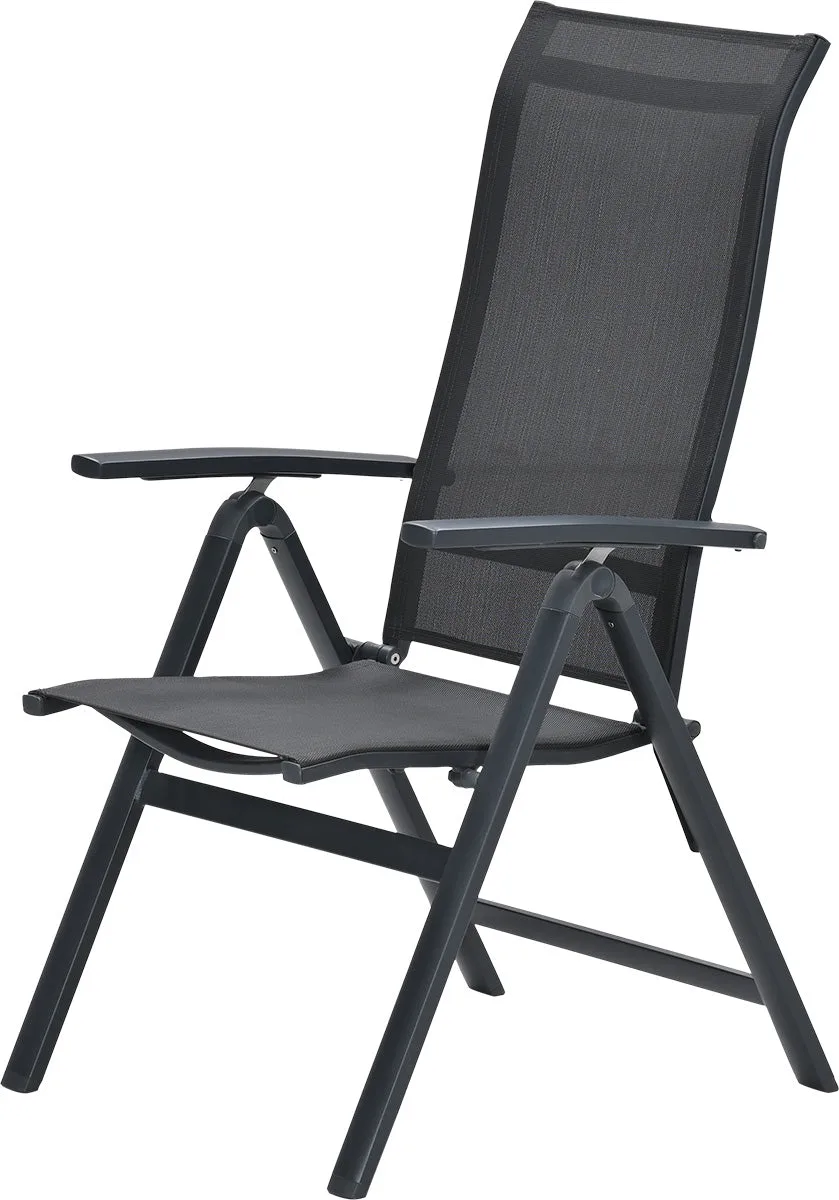
Osaka adjustable garden chair carbon black / mid grey
The Limone sun lounger also has an aluminium frame with Textilene, a backrest with 6 positions and the All Weather label in the product information. A sun lounger that's quickly usable again after a summer shower.
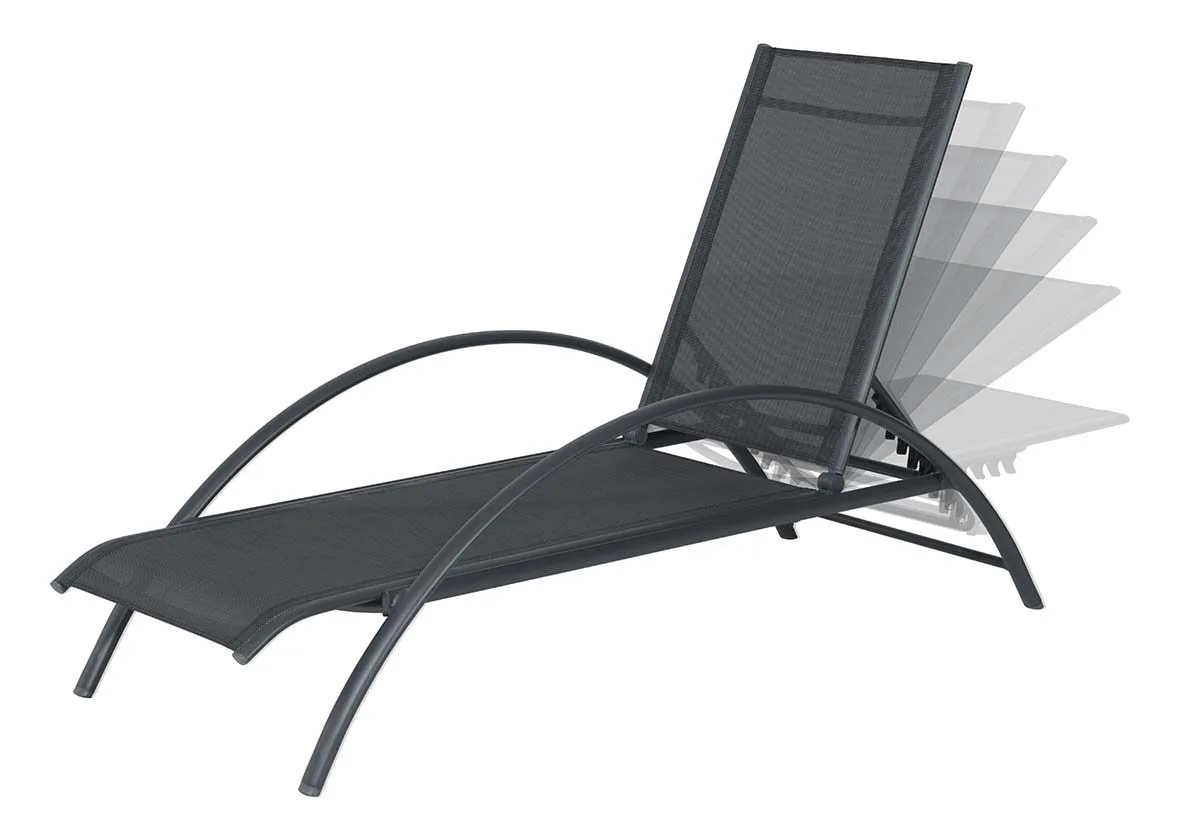
Limone sun lounger carbon black / anthracite
You'll find more models in our Textilene garden chairs and Textilene sun loungers. You can read about cleaning in how to maintain Textilene garden furniture.
Plastic wicker and rope
Plastic wicker is woven plastic strand wrapped around an aluminium frame. It doesn't absorb water itself, so rain simply drips off. However, dirt and leaves can get caught in the weave, and green film can grow there. The Tennessee 3-seater sofa has an aluminium frame with half-round wicker and the All Weather label in the product information.
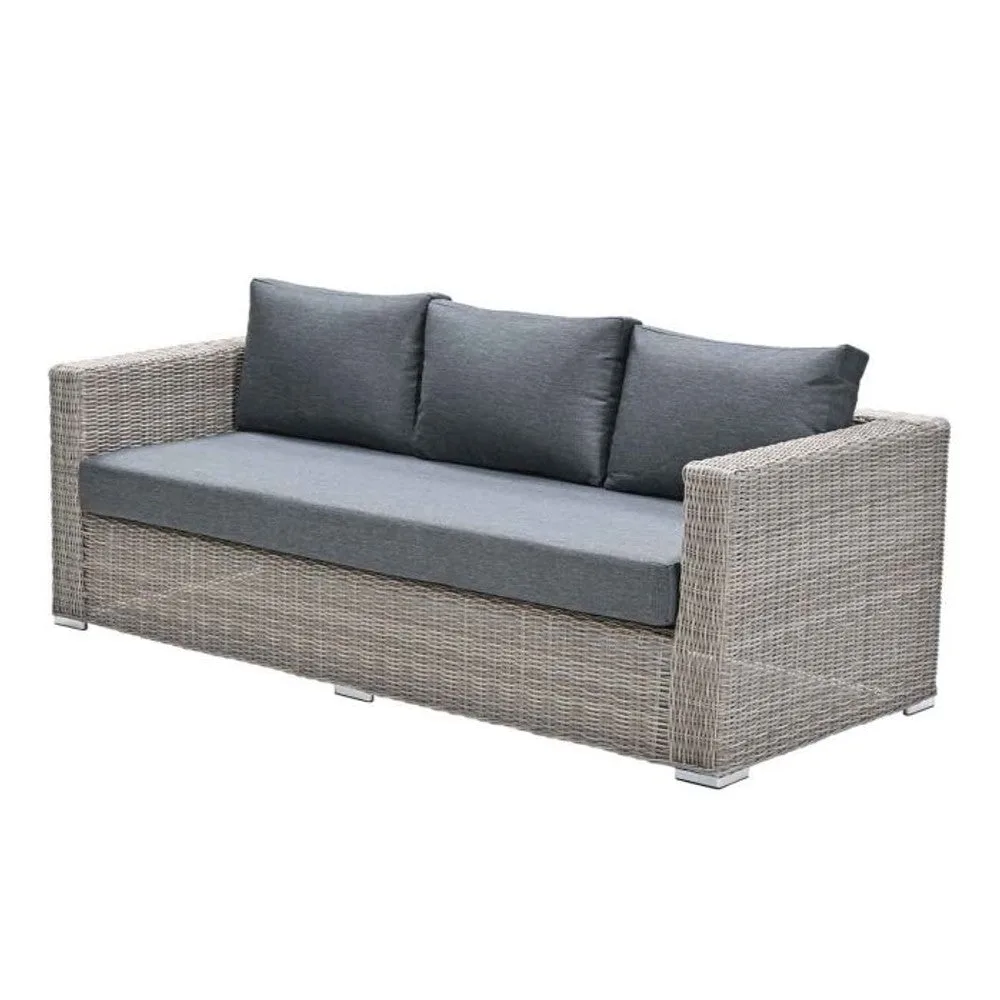
Tennessee 3-seater sofa vintage willow / anthracite
Rope is synthetic cord woven around a frame. It can handle rain, but because it's a textile, moisture and dirt stay trapped in the fibres for longer. Let rope dry thoroughly after a wet spell. For the Teramon with Qualicord rope, the product information states that the water-resistant polyester cushions can withstand light showers, and that they're best stored dry in bad weather.
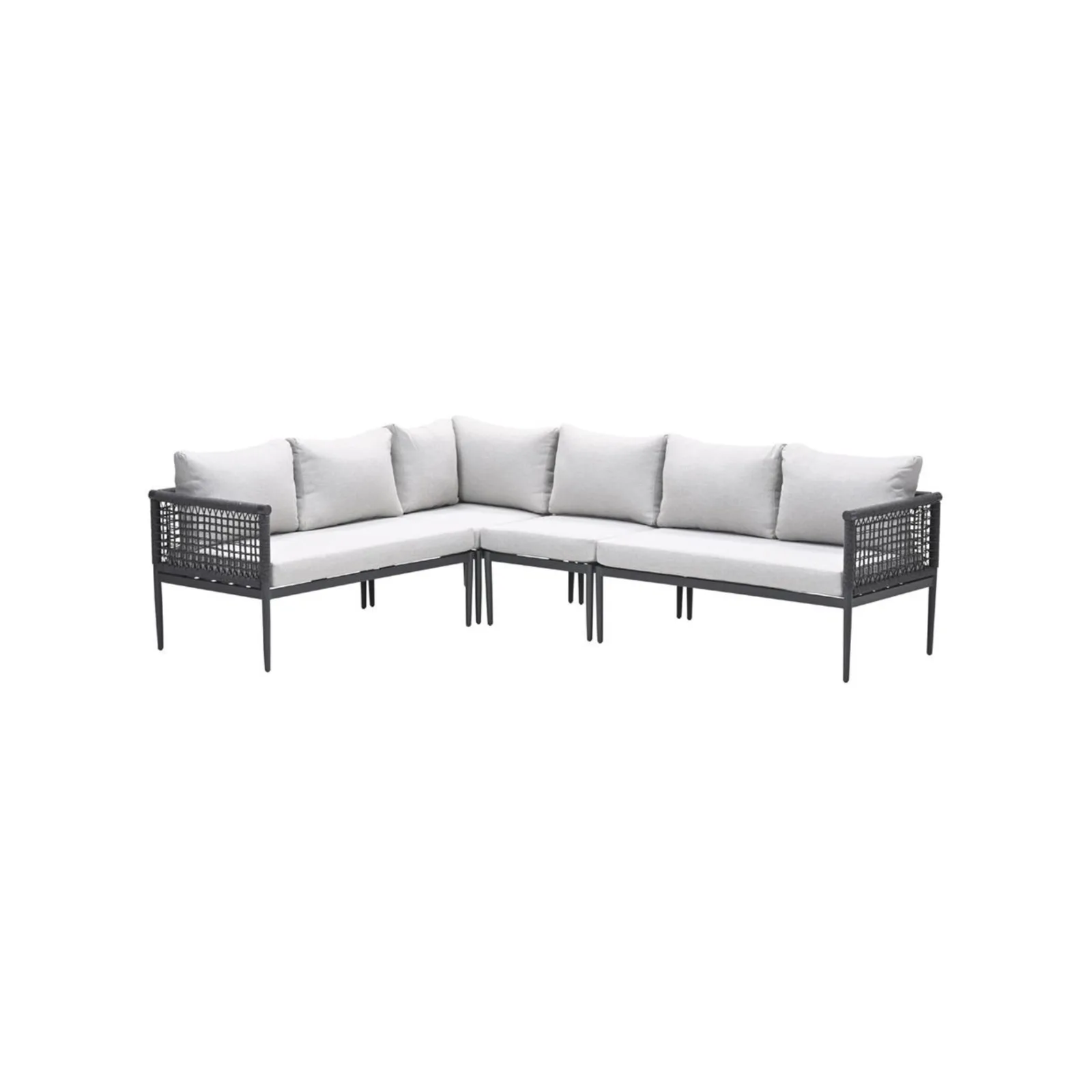
Teramon corner lounge set 4-piece
If you're torn between the two, read rope or wicker. You'll find all furniture with the All Weather label in our all weather garden furniture.
Where does the water collect?
Furniture made from a rain-resistant material can still be a nuisance if the water has nowhere to go. When buying and positioning, look especially at these spots:
- Flat seats: on a solid plastic or wooden seat, a puddle will sit there. A slightly sloping or open seat lets the water run off.
- Hollows and edges: in the corner between seat and backrest, or in a raised rim of a tabletop, water and dirt collect.
- Woven parts and rope: water runs off, but leaves and dust stay behind and hold moisture.
- The underside: feet that stand in a puddle on the paving stay wet for a long time. Adjustable foot caps, such as those on the Lowland table, help the furniture stand level and stable.
- The ground: a terrace that slopes slightly drains rain away. On grass or in a hollow, furniture stands in moisture.
Rain is rarely the problem; standing water is. Choose furniture where the water runs off or through by itself, and place it somewhere it can drain away. Then you'll be dry again soon after a shower.

Tabletops in the rain
A tabletop is the largest flat surface in your garden, so it catches the most rain. The material determines whether that water stays on top, soaks in or leaves marks.
| Tabletop | After rain | Maintenance |
|---|---|---|
| Centostone, ceramic | Doesn't absorb moisture | Wipe with soapy water |
| Aluminium | Doesn't absorb moisture | Soapy water, don't scrub |
| Glass | Water marks visible | Polish dry |
| Wood (teak, acacia) | Absorbs moisture, moves | Oil now and then |
Centostone is a hard tabletop material. According to the product information for the Lowland table, it doesn't absorb moisture and is heat- and scratch-resistant. The Lowland has a Centostone top in a light teak look on a powder-coated aluminium frame, and adjustable foot caps for uneven ground.
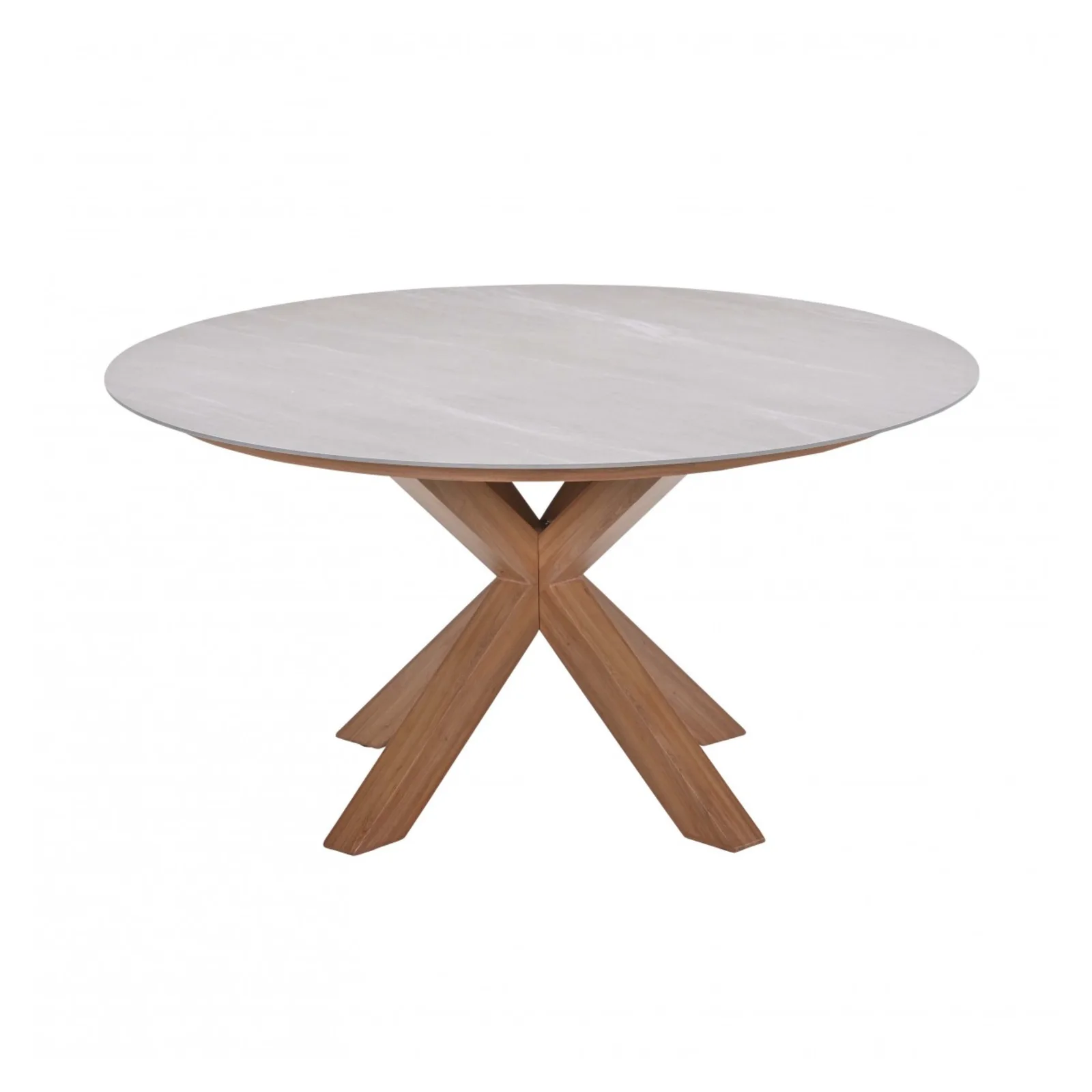
Lowland round garden table Ø150 cm light teak look
If you're looking for a large dining table for outdoors, the Scotland is an example: a Centostone top measuring 230 x 115 cm on an aluminium frame, with All Weather: Yes in the product information. Here too, the maintenance information says the table is best stored dry during prolonged bad weather, preferably with a protective cover.
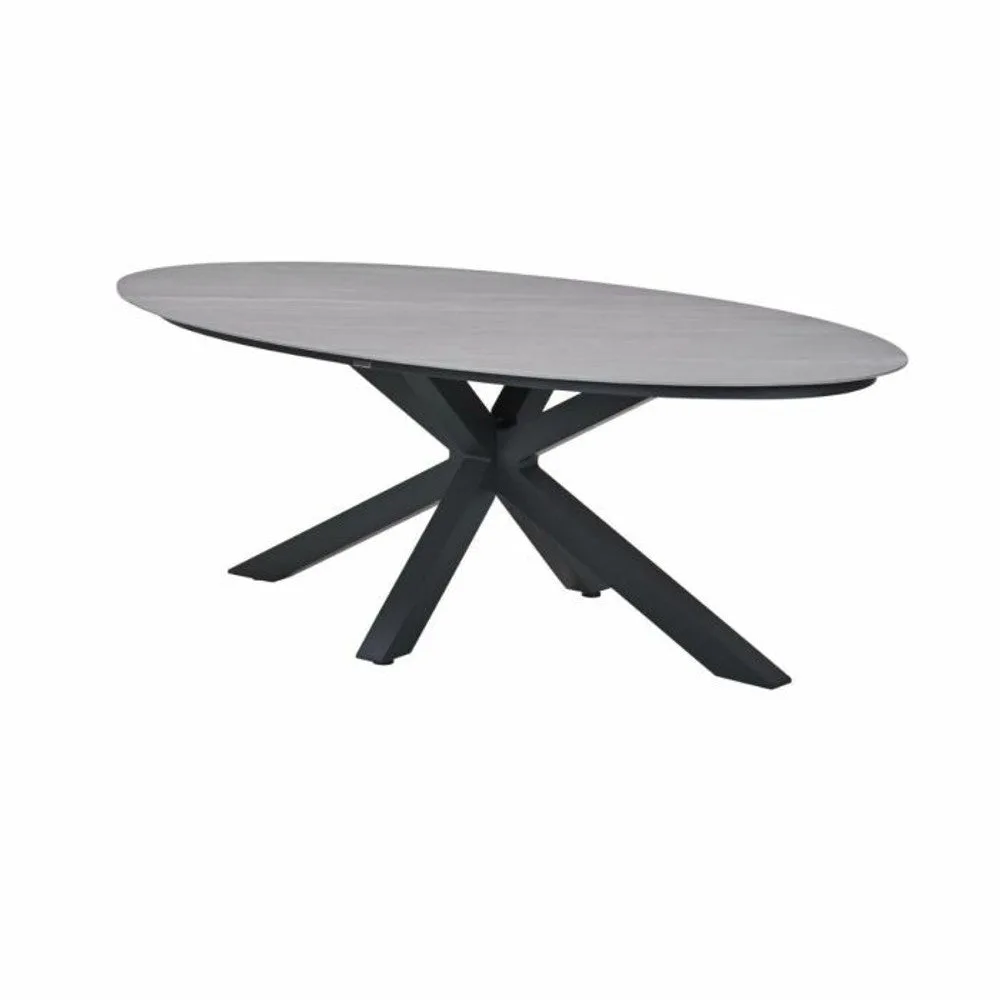
Scotland garden table 230 x 115 cm carbon black
You'll find more tables in our Centostone garden tables. You can read how to maintain such a top in what is a Centostone garden table and how do I maintain it?
Cushions and filling: the weak point
The frame may well cope with rain, but the cushions are almost always the weak spot. A cushion consists of two parts, and both do something with water:
- The cover: most cushion covers are made of polyester or acrylic with a water-resistant coating. A short shower runs off, but during prolonged rain the water soaks in.
- The filling: ordinary foam works like a kitchen sponge. The water soaks into the tiny cells and stays there, so a cushion can feel dry on the outside while the core is still wet. Fibre-fill flakes also hold moisture.
There is also quick dry foam: foam with an open structure that water runs through. It isn't waterproof, but it does dry faster. None of the cushions in our range lists it as filling. You can read more about it in quick dry foam cushion filling.
So when buying, check what the cover and filling are made of. Two examples that show how big the difference can be:
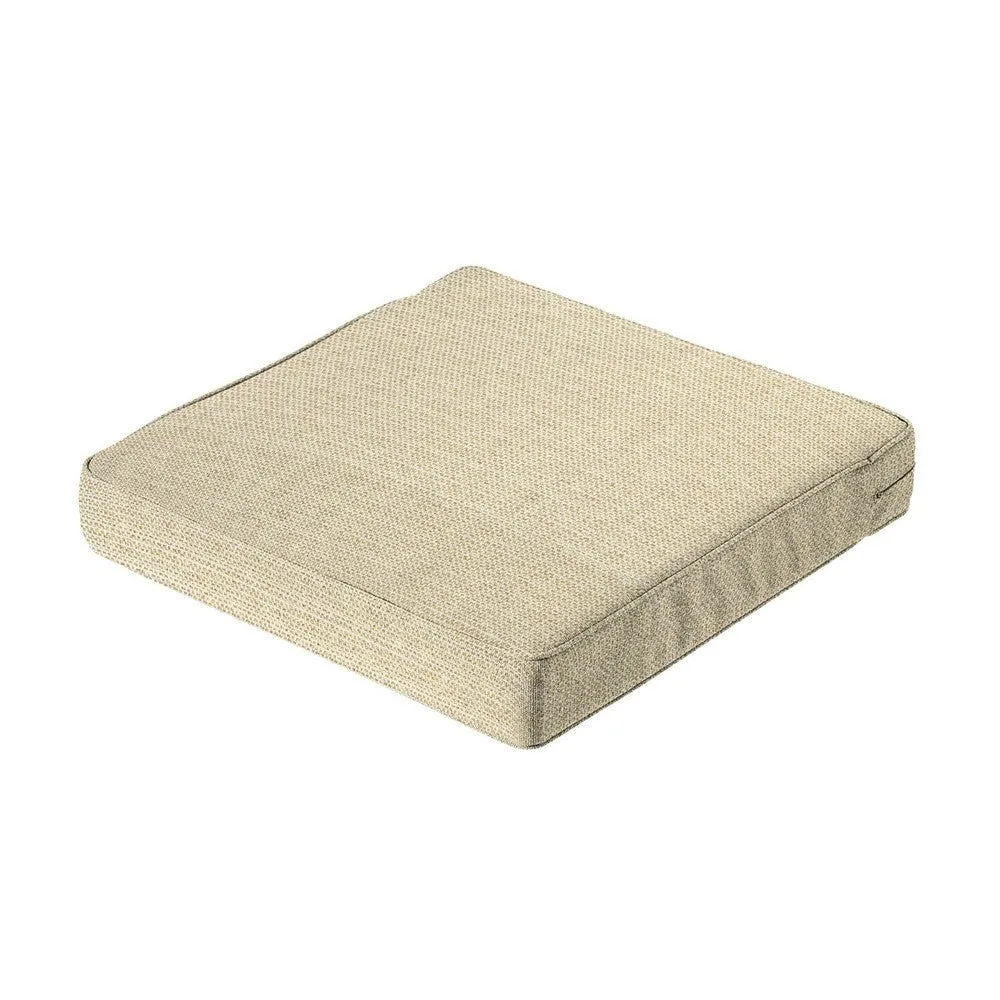
Lounge seat cushion Richmond moss 60x60 cm
The Richmond seat cushion has a water-resistant cover made of 65% acrylic and 35% polyester with a zip, so you can take the cover off to dry or wash it.
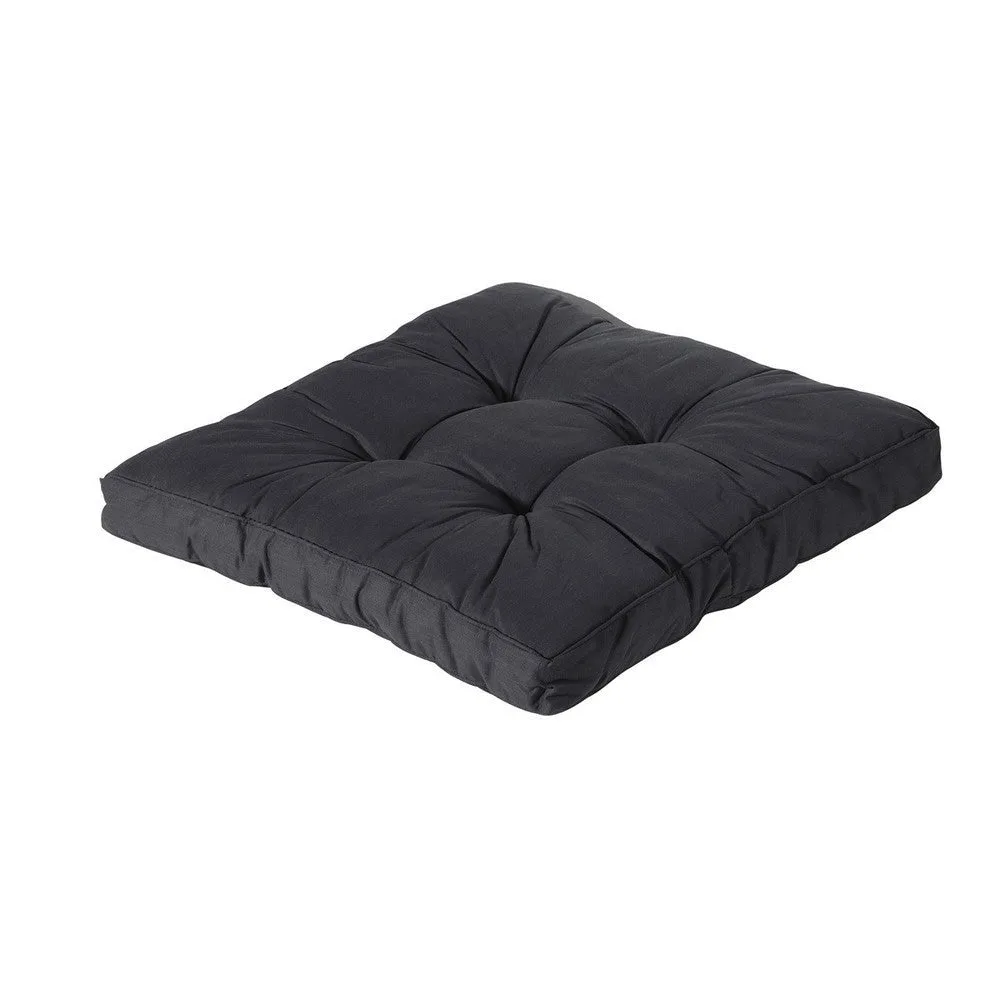
Florance seat cushion Basic black 73x73 cm
The Florance seat cushion is not water-resistant and has no zip. It's a cushion to bring indoors after use. You'll find more choice in our lounge cushions and in the overview of garden cushions. If you want a cover to repel water better, read how to make garden cushions waterproof.
After a rain shower: how to get back to sitting dry quickly
If a shower catches you out anyway, these four steps will help you get back to sitting down quickly and prevent mould.
Stand wet cushions on a short side in a airy spot, so the water can run down and out. Lying flat on a table, the water stays trapped in the cushion. If the cushion has a zip, take the filling out.
Wipe water off seats and tabletops with a cloth or a small squeegee. This prevents water marks on glass and dark surfaces.
Tilt chairs and stools for a moment, so water runs out of corners and edges. Brush leaves out of wicker and rope, as they hold moisture.
A dry cushion placed on a wet seat will draw the moisture back up. Also check that the core of a cushion is dry before you store it away.
You can read more about drying and washing in how to wash lounge set cushions. Is there a parasol outside too? Then read can you leave a parasol out in the rain?
Protecting against prolonged rain
For a one-off shower there's little you need to do. During days of rain, or if you haven't been in the garden for a while, it's worth covering your furniture and storing the cushions away.
Prevent puddles on the cover
A protective cover is never completely waterproof; the product information for the Coverit covers also states this. If a puddle stays on the cover, the water will eventually soak through. A cover support on the table creates a peak, so rainwater runs off.
Choose a breathable cover
Condensation forms under plastic sheeting. A breathable cover, such as the AeroCover, lets moisture escape and, according to the product information, counters mould formation. Also read covering garden furniture.
Only cover when dry
Anything wet under a cover hardly dries there. After a shower, wait until the furniture and cushions are dry, and only then cover them.
Give cushions a fixed place
A cushion box or cushion bag next to the lounge set makes tidying up easy, even when a shower arrives unexpectedly. You'll find more ideas in storing garden cushions.
A few examples from our range. Always check the dimensions of your own furniture.
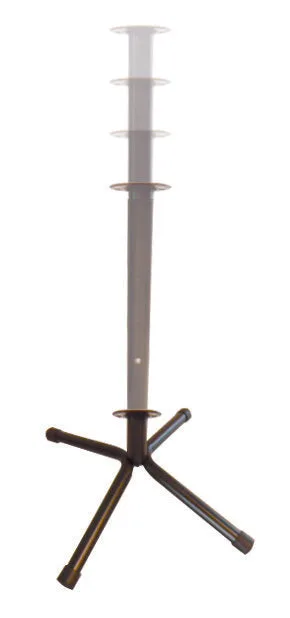
Coverit cover support
View support →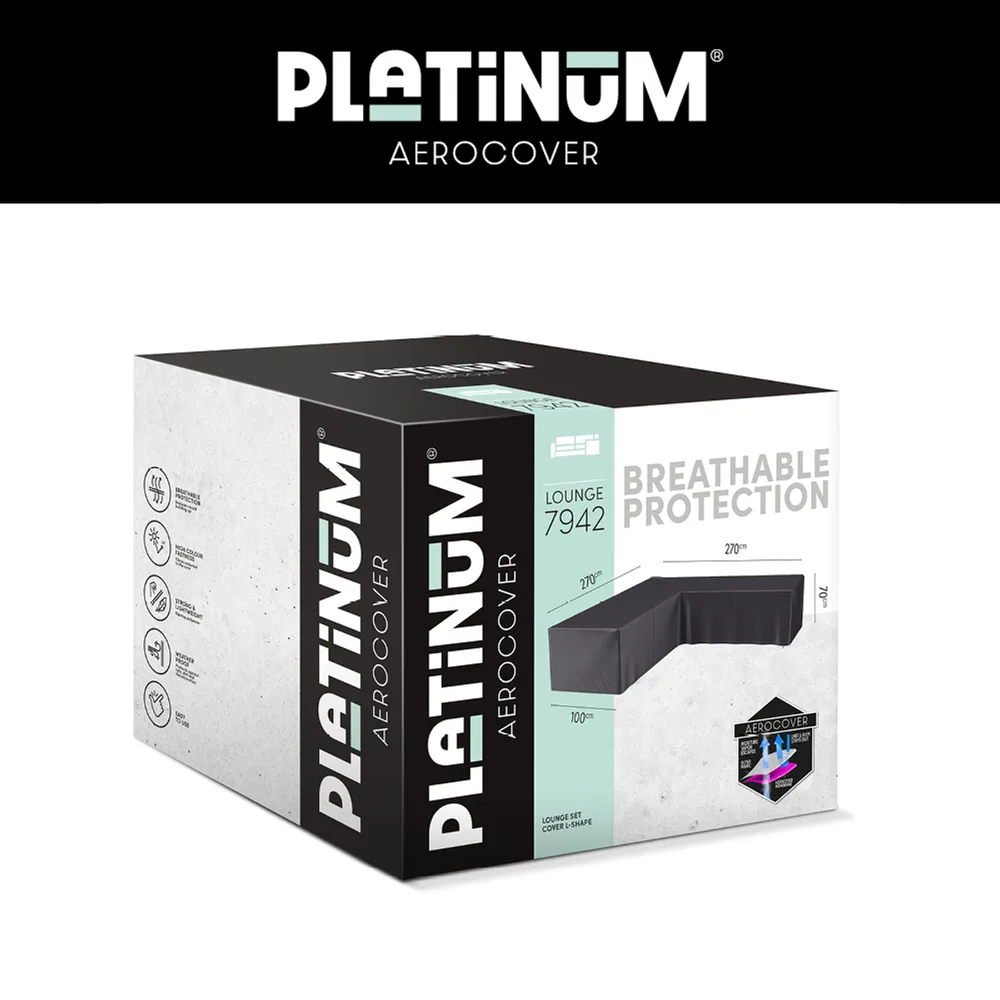
AeroCover corner set 270 x 270
View cover →All protective covers
View range →For the cushions: the Coverit cushion bag measuring 200 x 75 cm has a zip, taped seams and is water-resistant. The Primo cushion box is made of plastic and has a capacity of 680 litres.
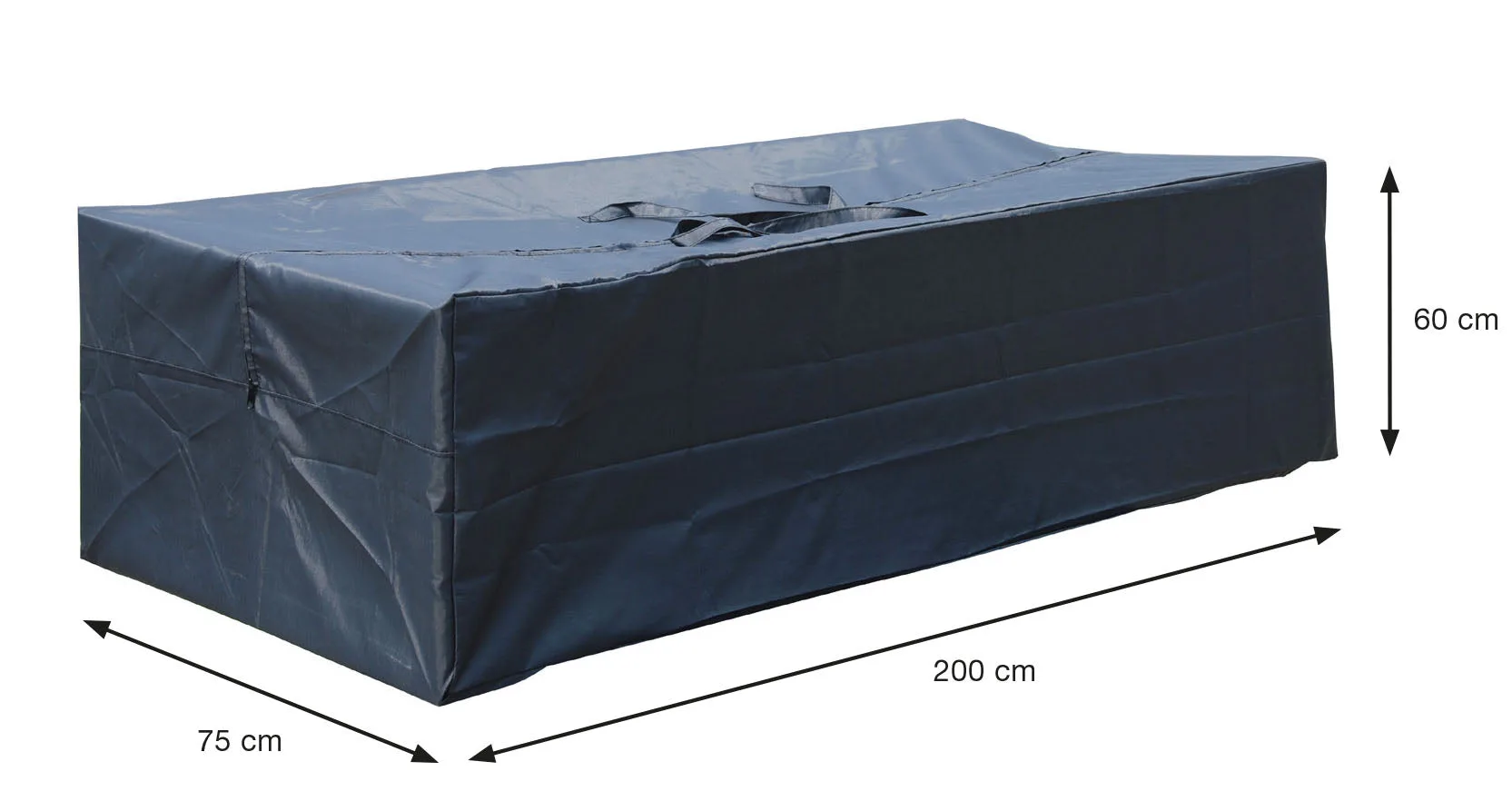
Coverit cushion bag 200 x 75
View bag →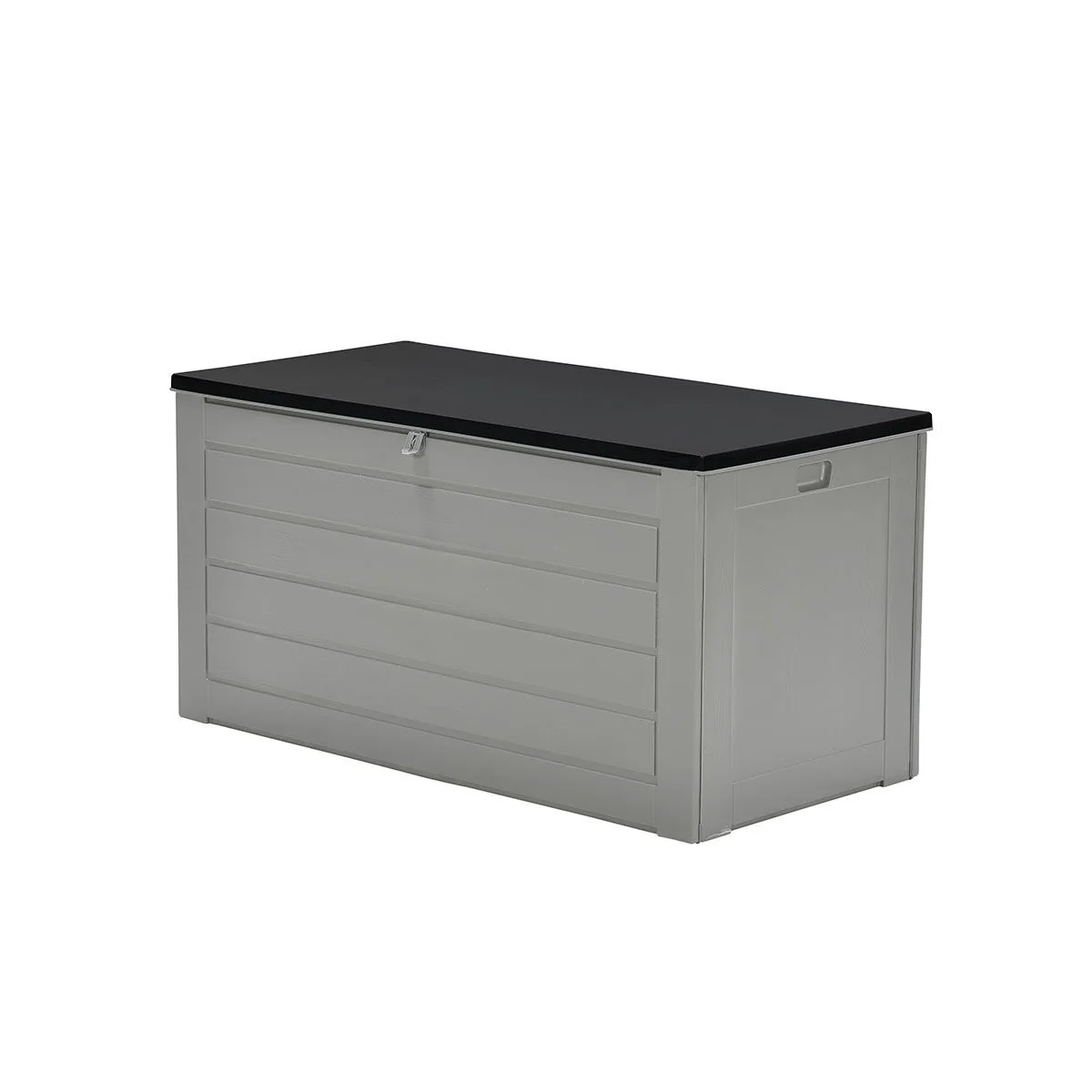
Primo cushion box 680 litres
View box →All storage boxes
View range →If your furniture also stays outside through the winter, read can a lounge set stay outside? and getting garden furniture ready for winter.
Checklist for a rainy garden
How to recognise rain-resistant garden furniture
- Frame: aluminium doesn't rust; steel needs an intact protective coating
- Seat: Textilene lets water through and dries quickly, rope dries more slowly
- Tabletop: Centostone and ceramic don't absorb moisture, wood does
- Cushions: water-resistant is not waterproof, so plan for dry storage
- Shape: no spots where water and leaves can collect
Tick off these points before you order:
- I know whether the seat lets water through, drains it away or absorbs it
- The tabletop doesn't absorb moisture, or I have time for oiling
- For the cushions, it states whether the cover is water-resistant
- The cushion cover has a zip, so the cover and filling can dry separately
- There's a dry spot or a cushion box for the cushions
- I have a breathable protective cover in the right size in mind
- The terrace drains rainwater, so the feet don't stand in a puddle
Still unsure which type of furniture or which size suits your garden? Then use our selection guide. If you want to compare materials for sun and frost as well, take a look at which garden furniture is weather-resistant.
Common mistakes
Reading water-resistant as waterproof
A water-resistant cover will hold off a short shower, not days of rain. Cushions left out will still get soaked through and can go mouldy.
Placing a dry cushion on a wet seat
The cushion will draw the water up from the seat. Let the seat dry first, or wipe it down.
Leaving wet cushions lying flat
Lying flat, the water stays trapped in the cushion. Stand them upright so the water can run out.
Letting water pool on the cover
Even a good protective cover will eventually let standing water through. Use a cover support or tension the cover so the water runs off.
Covering wet furniture
Under a cover, moisture barely dries out. This leads to mould and stains. Only cover furniture that is dry.
Leaving leaves lying around
Leaves in woven parts, rope and corners hold moisture and give algae a chance. Brush them away after a wet spell.
Frequently asked questions
Which garden furniture is best able to withstand rain?
Furniture with an aluminium frame and a seat that lets water through or doesn't absorb it. Textileen lets rain pass through and dries quickly after a shower, while plastic wicker and plastic furniture simply need wiping down with a cloth. For tables, a top that doesn't absorb moisture works best, such as Centostone. Cushions are the weak point: during prolonged rain, they should be stored dry.
What is the difference between water-repellent and waterproof?
A water-repellent fabric has a coating that keeps droplets beading up and rolling off. This holds back a brief shower, but in prolonged rain water still soaks in, particularly through seams and zips. Waterproof means no water gets through at all. Most garden cushions and protective covers are water-repellent, not waterproof.
Can garden cushions be left out in the rain?
A water-repellent cover can handle a brief shower, but in prolonged rain water soaks into the filling. Ordinary foam holds that moisture for a long time and can go mouldy. When rain is forecast, bring cushions indoors or store them in a cushion box or cushion bag. The product information for the Teramon, for example, also advises storing cushions dry in bad weather.
Which tabletop best withstands rain?
A top that doesn't absorb moisture, such as Centostone or ceramic. Rain stays on the surface as droplets, which you wipe away or let dry. Aluminium and plastic also cope well with rain. A wooden top absorbs moisture, which makes it less suitable for wet weather. It can stay outdoors, but needs oiling now and then and dries more slowly.
How do you dry garden furniture as quickly as possible after a rain shower?
Stand cushions upright in an airy spot so the water can run off downwards. Wipe puddles from seats and tabletops with a cloth or squeegee. Tilt loose chairs briefly so water runs out of corners and edges, and only put cushions back once the seat is dry.
Does a protective cover help against rain?
Yes, but a cover is never completely waterproof. The product information for the Coverit covers states this too. Make sure water can't pool on the cover, for example by using a cover support that creates a peak, and choose a breathable cover so condensation can escape.