
As soon as the first rays of sunshine appear, we head outdoors in large numbers. On the terrace, in the garden or on the balcony we want to relax and enjoy the lovely weather. However, prolonged exposure to the sun is not without risks: UV radiation can be harmful to the skin, and nobody likes to sit sweating in the full sun. A parasol offers the ideal solution. It provides shade, cooling and protection against sunburn.
Yet buying a parasol is not as straightforward as it seems. There are countless models, sizes, colours and features. What do you need to pay attention to before making a choice? In this blog we provide a comprehensive answer to that question, so you can choose the perfect parasol for your outdoor space.
A standing parasol or cantilever parasol?
One of the most important choices you need to make when buying a parasol is the type. The two most common variants are the standing parasol (with centre pole) and the cantilever parasol (freestanding).
Standing parasol (with centre pole)
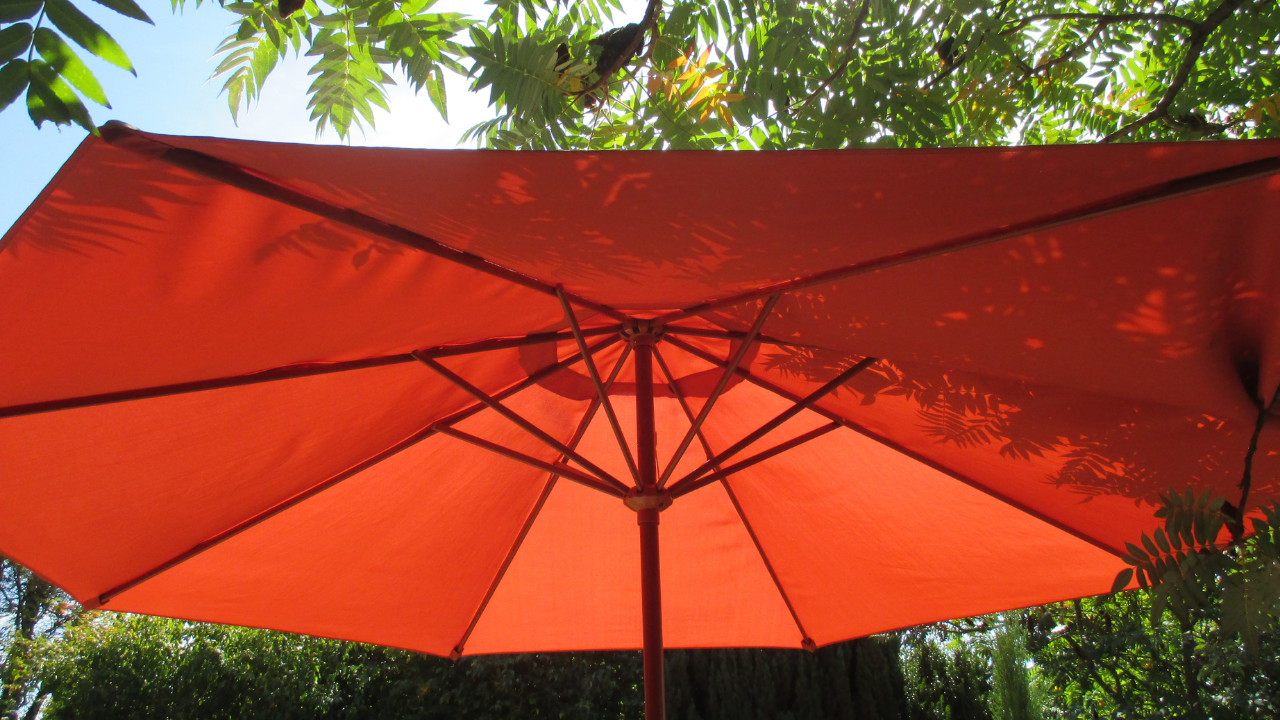
The standing parasol is the classic model that you often see in combination with a garden table. The pole is in the middle and is usually placed in a hole in the table or in a parasol base . This type is very suitable for smaller gardens, terraces and balconies, and has the advantage of being simple and affordable.
Advantages:
- Compact and easy to use
- Competitively priced
- Suitable for tables with a parasol hole
- Relatively easy to move
Disadvantages:
- Less flexible in shade direction
- The centre pole can get in the way when using the table
- Limited rotation or tilt capability
Cantilever parasol (freestanding)
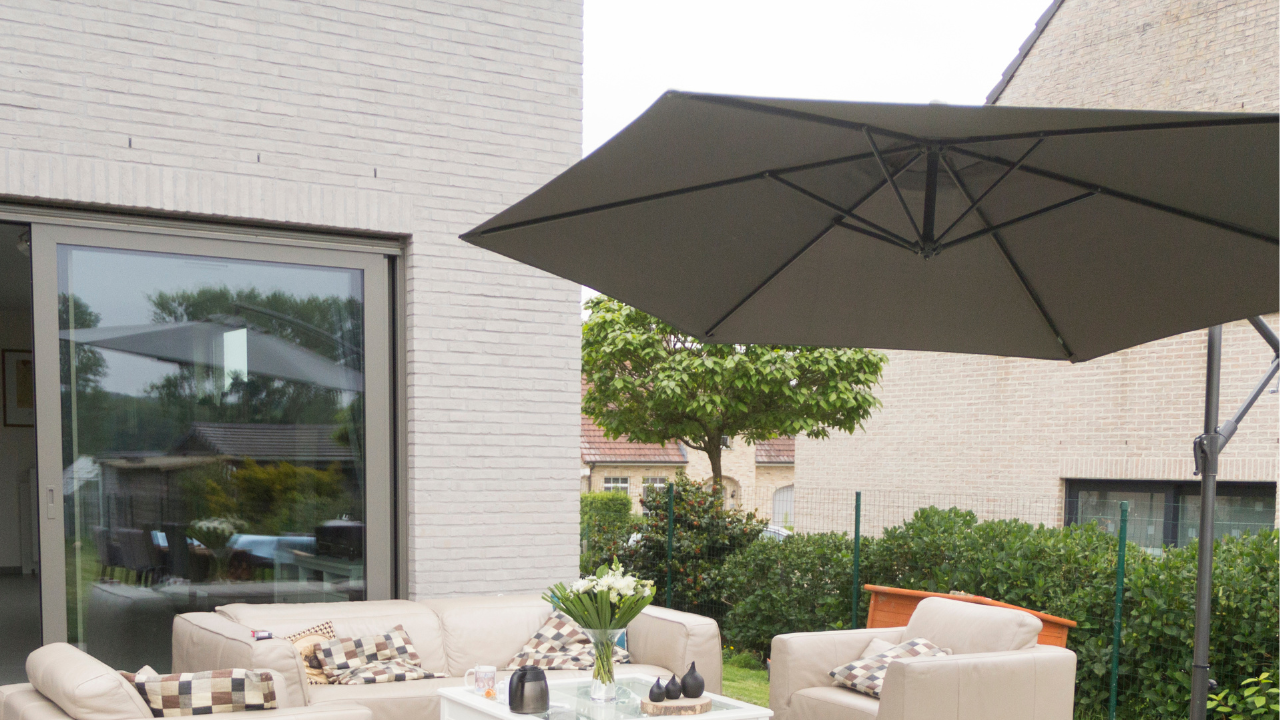
With a cantilever parasol, the fabric hangs from an arm that is mounted to the side. This gives you complete free space underneath the parasol – ideal if you don't want obstacles like a centre pole. Cantilever parasols are often equipped with tilt and rotation functions, so you can position the shade exactly where you want it.
Advantages:
- Free space underneath the parasol
- Suitable for lounge sets and dining tables without a parasol hole
- Often 360-degree rotatable and tiltable
- Luxury appearance and multipurpose use
Disadvantages:
- More expensive to purchase than standing parasols
- Requires a heavier and sturdier base
- Takes up more space
- Less easy to move
Our tip: Do you have a large garden or a spacious lounge corner? Then a cantilever parasol is an excellent choice. For compact terraces or a dining table with a parasol hole, a standing parasol is often more practical. 👉 Want to know more about the differences? Also read our separate blog: Buying a cantilever parasol: what to watch out for?
The right size: how much shade do you need?
The size of the parasol largely determines how much shade you create. This depends on where you want to use the parasol and how many people you want to provide with shade.
Some guidelines:
- Ø 200-270 cm: Suitable for small balconies or intimate seating areas
- Ø 300 cm: Ideal for a standard garden set or round table with 4 to 6 chairs
- 300x300 cm or larger: For larger lounge sets, dining tables or complete terraces
- Rectangular parasols (e.g. 300x400 cm): Perfect for long tables or narrow terraces
Note: When determining the size, also take into account the position of the sun during the day. A larger parasol provides more flexible shade, especially if it is tiltable or rotatable.
Curious about where you can best place your parasol in your garden? Then read this article!
Which parasol shape fits best?
Parasols come in different shapes, each with their own advantages.
Round
The traditional round parasol is the most popular choice. This shape works perfectly with round tables or a central arrangement. The appearance is classic and welcoming.
Square
A square parasol is ideal for a sleek, modern garden. It works well with square tables or symmetrical seating areas and often makes more efficient use of shade space than a round parasol.
Rectangular
Rectangular parasols are perfect for long tables or narrow spaces such as balconies or urban courtyards. Their shape provides a lot of targeted shade in a single line.
Tip: Do you have a specific table shape or lounge set? Then choose a parasol that matches the layout of your furniture in terms of shape. This way you make optimal use of the space and the whole thing looks stylish.
👉 Still undecided about the type of parasol? Check out our Parasol Selection Guide
Fabric quality and UV protection
The fabric of the parasol is arguably the most important part. It determines not only how well you are protected from the sun, but also how long the parasol stays looking good.
Important properties:
- UV protection: Choose a parasol with a UPF value of 30+ to 50+. The higher the UPF (Ultraviolet Protection Factor), the better you are protected from harmful UV radiation.
- Water repellency: A good fabric also withstands light rain. Look for terms such as "water repellent" or "waterproof".
- Colour fastness: Cheaper fabrics often fade after just one season. Preferably choose acrylic or olefin if colour fastness is important to you.
- Fabric thickness: A thicker fabric often provides better protection and is more durable.
Which material do you choose?
The material of the fabric and frame determines how long your parasol lasts and how well it withstands the weather.
Parasol fabric:
- Polyester: Affordable, lightweight, less colour fast.
- Acrylic: More durable, colour fast, resistant to UV and rain.
- Olefin: High colour fastness, water repellent, premium choice.
Frame:
- Aluminium: Lightweight, rust-free, modern.
- Steel: Strong, but can rust without coating.
- Wood: Authentic appearance, requires maintenance.
👉 Want to know more about maintenance? Read:
Ease of operation: manual, crank or luxury features?
The ease of use of a parasol is essential. Especially if you use it daily, you don't want any hassle when opening and closing it.
Common systems:
- Push-up system: Works like a large umbrella. Quick and simple, but less comfortable with larger models.
- Crank mechanism: By turning a handle, you can easily open or close the parasol. Ideal for daily use.
- Tilt mechanism: With this you can tilt the fabric so that you are still in the shade even when the sun is low.
- 360° rotatable: Especially useful on cantilever parasols. You rotate the parasol with the sun without having to move it.
A sturdy parasol base: do not underestimate this
A parasol without a good base is like a tree without roots. Stability is essential, especially in windy conditions.
Which base do you need?
- Light parasols (round Ø 200–270 cm): 20–30 kg is often sufficient
- Standard parasols (round Ø 300 cm): 30–40 kg recommended
- Cantilever parasols or large models: 60–100 kg, preferably with additional weight tiles
Some parasols come with a cross-base where you need to insert loose tiles. These tiles are not always included, so check this at purchase.
Tip: Use rubber tile holders or a parasol base on wheels if you want to move the parasol regularly.
Wind resistance: safety above all else
Although no parasol is 100% wind resistant, there are certainly models that are more resistant to wind than others.
Note:
- Wind vent (ventilation opening) at the top of the parasol lets air through and reduces pressure on the fabric
- Sturdy ribs made of metal or fibreglass provide flexibility and resilience
- Robust mast and connectors reduce the chance of breaking
- Use in wind: In wind force 4 or higher it is advisable to collapse the parasol – even with sturdy models
👉 Also read: How do I protect my parasol from wind and rain?
Extra features that make the difference
Some parasols offer just that extra bit of comfort or luxury.
- Protective cover: Significantly extends the life of your parasol
- Lighting: Integrated LED lighting makes your summer evening extra atmospheric
- Solar function: Charges during the day and lights up in the evening without cables
- Wheels under the base: For easy moving
- Tilt function: Follow the sun by tilting your parasol with one hand movement
Finally: choosing your perfect parasol
Buying a parasol is not something you do on a whim. It is an investment in comfort, safety and appearance. Think carefully about:
- Where you want to place the parasol
- How much shade you need
- How important operation and flexibility are to you
- Whether you opt for price or durability in the long term
Do you want years of enjoyment from your parasol? Then choose quality in fabric, construction and ease of use.
At Boender Outdoor Garden Furniture you will find a wide range of standing parasols, cantilever parasols and matching accessories. Order easily online or visit our showroom for personal advice!
Also read: What is a cantilever parasol? Everything you need to know, Buying a cantilever parasol: What to watch out for and What parasols are there?
Also check out: Buy cantilever parasols
Also check out: Buy centre pole parasols