
In autumn the question suddenly comes up on the terrace: can the planters stay outside, or does everything need to go indoors? The answer depends on three things: the material of the planter, how the water can drain out and whether the plant itself can handle frost. In this guide you'll read what frost-resistant means in the product information, which materials come through winter well, what to do with self-watering pots and how to get a planter ready for winter.
Are you getting the rest of the garden ready for winter too? Then also read preparing garden furniture for winter and preparing garden tools for winter. This article is only about pots and planters.
In short: choose a planter that, according to the product information, is frost-resistant and suitable for outdoor use, with a drainage hole. Plastic, fibreclay and concrete usually come through winter well; with terracotta and glazed earthenware you need to be careful. Self-watering pots should be emptied before frost. And the planter doesn't protect the plant: the plant itself must be hardy.
What does frost-resistant mean for a planter?
Frost-resistant means that the manufacturer states the planter itself can handle frost: the material doesn't crack or flake when it freezes. On the page planters and flower pots you'll see it in the specifications as a yes or no, along with whether a planter is intended for indoor use, outdoor use or both.
Two caveats. First, the label tells you something about the planter, not about what's inside it. Wet potting soil that freezes expands and presses against the walls. A planter that can't get rid of water will struggle with that, even if it's frost-resistant. Second, the label says nothing about the plant. A frost-resistant pot with a plant that can't handle frost is still a pot with a dead plant in February.
| Information in the product details | What it means | What you still need to check |
|---|---|---|
| Frost-resistant: yes | According to the manufacturer, the material can handle frost | Drainage hole, location, the plant |
| Indoor and outdoor | You may also use the planter outside | Whether it is also frost-resistant |
| Indoor only | Not intended for outdoor use | Bring it indoors for winter |
| Self-watering: yes | There is a water reservoir built in | Empty the reservoir before frost |
| Drainage hole: no | Water cannot drain out | Make a hole yourself or place a nursery pot inside |
Look for two ticks
For a planter that stays outside all winter, you want to see two things in the specifications: frost-resistant and suitable for outdoor use. If one of the two is missing, it's a planter for summer or for indoors.
Choice test: which planter suits your winter spot?
Answer four questions and see which type of planter suits best the place where it will spend the winter.
Which planter suits your winter spot?
Where will the planter stand in winter?
- In the middle of the terrace or next to the front door
- Indoors on the windowsill or on a covered balcony
- On the balcony railing
- Along the edge of the terrace, as a divider
What is planted in it?
- A shrub, small tree or ornamental grass
- Herbs or plants that need water regularly
- Heather, violas or small winter plants
- A row of grasses or a low hedge
How often do you want to water?
- As little as possible, the rain does most of the work
- Preferably with a reservoir, so it can wait a while
- Now and then, it's only a small planter
- Not often, but the planter must stay moist
What matters most to you?
- A large, sturdy pot that stays put
- Ease of watering
- Lightweight and easy to hang
- A clean line along the terrace
A large pot in fibreclay or plastic suits you. The more soil, the more slowly the roots freeze. Choose a pot with a drainage hole and stand it on feet.
A self-watering pot suits you. Handy in summer, but empty the reservoir as soon as frost arrives, or place the pot in a spot that stays frost-free.
A plastic balcony planter suits you. Lightweight, frost-resistant and with a bracket for the railing. Check the width of your railing.
A long rectangular planter suits you. Choose a spacious planter with enough height, so there is plenty of soil around the roots.
Which planter material is frost-resistant?
The material largely determines how well a planter gets through winter. The rule of thumb: the less water a material absorbs, the lower the risk of frost damage. This table gives an overview; the last column refers to brands you'll come across on the page flower pots.
| Material | In winter | Watch out for | Example |
|---|---|---|---|
| Plastic | Doesn't absorb water; usually frost-resistant | Can become more brittle after years of sun and cold | Elho, Capi Europe, Ecopots |
| Plastic with inner pot | Often frost-resistant; the reservoir needs attention | Empty the reservoir before frost | Lechuza |
| Fibreclay | Lightweight and often frost-resistant according to the manufacturer | The finish can be damaged by knocks | Pottery Pots |
| Concrete | Heavy and sturdy; frost-resistant depending on the finish | Heavy to move | Hanging planters and large pots |
| Terracotta | Porous; absorbs water | Can flake or crack when it freezes | Only if the manufacturer states it is frost-resistant |
| Glazed earthenware | The glaze holds water in, the underside often doesn't | Cracks through hairline fractures or the base | Better to keep it frost-free |
Fibreclay is a mixture of clay and fibres. It looks like stone or clay, but weighs a fair bit less. In the product information for Pottery Pots, the material is called Ficonstone. Plastic planters from brands such as Elho, Capi Europe and Ecopots come in many shapes, including stone, terrazzo or ribbed looks.
A frost-resistant planter is not a winter coat for your plant. It stops the pot from cracking; whether the plant survives winter depends on the plant itself and on how wet the soil stays.
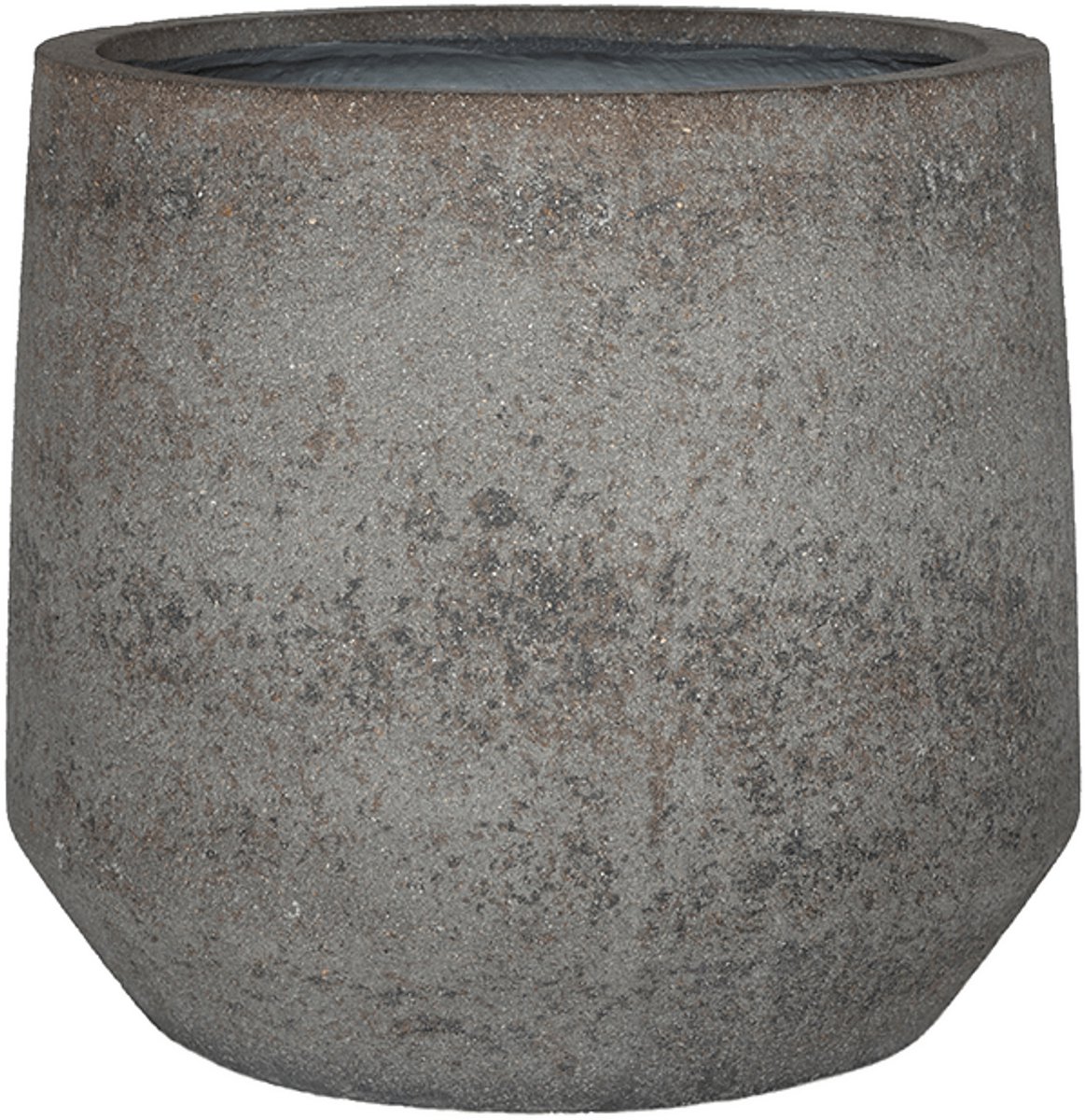
Pottery Pots Harith L: large fibreclay pot
A round pot 54 cm in diameter and 48 cm high, in the colour Diorite Grey. According to the product information, it is frost-resistant, suitable for indoor and outdoor use, with a drainage hole and a capacity of 81 litres. Enough soil for a shrub or a small tree.
Can terracotta stay outside in winter?
Terracotta is fired clay and feels pleasantly dry and rough. That's because it's porous: it absorbs water. In summer that's useful, because the pot breathes and the roots get air. In winter it's a risk. Water in the wall freezes, expands and can make the outside flake or the pot crack. How big that risk is depends on the clay and how hard the pot was fired.
Some terracotta is sold as frost-resistant. In that case, the manufacturer has taken it into account. Is nothing stated, or don't you know anymore? Then put the pot somewhere dry over winter, under a canopy, in the shed or in a cool, frost-free room. A pot on feet and out of the rain at least absorbs less water.
Empty the pot or keep it dry
An empty terracotta pot turned upside down under a canopy usually gets through winter fine. Problems arise with a pot that stands full of wet soil in the rain and then freezes.
Why is a drainage hole so important?
More planters are ruined by water in winter than by cold. A planter without an outlet fills up further with every downpour. The soil turns into a wet mass, the roots get no air and, when it frosts, the whole thing freezes into a block that presses against the walls. That's why the specifications state whether a planter has a drainage hole.
| Situation | Risk in winter | Solution |
|---|---|---|
| Planter with drainage hole standing on the tiles | The hole gets blocked, water stays put | Stand the planter on feet |
| Planter without drainage hole | Water collects, roots rot | Have a hole drilled or place a nursery pot with holes inside |
| Planter with a saucer underneath | The saucer stays full of water | Remove the saucer in winter |
| Planter with a coarse layer at the bottom | Less chance of a waterlogged base | A layer of gravel or clay pebbles under the potting soil |
Pot feet are small blocks under the planter. They lift it a few centimetres, so water can run away and the base doesn't freeze fast to the tiles. A planter without a hole, such as some tall decorative pots, is best used as an outer pot: put a nursery pot with holes inside it and tip out the water now and then in winter. You can read more about moisture in the garden and what it does to materials in rain-resistant garden furniture.
What do you do with a self-watering pot in winter?
A self-watering pot has a reservoir at the bottom. The plant draws the water up through the soil or a special substrate, so you need to water less often. In summer that's ideal. In winter the plant needs little water, and there is a tank of water below the roots that can freeze.
- Before the first frost: empty the reservoir. Many self-watering pots have a removable inner pot, which makes emptying easy.
- During winter: only water when the soil is really dry, and don't refill the reservoir.
- Indoors or outdoors: many self-watering pots are suitable for indoor and outdoor use. A sensitive plant can go indoors with its pot.
Lechuza is a well-known brand of self-watering planters with a removable inner pot. What the manufacturer recommends for winter is in the manual; follow that.
Lechuza Canto Stone 30 high: self-watering with inner pot
A tall, square planter 30 cm wide and 56 cm high, in quartz white. According to the product information, it is self-watering, with a removable inner pot and a water reservoir, frost-resistant and suitable for indoor and outdoor use.

Canto Stone 30 high, self-watering
Which balcony planter can stay outside hanging?
A balcony planter or hanging pot has a harder time in winter than a large pot on the ground. There is little soil in it, and the planter hangs freely in the wind. The roots therefore freeze more quickly. Plastic balcony planters are often frost-resistant; the question is mainly what you put in them. Heather, small conifers and violas can often cope with a winter on the railing; summer bloomers usually can't.
With a balcony planter, also pay attention to the fixing. The product information sometimes states which railing width it suits. If it's loose, it will rattle in a storm, or worse. You'll find more ideas for a balcony that also looks good in winter in balcony styling tips.
Elho Barcelona Allin1 50: balcony planter with bracket
A plastic balcony planter 50 cm long and 19 cm high, in anthracite. According to the product information, it is frost-resistant, for outdoor use, with a drainage hole and brackets for a railing up to 65 mm wide.
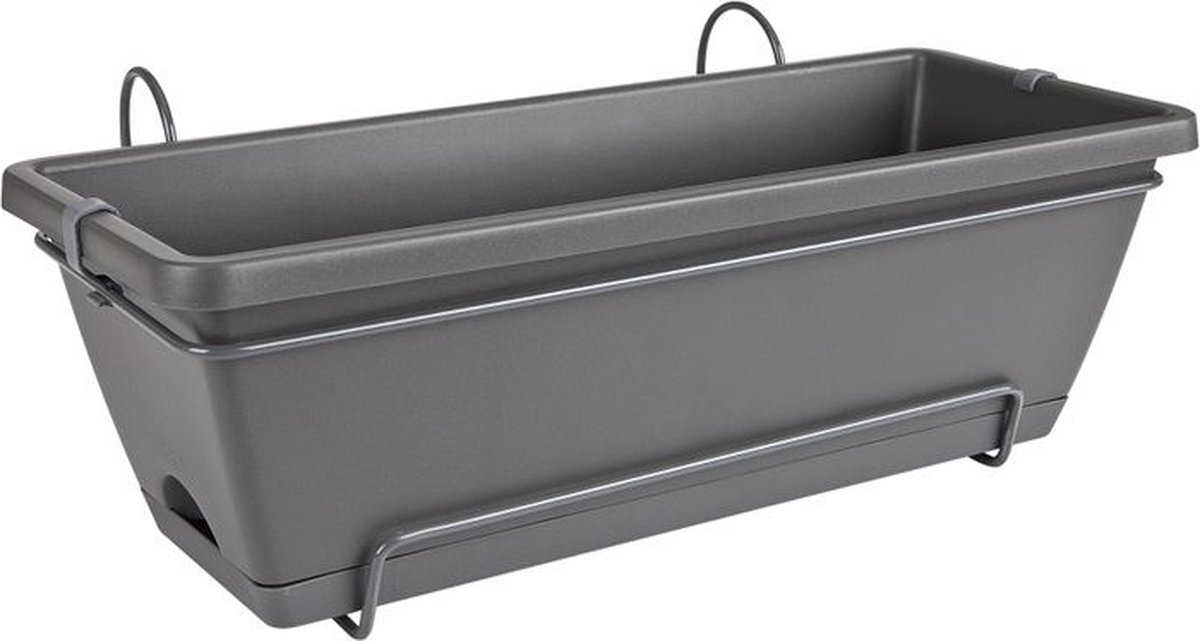
Barcelona Allin1 50 balcony planter
Which plants can stay outside in a pot in winter?
However frost-resistant the pot is, the plant has to cope too. In open ground, roots grow deep and sheltered. In a pot they sit against the wall on every side, and that cools down quickly. A plant that is hardy in a border can therefore struggle in a small pot. So choose plants that are known as hardy, and give them a generous pot.
| Type of plant | In a pot outside | Tip |
|---|---|---|
| Ornamental grasses | Often fine; many species are hardy | Leave the foliage standing until spring |
| Evergreen shrubs (holly, skimmia) | Often fine in a generous pot | Water on frost-free, dry days |
| Heather and small conifers | Often fine, also in balcony planters | Keep them out of the coldest wind |
| Herbs such as rosemary and thyme | Variable; they don't like wet feet | Keep them sheltered and dry |
| Tub plants (olive, citrus, oleander) | Sensitive to hard frost | Keep indoors frost-free or wrap well |
| Summer bloomers | Usually not hardy | Replace with winter plants |
If you're unsure about a specific plant, check the label from the grower or ask at a garden centre. For what to plant and set out in autumn, there are also ideas in a cosy autumn garden.
How do you protect plants in pots from frost?
A few simple steps make a difference. You don't need to wrap every pot; it mainly matters for smaller pots, sensitive plants and days of hard frost.
- Choose the spot: place pots against the wall of the house, where it's a little warmer and the wind has less effect. A spot under an overhang also keeps them out of the worst rain.
- Group pots: pots standing close together protect each other from wind and cold.
- Lift them up: pot feet keep the base dry and clear of the cold tiles.
- Wrap up in hard frost: wrap hessian, dimpled membrane or a fleece blanket around the pot. It's about the root ball; the foliage of evergreens needs light.
- Water now and then: evergreen plants lose moisture in winter too. On a frost-free day, give a little water if the soil is dry.
The bigger, the better
A large pot holds more soil, and soil buffers against cold. The roots in the middle of an 80-litre pot freeze much more slowly than those in a 10-litre pot. If you're planting a shrub for years, choose a size up.
Is a potted plant too big to bring indoors? Then an overwintering tent can help: a frame with plastic film that you place over the plant. What such a tent can and cannot do is explained in the overwintering tent section of growhouse, cold frame or greenhouse.
On the page large pots you'll find planters with plenty of capacity. Do you want to keep the rest of the terrace cosy in the dark months too? Then read lighting your garden in winter: a few lights by the pots make the terrace look lovely from the living room too.
Ecopots Paris 80: long planter for a row of plants
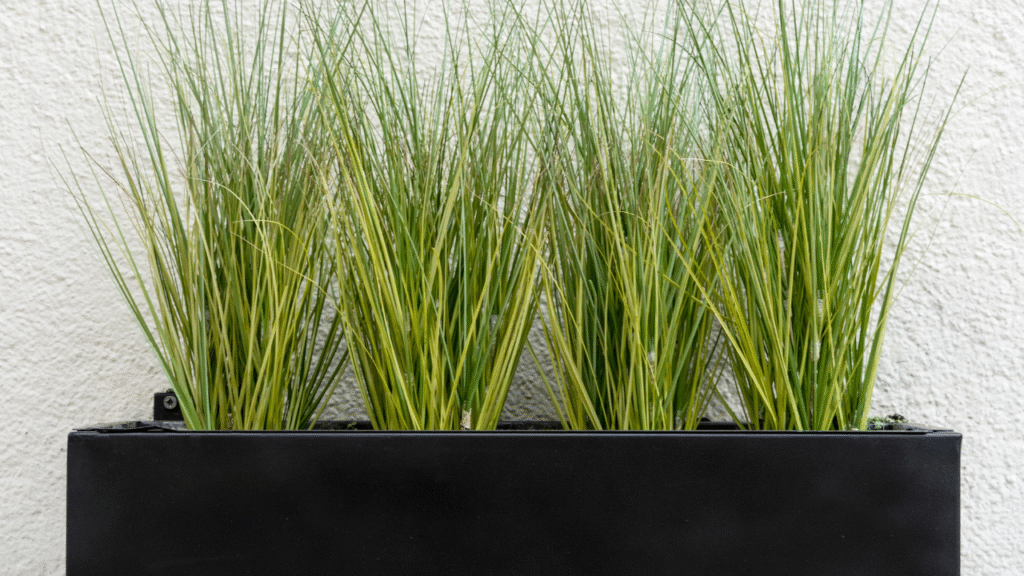
A rectangular planter 80 cm long, 38 cm wide and 41 cm high, in white grey. According to the product information, it is frost-resistant, suitable for indoor and outdoor use, with a drainage hole and a 100-litre capacity. Enough room for a row of ornamental grasses or a low hedge.
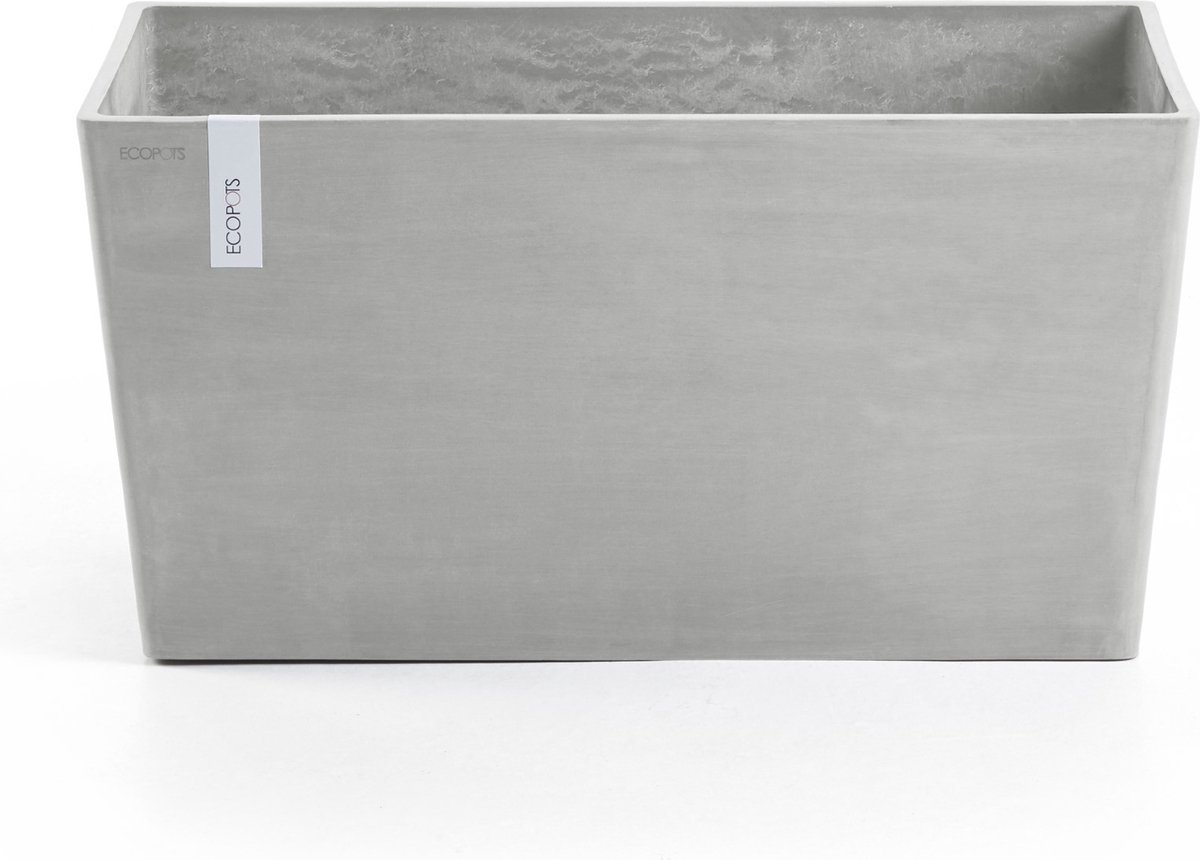
Paris 80 rectangular planter
Capi Europe Terrazzo: sleek planter for outdoors
A rectangular planting trough measuring 64 by 25 cm and 35 cm high, in black with a terrazzo look. According to the product information, it is for outdoor use, frost-resistant, with a drainage hole and a 55-litre capacity.
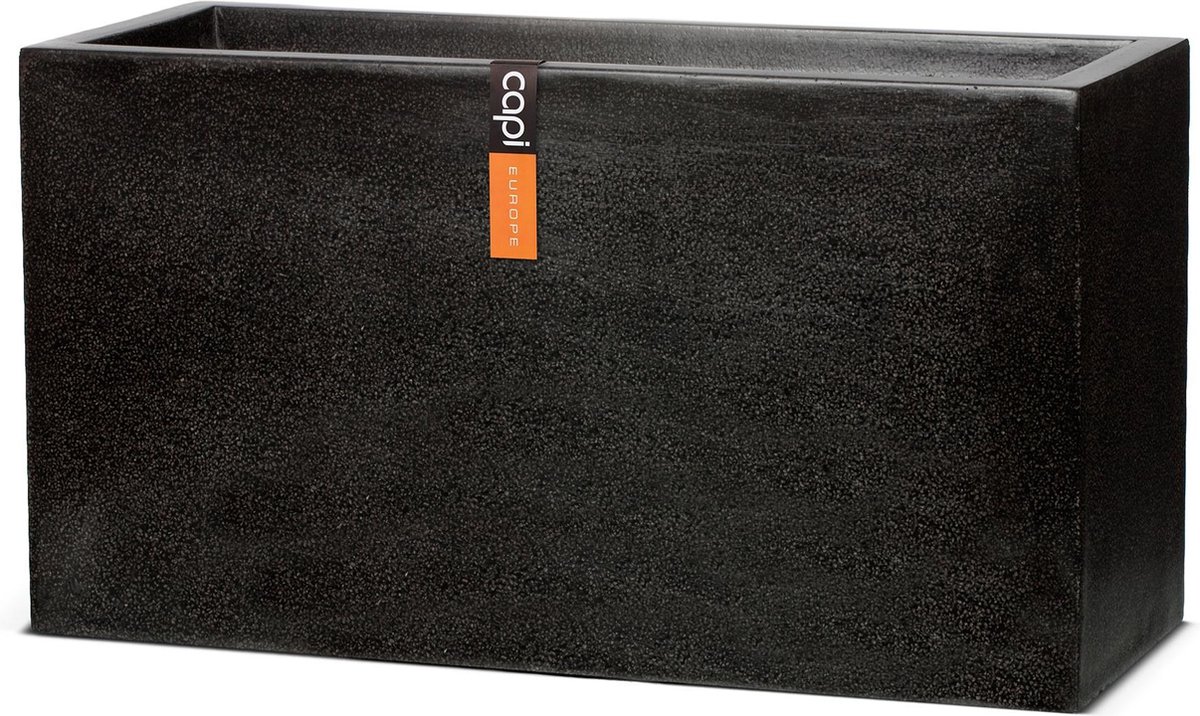
Rectangular Terrazzo planter 64 cm
Capi Europe Groove: rounded pot with ribs
A round, rounded pot 43 cm in diameter and 41 cm high, in warm taupe. According to the product information, it is frost-resistant, suitable for indoor and outdoor use, with a drainage hole and a 47-litre capacity.
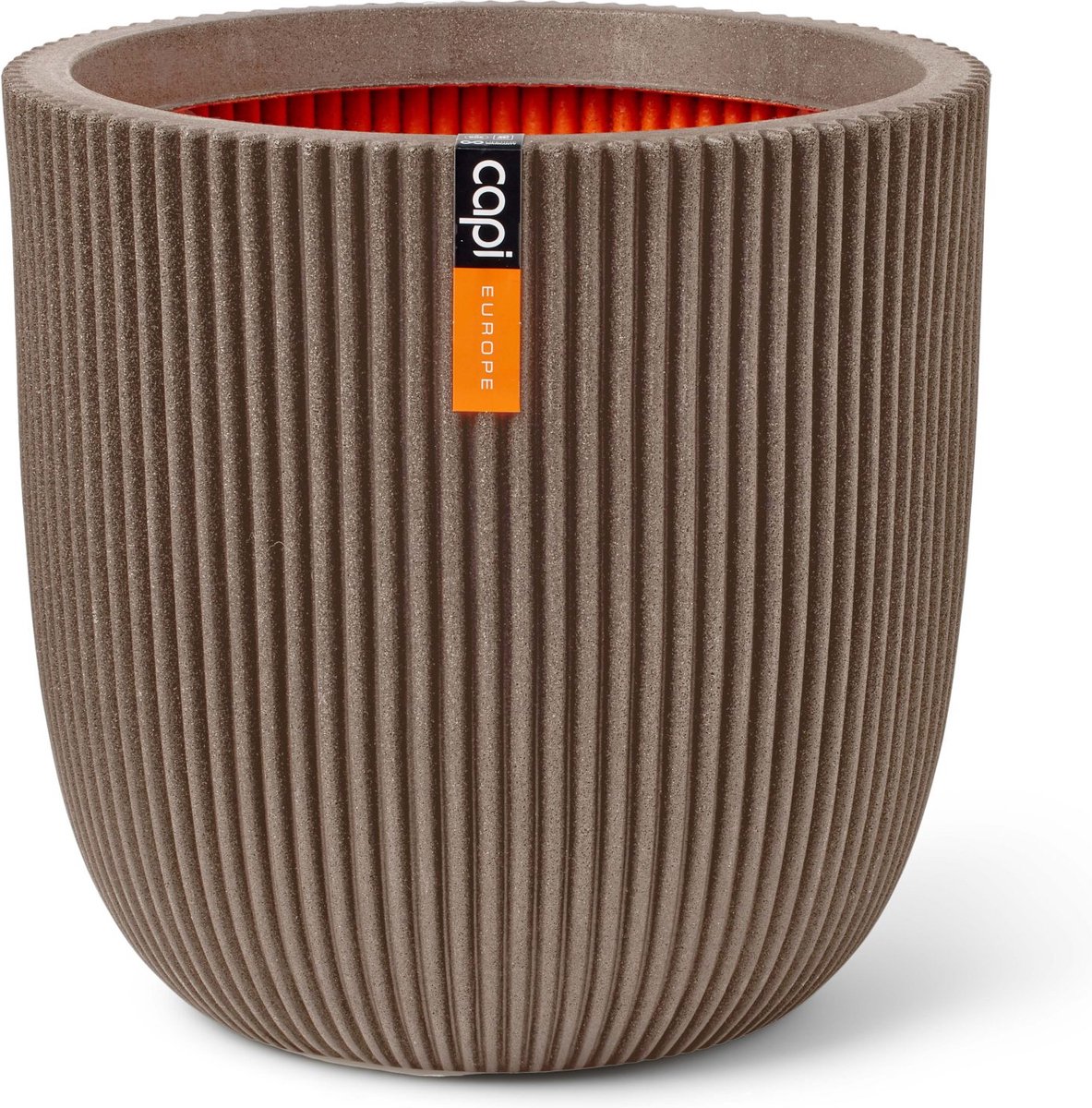
Rounded Groove flower pot 43 cm
Six frost-resistant planters compared
According to the product information, all the planters in this article are frost-resistant and suitable for outdoor use. You can see the current price and shop on the cards; all sizes are also on the page rectangular planters.
| Planter | Type | Material | Capacity | Special feature |
|---|---|---|---|---|
| Pottery Pots Harith L | Large pot | Fibreclay | 81 l | Light for its size |
| Lechuza Canto Stone 30 high | Tall planter | Plastic | 12 l | Self-watering |
| Elho Barcelona Allin1 50 | Balcony planter | Plastic | 9.5 l | With bracket |
| Ecopots Paris 80 | Rectangular | Plastic | 100 l | Long planter |
| Capi Europe Terrazzo | Rectangular | Plastic | 55 l | Terrazzo look |
| Capi Europe Groove | Rounded pot | Plastic | 47 l | Ribbed |
Also worth a look:
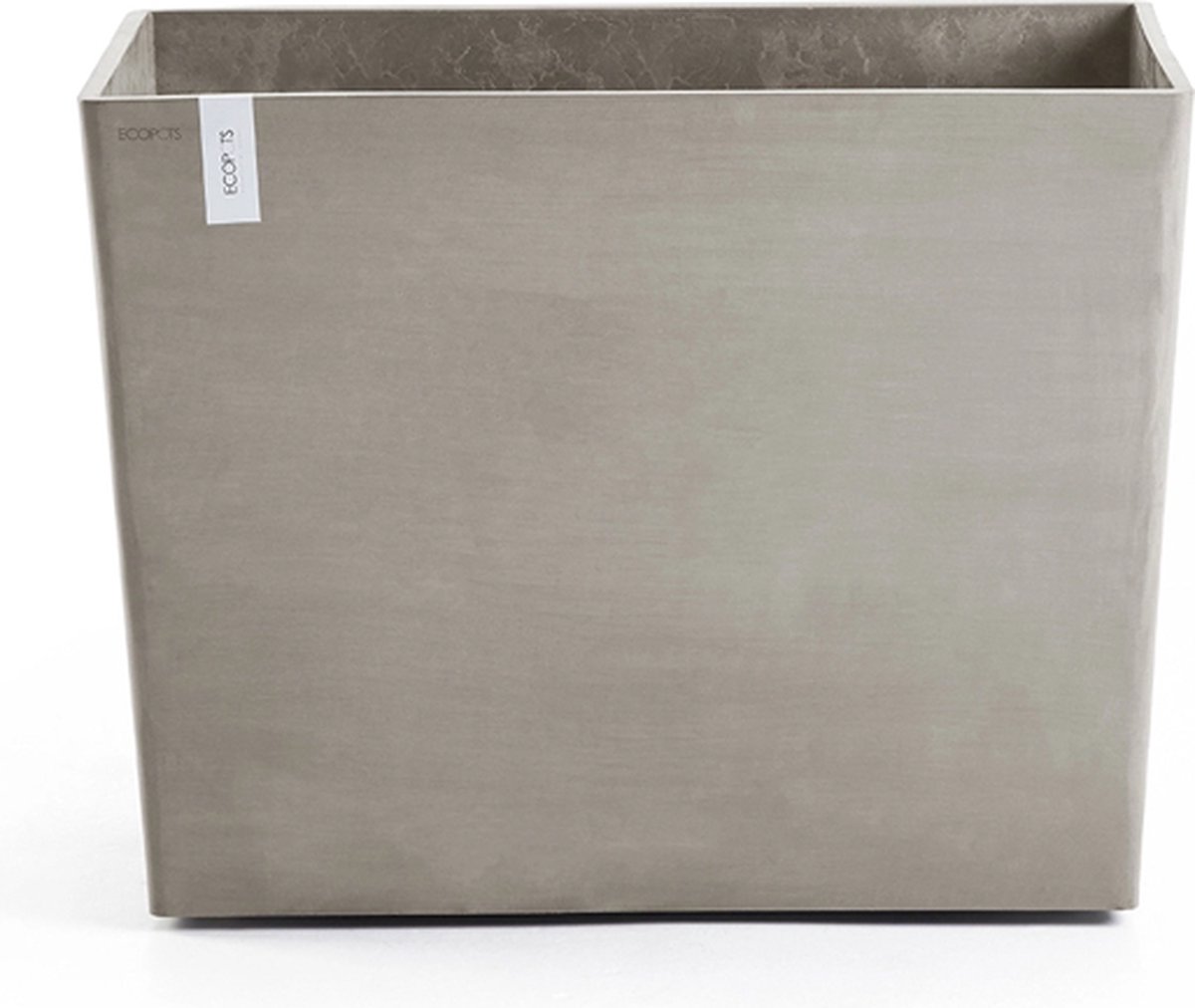
Ecopots Paris on wheels: 220 litres
View planter →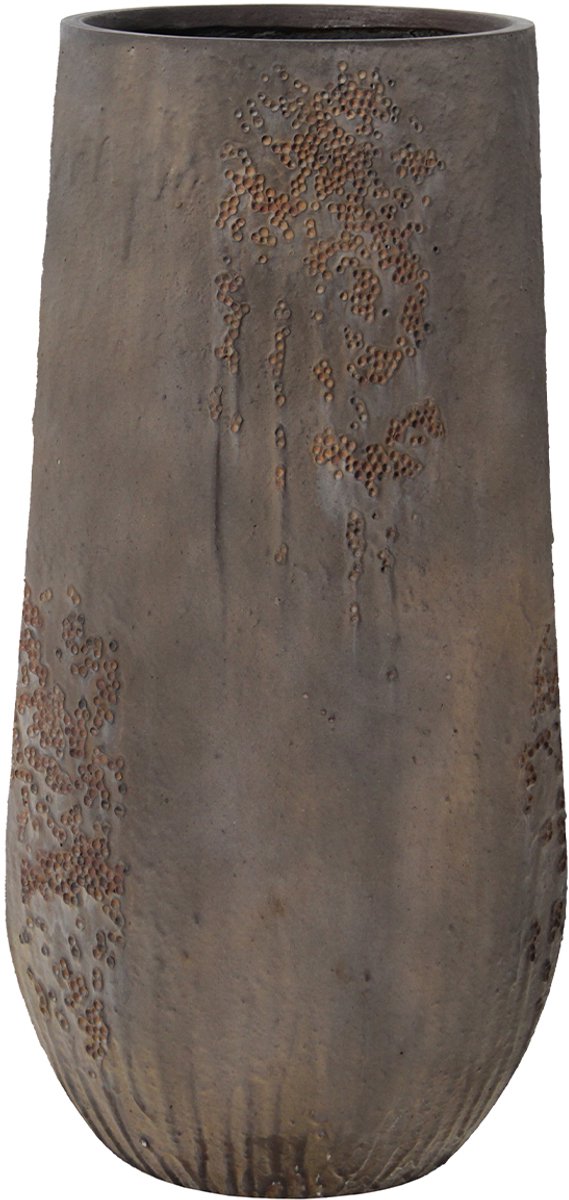
Pottery Pots Nax: tall pot
View pot →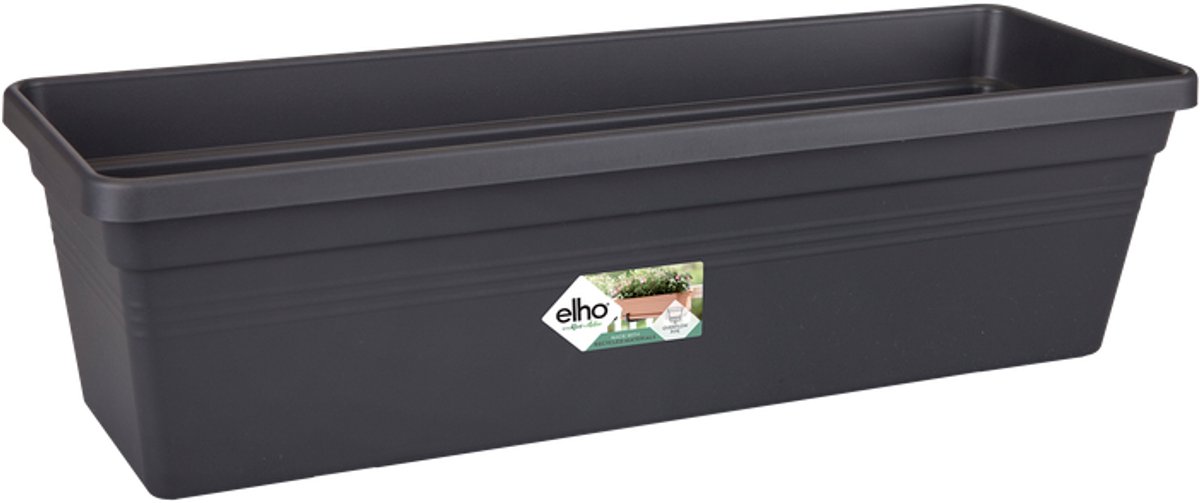
Elho Green Basics: balcony planter
View planter →Do check the specifications of the tall Nax pot: according to the product information, it has no drainage hole. Outdoors, it's best used as an outer pot, with a nursery pot inside. A planter on wheels, such as the Ecopots Paris, is handy if you want to roll it to a sheltered spot in winter.
How to choose quickly
- Outside all winter: frost-resistant and for outdoor use in the specifications
- Always a drainage hole, or a nursery pot inside
- Large plant: plenty of capacity, so the roots freeze more slowly
- Self-watering: reservoir empty before frost
- Terracotta with no mention: overwinter dry and sheltered
Common mistakes in winter
Do you recognise any of these pitfalls? Tick off each mistake you already avoid.
Leaving the saucer under the pot
In winter a saucer stays full of water for weeks. The soil stays wet and the base of the pot freezes. Remove saucers in autumn.
Leaving the reservoir full
A full reservoir in a self-watering pot can freeze, and the roots end up in cold water. Empty it before the first frost.
Choosing by looks, not by label
A pretty pot for indoors isn't always suitable for outdoors. Check frost-resistant and indoor or outdoor in the specifications.
Leaving a sensitive plant in a small pot
An olive or citrus in a small pot on an open terrace often doesn't survive a hard frost. Keep it frost-free or wrap it well.
Giving no water at all
Evergreens lose moisture in winter too. After a dry, freezing spell, a plant can dry out. Give a little water on a frost-free day.
Checklist: planters ready for winter
Tick off what you've done; your browser will remember it for next time.
- I know for each planter whether it is frost-resistant and suitable for outdoor use
- Every planter outside has a drainage hole or a nursery pot inside
- Saucers have been removed or turned over
- The planters are standing on pot feet
- Reservoirs of self-watering pots are empty
- Terracotta without a frost label is standing dry and sheltered
- Sensitive plants are indoors or wrapped up
- The pots are standing close together, against the wall of the house
Compare all planters and flower pots from Elho, Lechuza, Capi Europe, Pottery Pots and Ecopots. In spring the planters will be up for attention again; for that, read getting the garden ready for spring. For a garden that needs little work all year round, there are tips in a low-maintenance garden, and for the entrance, see front garden ideas.
Frequently asked questions
Which planters can stay outside all winter?
Planters that the manufacturer describes as frost-proof and suitable for outdoor use, such as most plastic planters, fibreclay and well-finished concrete. Even then, excess water must be able to drain away through a drainage hole. A planter without drainage that stands full of wet compost can still suffer damage in severe frost, and so can the plant in it.
Are terracotta pots frost-proof?
Not all of them. Terracotta is porous and absorbs water. When that water freezes, it expands and the pot can flake or crack. Some terracotta is sold as frost-proof, so check what the manufacturer says. If you're unsure, store the pot dry under a canopy or indoors in a cool room.
Should I empty the water reservoir of a self-watering pot in winter?
Yes, if the pot stands outside. Water in a reservoir can freeze and expand, and waterlogged roots in cold soil are bad for most plants. Empty the reservoir before the first frost and in winter only water when the compost is really dry. Otherwise, follow the manufacturer's instructions.
How do you protect plants in a pot from frost?
Choose a generously sized pot, make sure water can drain away, stand the pot on pot feet and move it to a sheltered spot against a wall. In severe frost you can wrap the pot in hessian, bubble wrap or horticultural fleece, so the root ball is less likely to freeze. The foliage of evergreen plants can remain uncovered so it still gets light.
Which plants can stay outside in a pot over winter?
Plants known as hardy, such as many ornamental grasses, shrubs like holly and skimmia, heather and most conifers. Roots in a pot are colder than roots in the open ground. So choose a plant that tolerates a little more cold than you expect in your region, and a pot that is large enough.