
Stick parasols, cantilever parasols, balcony parasols, commercial parasols: if you're looking for a parasol, it's easy to lose sight of the wood for the trees. Yet there are only a handful of real types, and each one suits a different spot in your garden.
This overview shows all the parasol types at a glance. For each type, you can read how it works, when to choose it, and see an example from the comparison. That way you'll quickly know which type suits your terrace, garden or balcony.
In short: a stick parasol is lightweight and fits through the hole in your table. A cantilever parasol keeps the space under the canopy clear and is ideal above a lounge set. For a balcony, choose a narrow rectangular parasol, and for a large terrace, a large or commercial parasol.
All parasols at a glance
First, the quick overview. Bear in mind that the groups overlap: a cantilever parasol can also be rectangular, large and tilting.
| Type | Ideal for | Note |
|---|---|---|
| Stick parasol | Dining table with a parasol hole | Pole sits in the middle |
| Cantilever parasol | Lounge set, table without a hole | Heavy base required |
| Balcony parasol | Balcony, narrow space | Small shade area |
| Rectangular | Long table, narrow terrace | Aim it over the table |
| Large / commercial | Large terrace, many guests | Heavy, needs space |
| Tilting | Sitting in low sun | Not every model tilts |
| With base | Ready to use straight away | Base only fits that parasol |

Stick parasols
View all →
Cantilever parasols
View all →
Rectangular parasols
View all →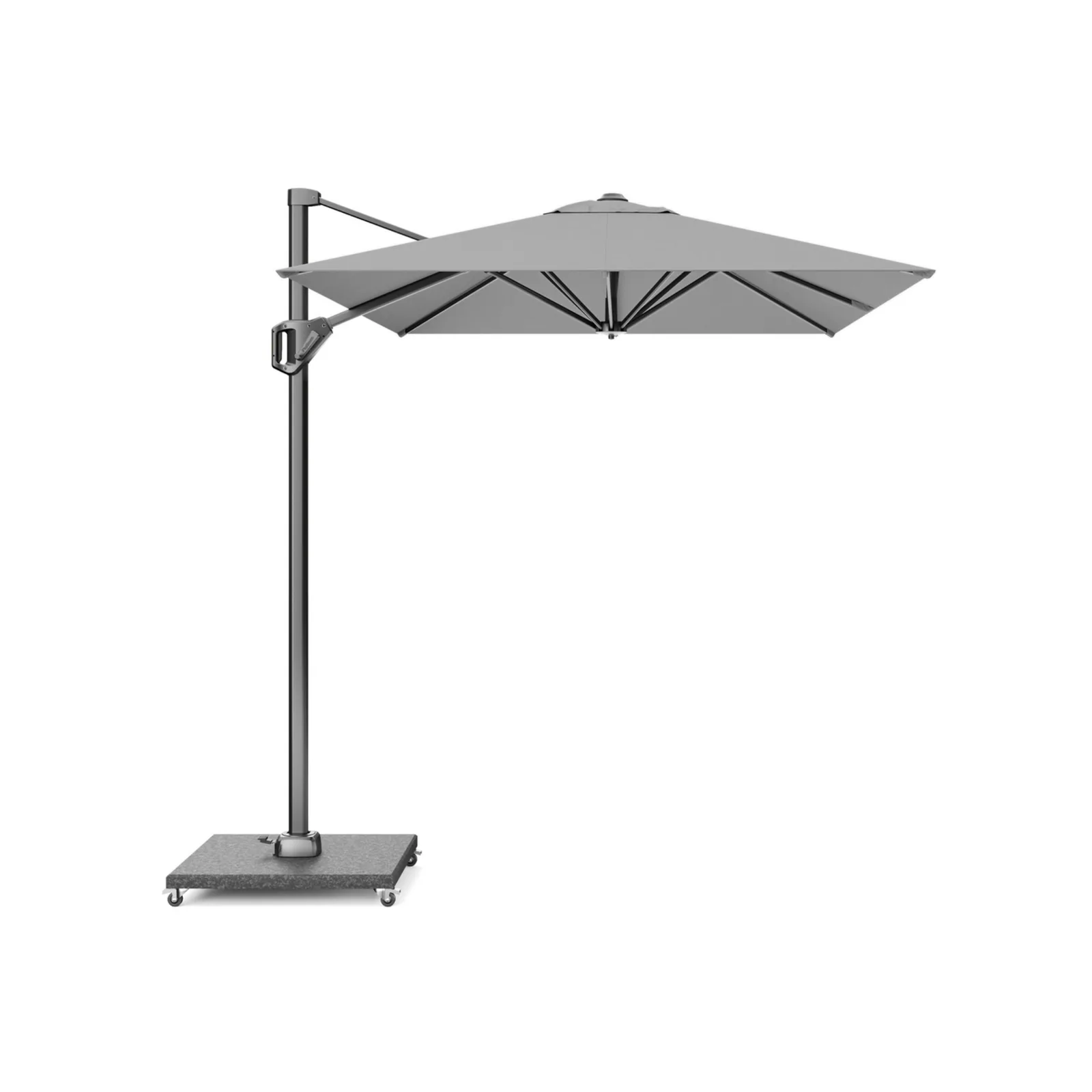
Rectangular parasols
View all →
Commercial parasols
View all →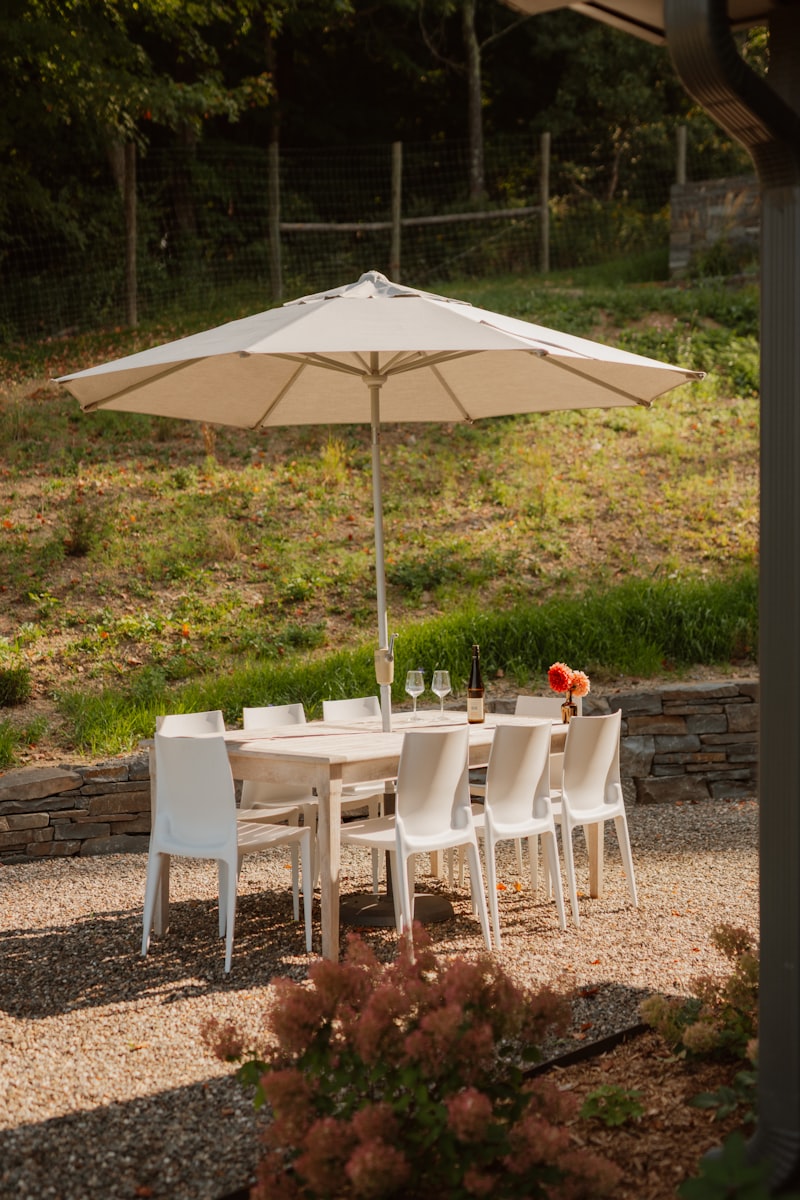
Parasol with base
View all →Stick parasol
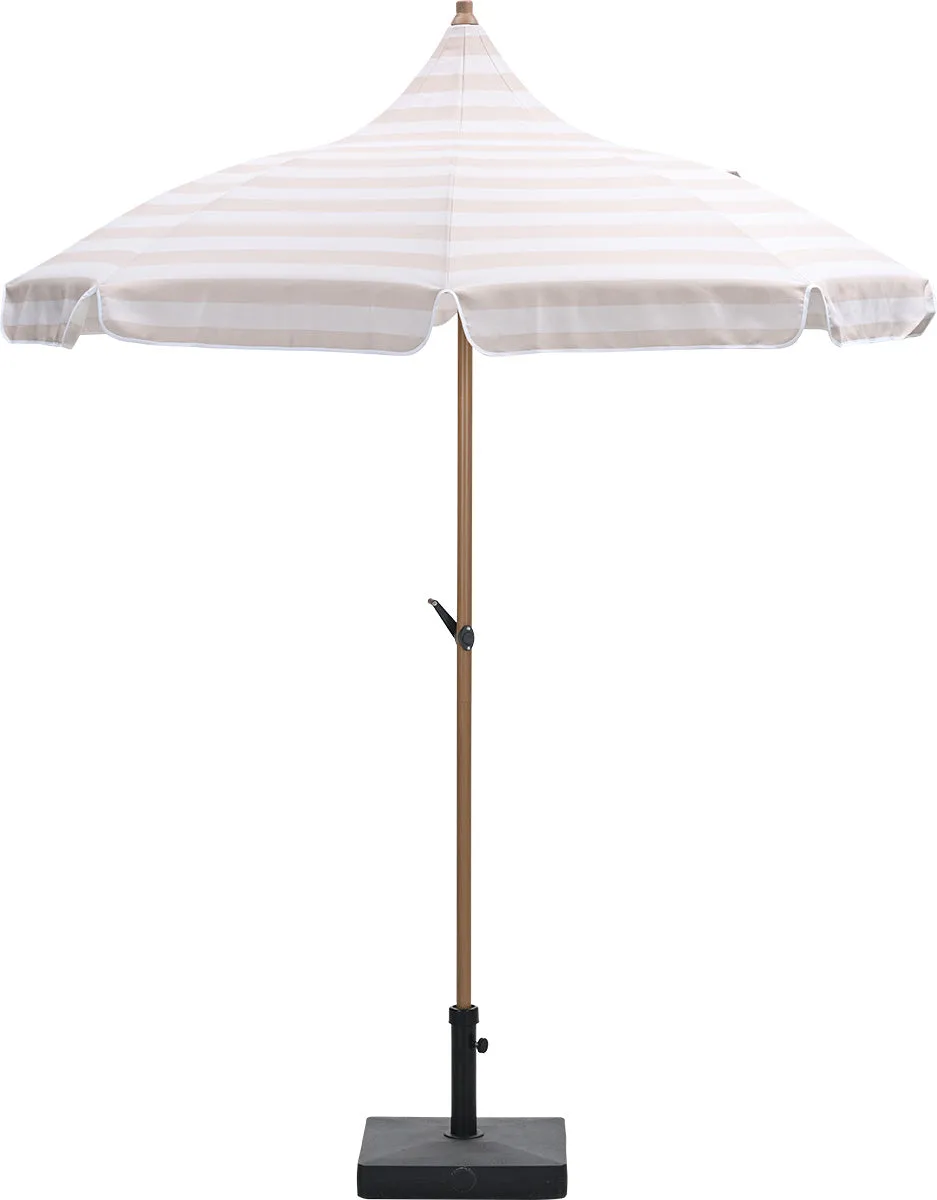
The stick parasol is the classic parasol: a straight pole in the centre of the canopy. You place it in a parasol base or push it through the hole in your garden table. Used this way, it's a table parasol. Stick parasols are lighter than cantilever parasols, easy to move, and need only a lighter base.
Choose a stick parasol if you have a dining table with a parasol hole, a small terrace, or if you move the parasol often. The pole in the middle is no problem above a table, as nobody sits there anyway.
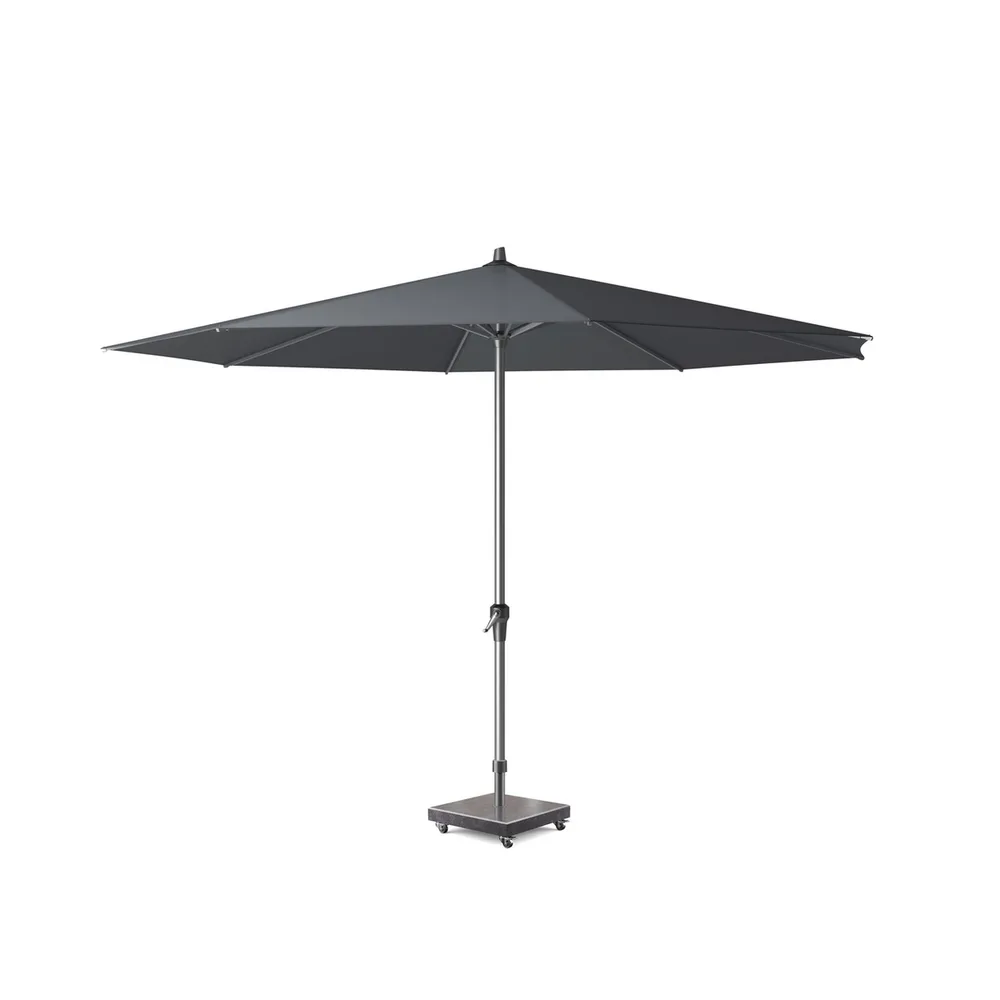
Riva stick parasol Ø350 cm
With a stick parasol, pay attention to the pole diameter: it must fit your base or the hole in your table. With the Riva range, that's 38 mm for the smaller sizes and 48 mm for this Ø350. You can read all about sizes, operation and bases in buying a stick parasol: what should you look out for?
Cantilever parasol
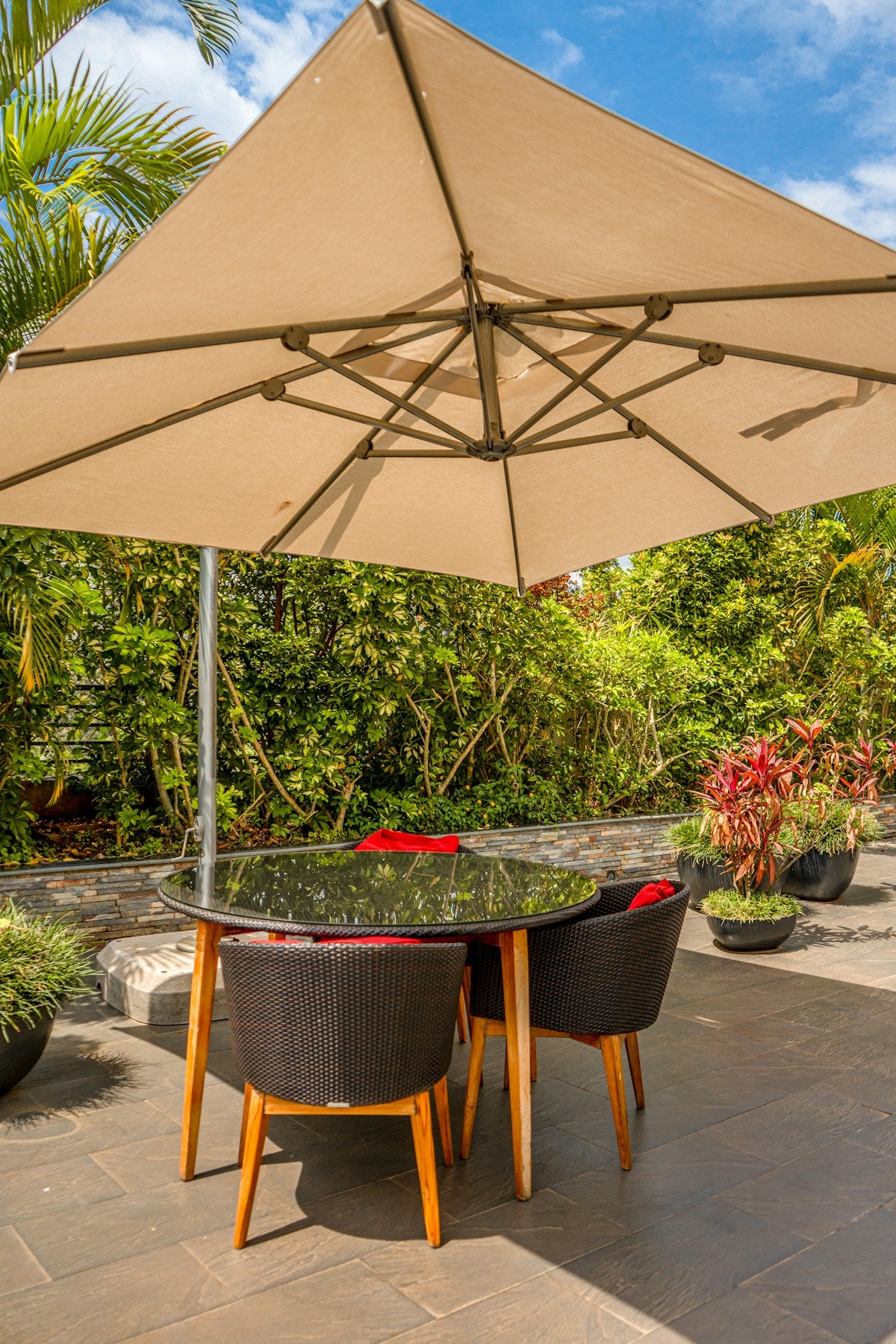
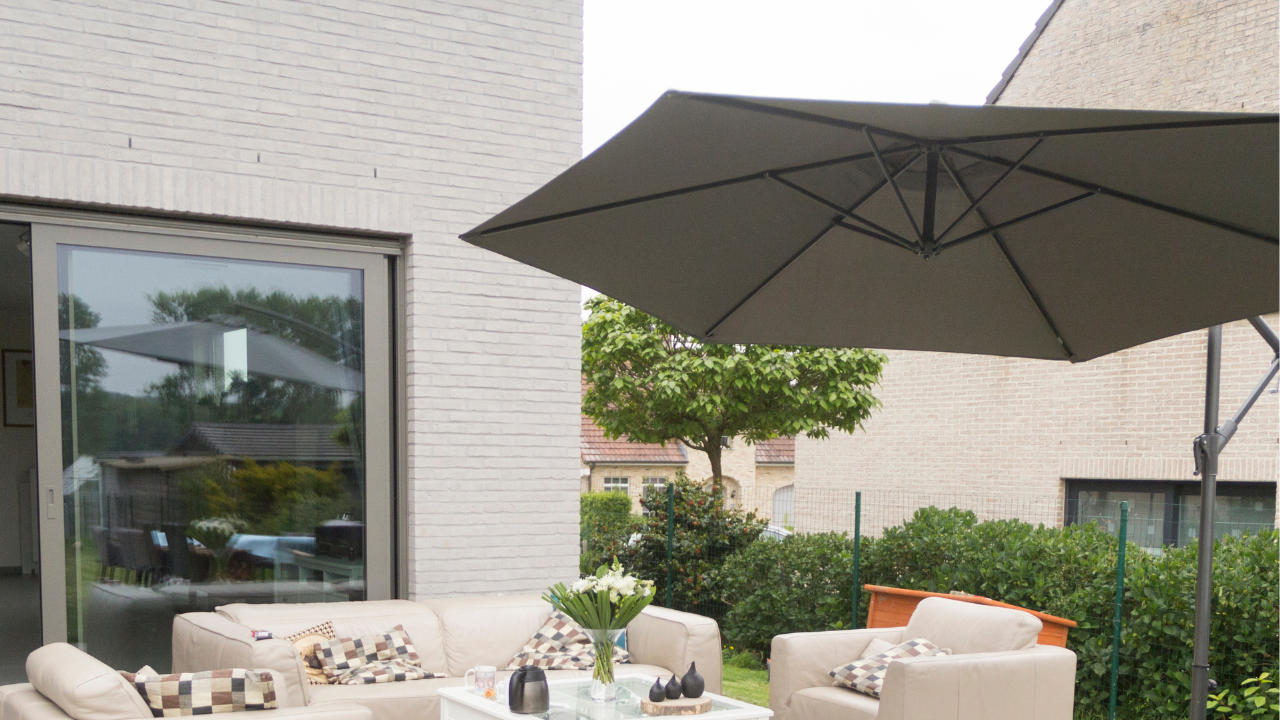
With a cantilever parasol, the pole stands beside your seating area and the canopy hangs from an arm. The canopy appears to float, hence the name. Nothing gets in the way underneath, and most models can be rotated 360 degrees to follow the sun without moving the base.
Choose a cantilever parasol if you want shade above a lounge set, a table without a parasol hole, or a spot where a central pole would be in the way. Do allow for a heavy base or a ground-anchor base, and room for the pole beside the seating area.
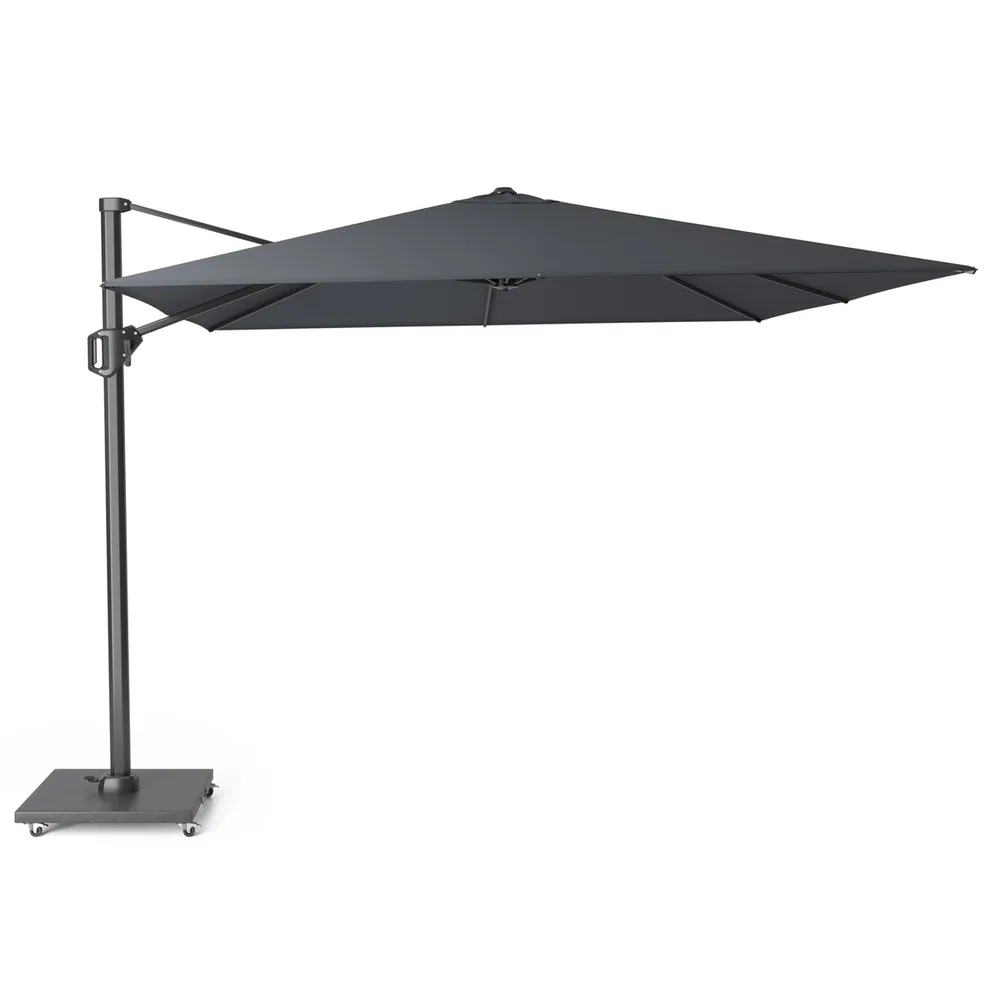
Challenger T¹ cantilever parasol 300x300 cm
New to cantilever parasols? Start with what is a cantilever parasol? and then read buying a cantilever parasol: what should you look out for? You'll find the best models by budget in best cantilever parasol 2026. If you're still torn between the two main types, read cantilever parasol vs stick parasol.
Place a chair where the pole of your cantilever parasol will go and walk around it a few times. If it sits in the route to the garden or the door, look for a different corner.
Balcony parasol
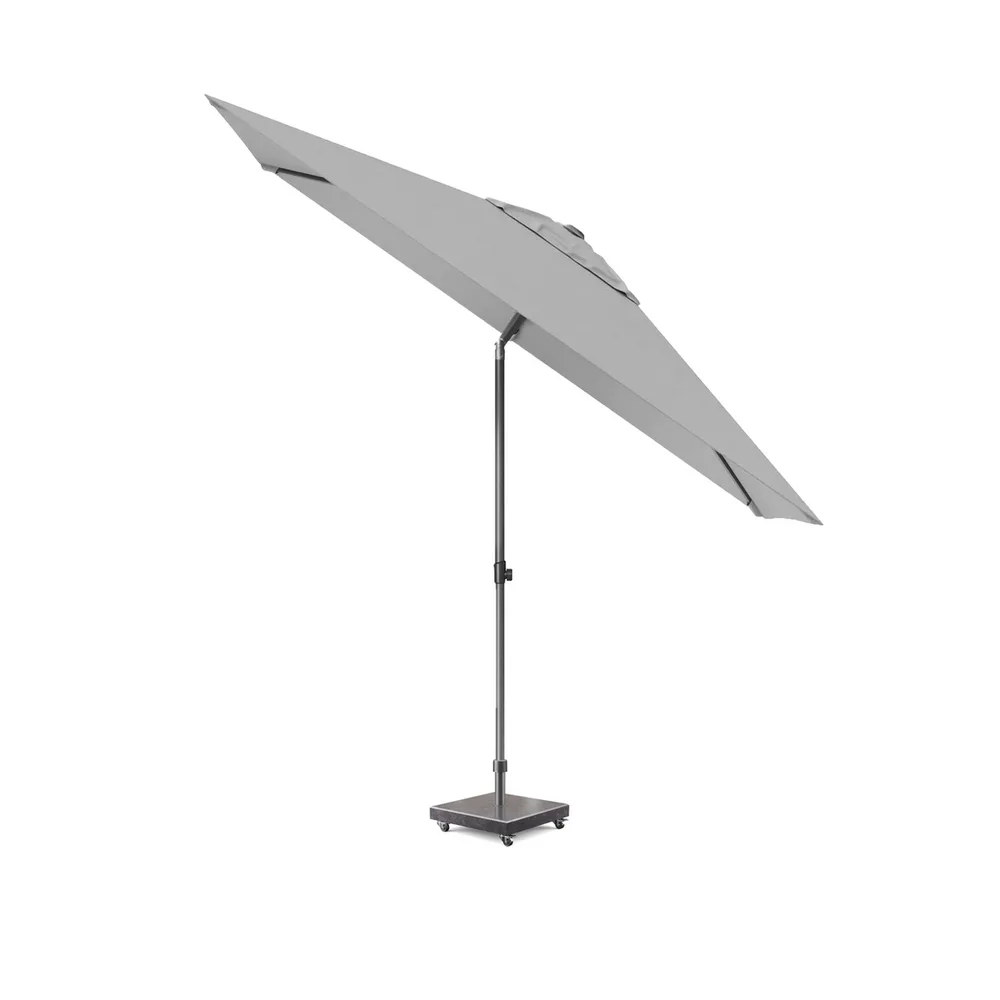
On a balcony there's little room, and you don't want the canopy sticking far over the railing. A balcony parasol is therefore small or narrow and rectangular. You place it against the wall or the railing, with the long side along your seating spot. Half parasols that sit flat against the wall also exist; in our overview you'll mainly find narrow rectangular models.
Choose a balcony parasol if you have a balcony, roof terrace or narrow city garden. Look for a low height and a tilting feature, so you still have shade when the sun is at an angle on your balcony.
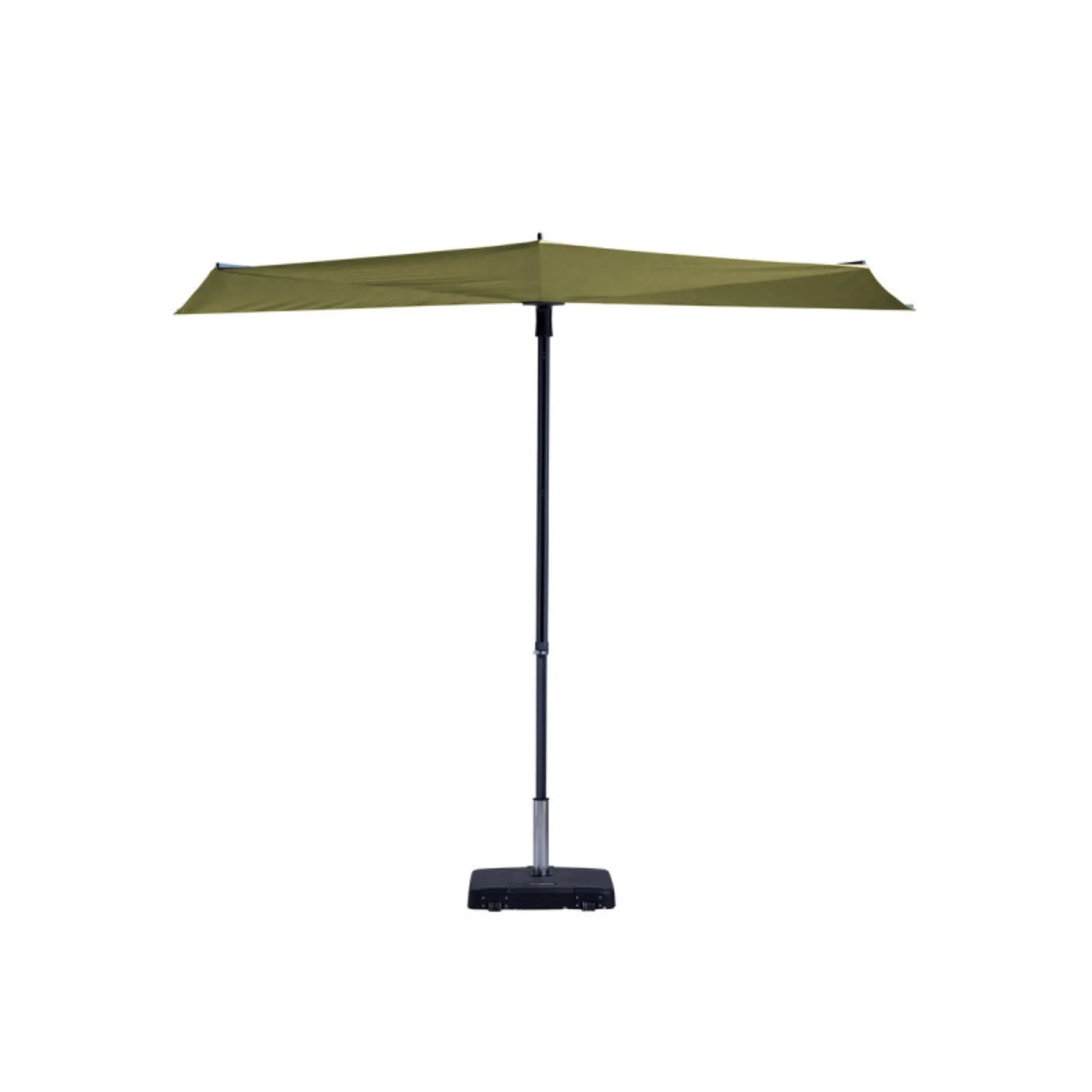
Don't want a base on your balcony floor? For the Sun Wave there's a separate Madison balcony clamp that attaches to the railing. For more ideas for a small outdoor space, read where do you place a parasol?
Rectangular parasol
A rectangular parasol gives an elongated area of shade. That fits perfectly with a long dining table or a narrow terrace along the wall. Rectangular parasols come as both stick and cantilever parasols.
Choose a rectangular parasol if your table is clearly longer than it is wide, or if a round canopy would end up against the wall or over the fence.
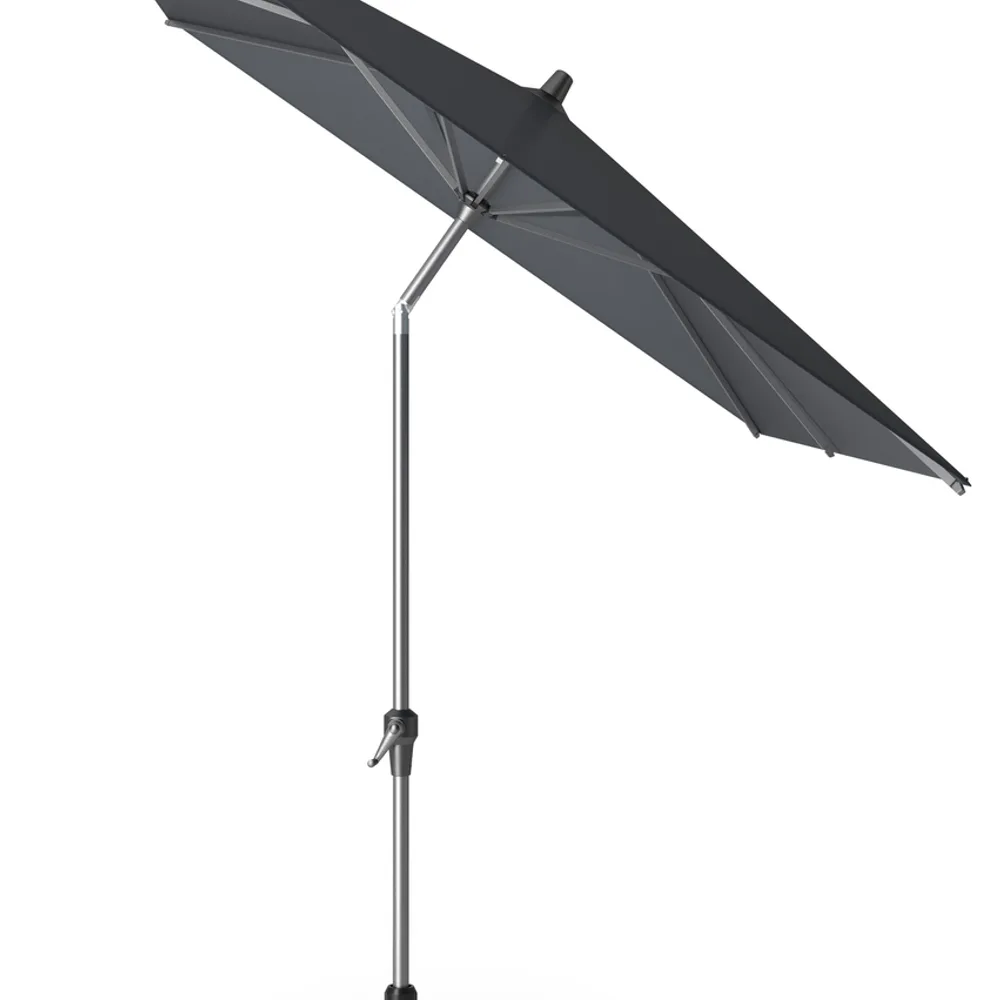
Riva stick parasol 300x200 cm
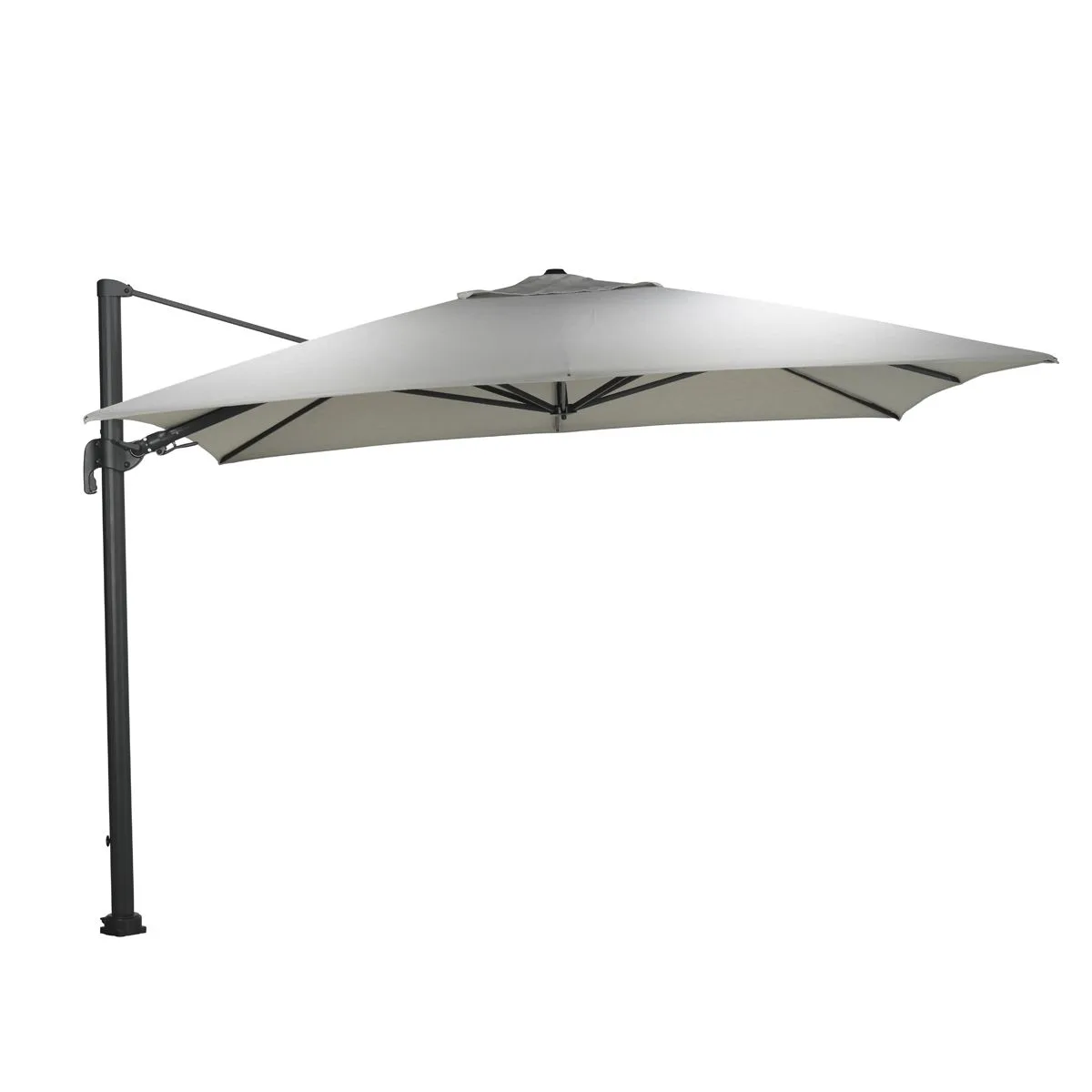
Prefer no pole above the table? The Platinum Voyager T¹ 300x200 has the same shape as a cantilever parasol, rotates 360 degrees and tilts backwards.
Round and square parasol
A round parasol is the classic shape and suits a round table or a seating area in the middle of the terrace. A square parasol looks sleeker and sits nicely over a square table or lounge set. You'll find both shapes in stick and cantilever parasols.
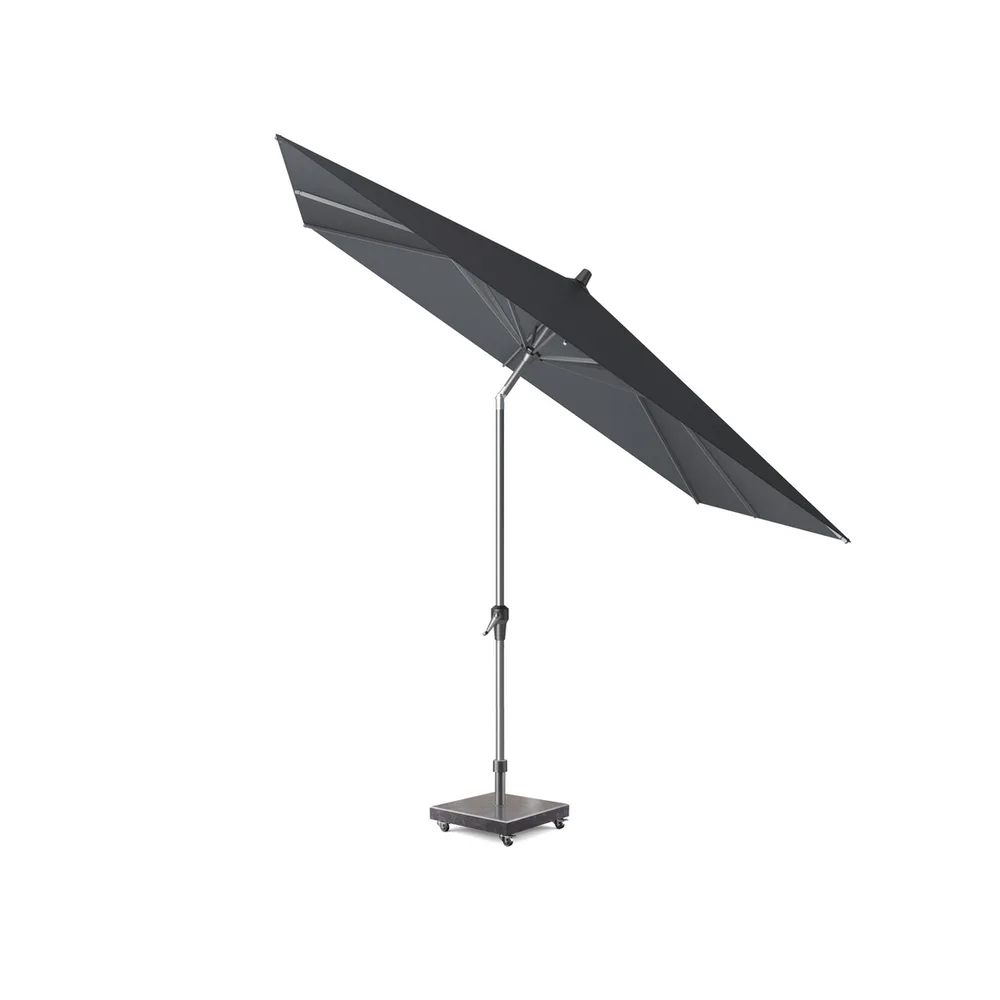
Riva 250x250 cm (square, stick)
View →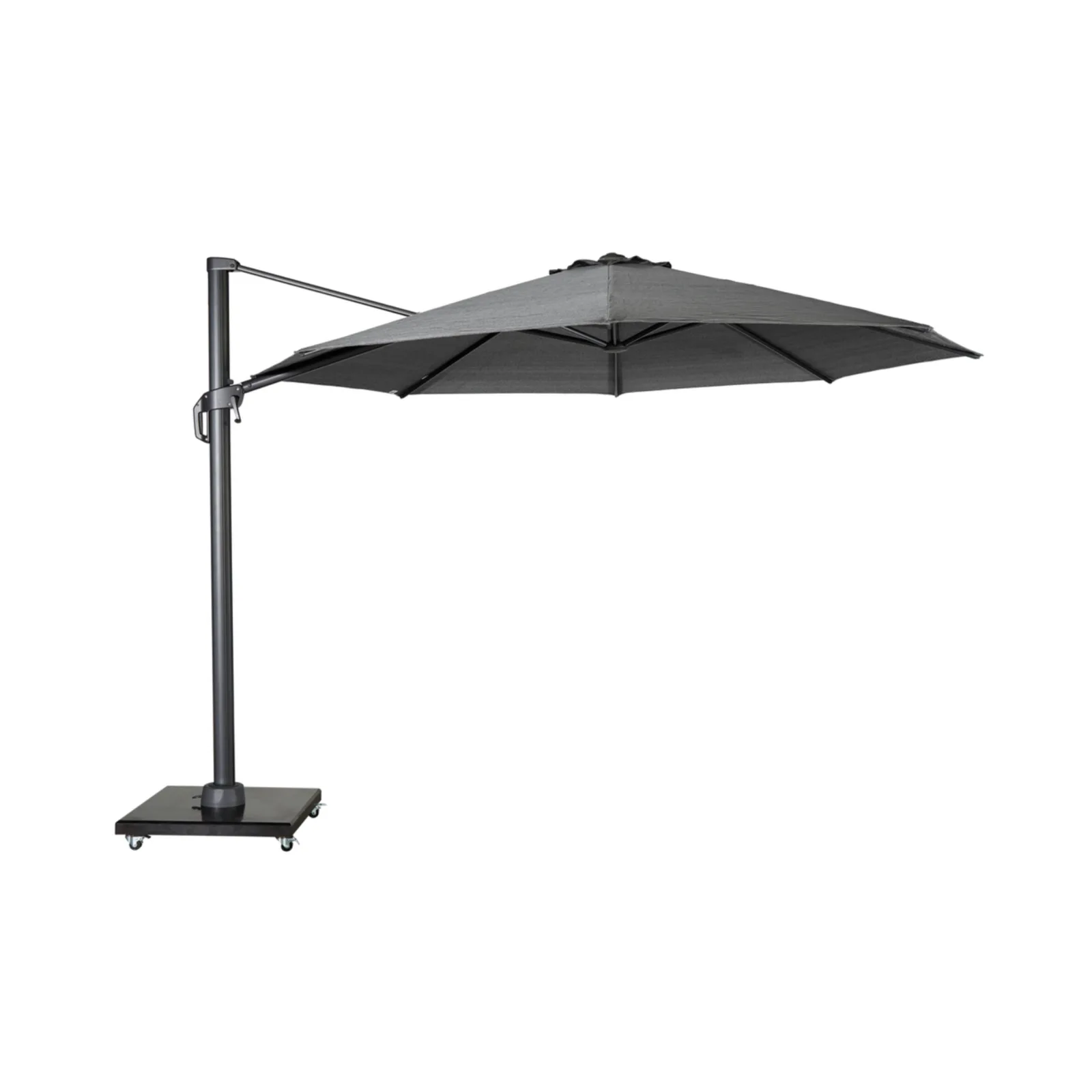
Nesling Coolfit Ø350 cm (round, cantilever)
View →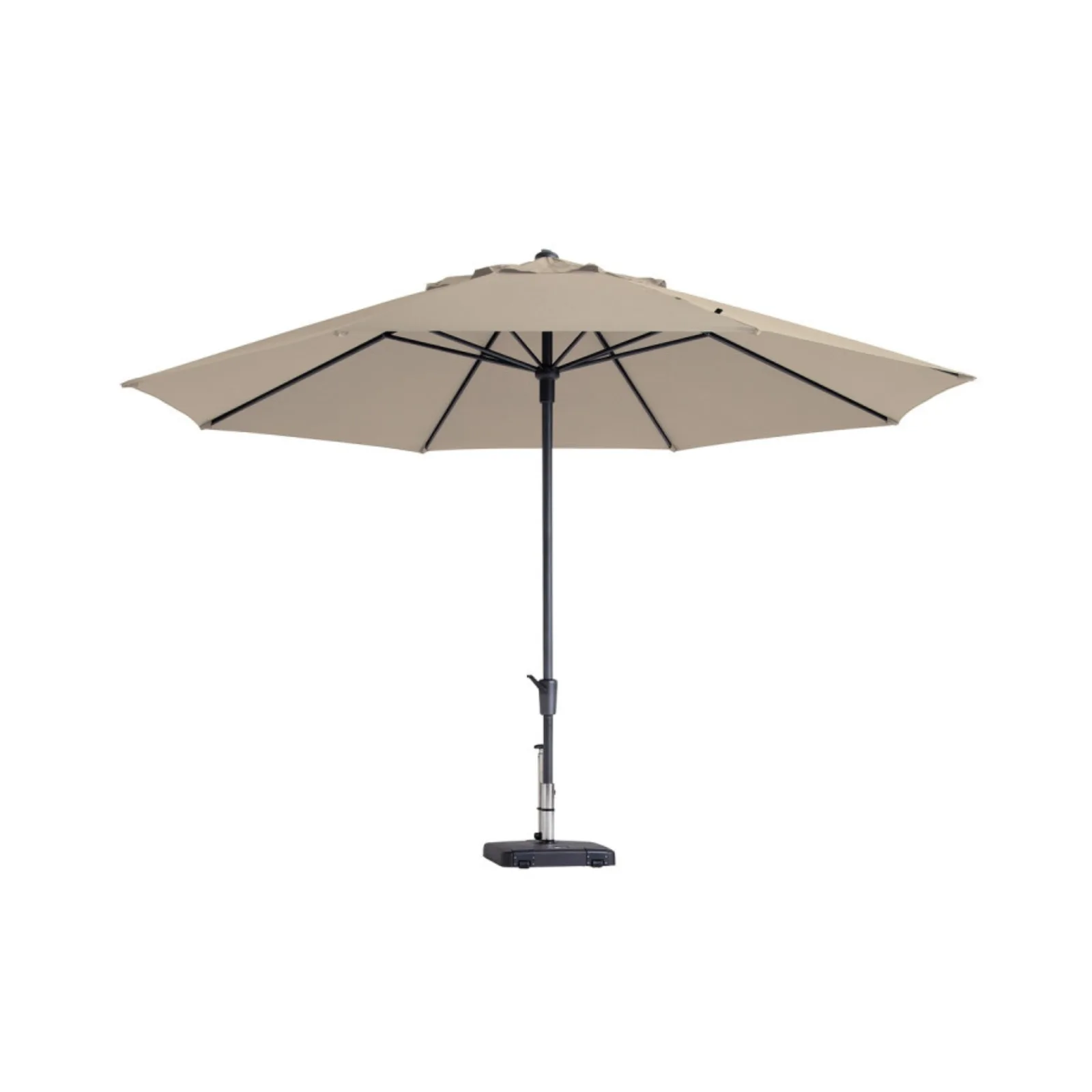
Madison Timor Ø400 cm (round, with base)
View →To find out which size you need for each shape, read what size parasol do I need?
Large parasol and commercial parasol
With a large parasol, you can put an entire table or lounge area in shade in one go. Think of sizes from 350x350 cm, 400x300 cm or Ø400 cm. A commercial parasol goes a step further: a heavy pole, sturdy ribs and a canopy that can handle daily use. You can also use such a parasol at home if you have a large terrace.
Choose a large parasol if you sit at the table with six or more people, have a large lounge set, or want one parasol instead of two small ones. Consider the weight and a base that matches it.
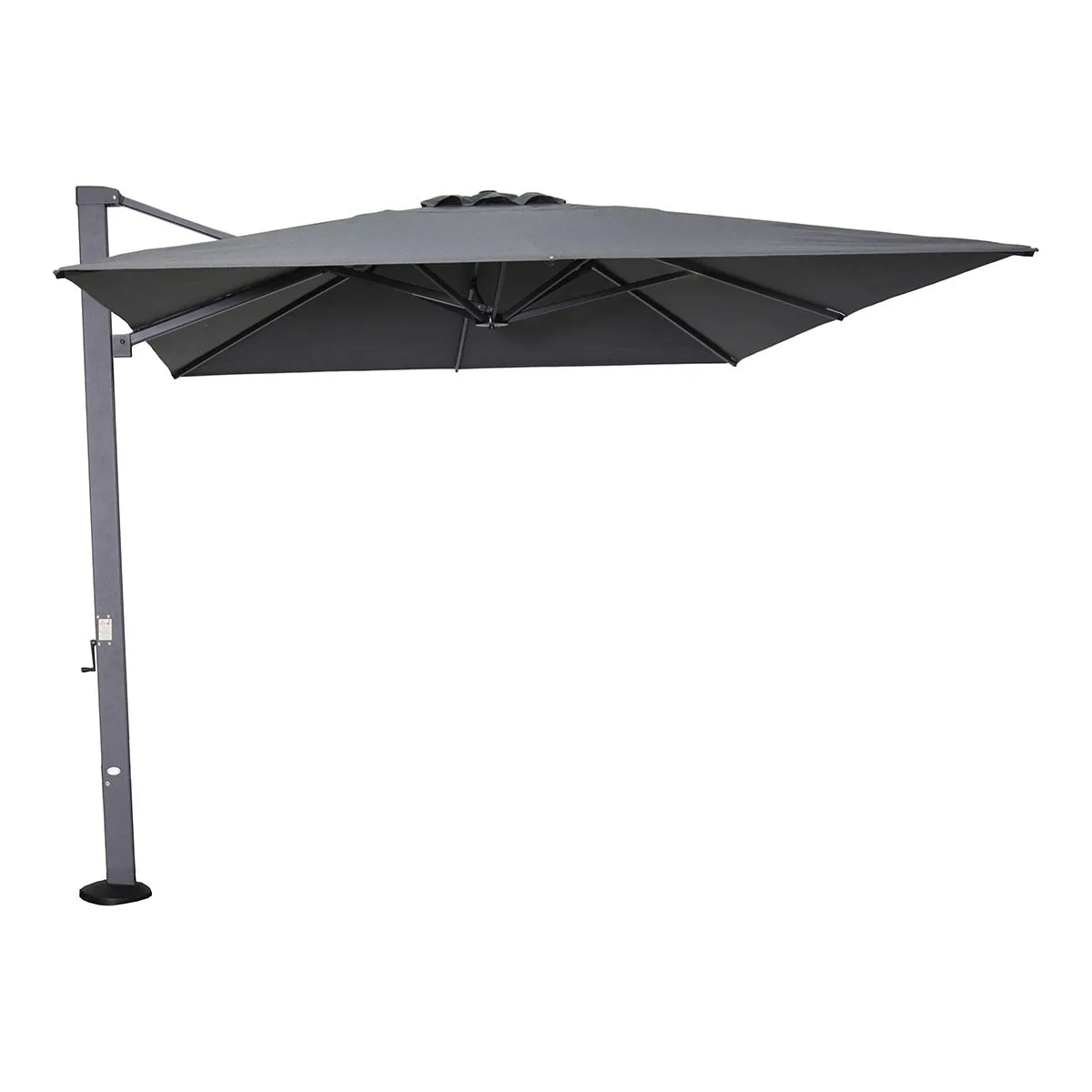
Hawaii Emperor cantilever parasol 300x400 cm
A large stick parasol is also an option. The Madison Timor luxe Ø400 cm comes with its base, but it doesn't tilt. To see which large parasols offer the best value for money, check best parasol 2026.
Tilting parasol
A tilting parasol isn't a separate type, but a feature you'll find on stick and cantilever parasols. You tilt the canopy at an angle so you can sit in the shade even when the sun is low. There are two variants:
- Tilting backwards: the canopy tilts in one direction. You'll see this on many cantilever parasols, such as the Challenger T¹.
- Tilting sideways and backwards: the canopy tilts in more directions, so you can follow the sun throughout the day.
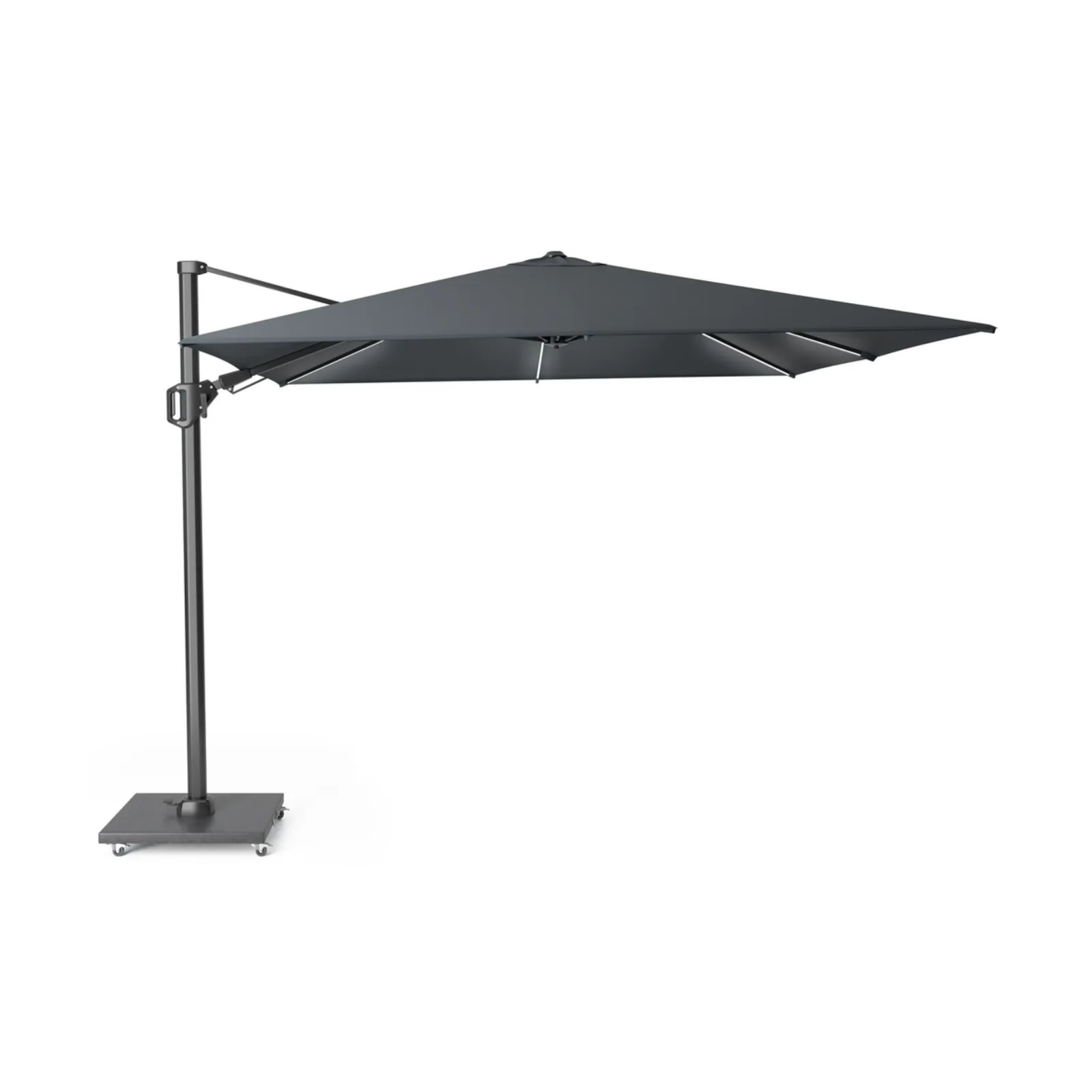
Challenger T² Glow cantilever parasol 300x300 cm
Always check per model, as it can vary within a range: with the Platinum Riva, most sizes tilt, but Ø350, Ø400 and 275x275 don't.
Parasol with base
With a parasol with base, the base is included. You don't need to work out which base fits or how heavy it should be. This is handy if you want to be ready quickly or know little about pole sizes.
Choose a parasol with base if you want a complete set. Do bear in mind that the base belongs to that parasol: if you later buy a different parasol, it may not fit.
Aloha parasol set Ø200 cm with base
Buying the base separately? Read which parasol base do you need? first, or browse the parasol bases.
Special features
Besides shape and type, there are a few features that make using a parasol easier:
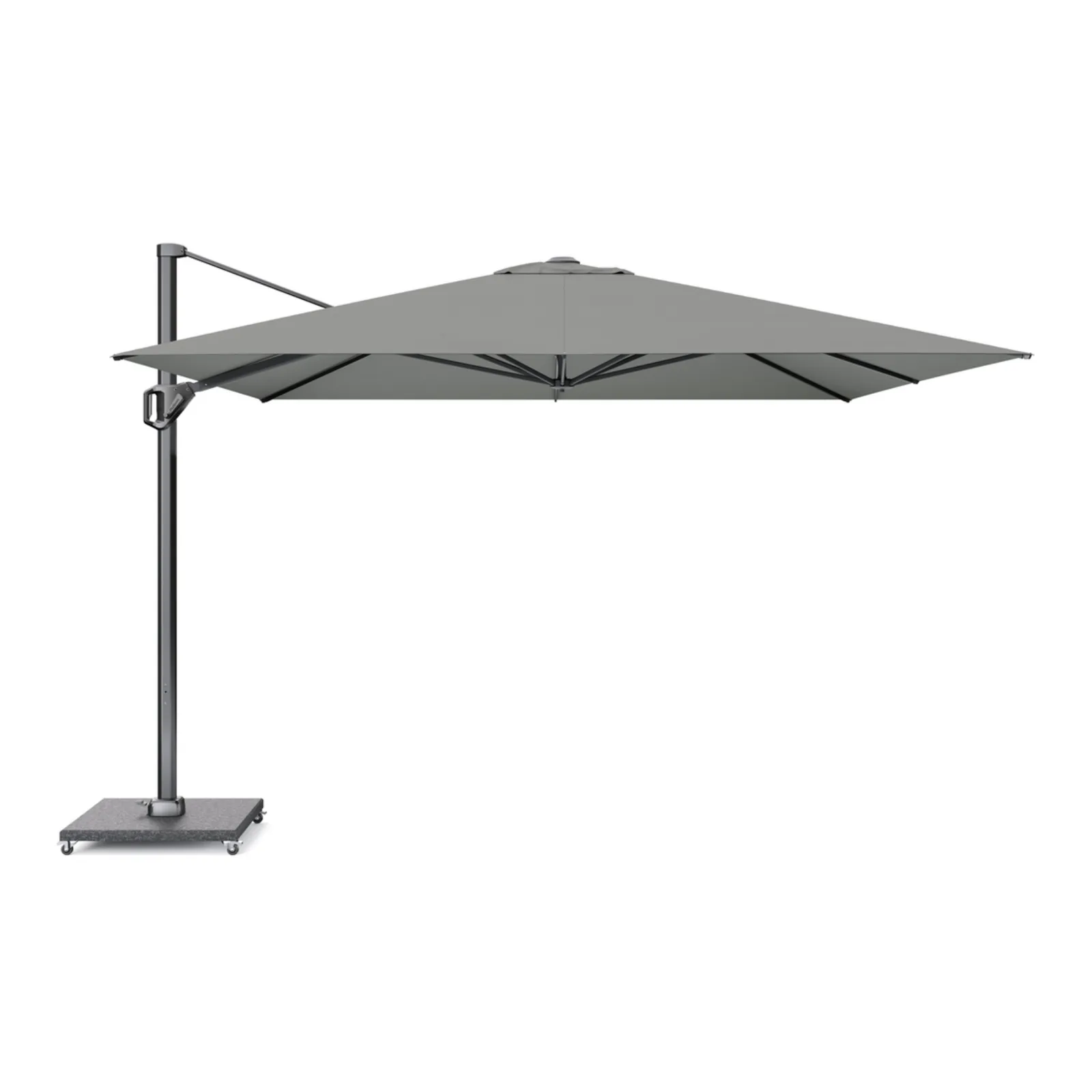
- Telescopic system: on the Challenger T¹ Telescope, a gas spring raises the pole up to 2.73 m. This lets you open and close the parasol without moving your furniture.
- Breathable HDPE canopy: the Nesling Coolfit canopy lets wind and water through and, according to the manufacturer, blocks up to 95% of UV radiation.
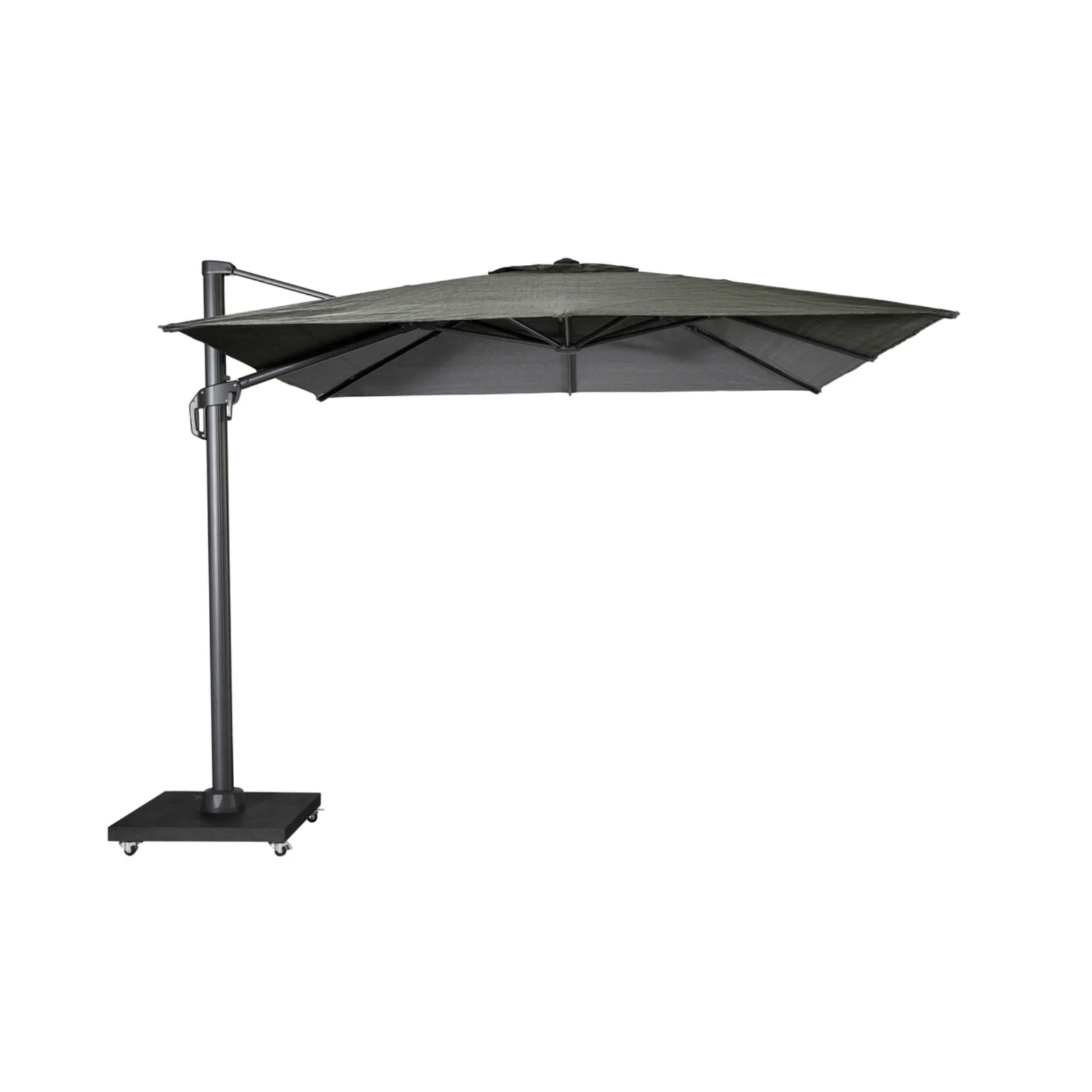
- Extra sturdy pole: the Hawaii Big Pole II has a 95x65 mm pole and, according to Garden Impressions, is wind-resistant up to Beaufort 4.
- Lighting: the Challenger T² Glow has LED lighting in the ribs, handy for summer evenings.
Want a large area of shade without a pole or base? Then a shade sail is an alternative. You stretch it between walls, posts or trees.
Which type suits you?
A narrow rectangular balcony parasol, such as the Madison Sun Wave or the Platinum Lisboa.
A stick parasol, round or square for a square table, rectangular for a long table.
A cantilever parasol, ideally rotatable through 360 degrees and tilting.
A large parasol or commercial parasol from 350x350 cm, or a shade sail.
Know which type you want? Then use our checklist in buying a parasol: what should you look out for? to choose the right size, canopy and base.
Common mistakes when choosing a type
A stick parasol over a lounge set
At a dining table, the pole in the middle isn't in the way, but at a lounge set it is. You sit right in the middle. Above a lounge set, a cantilever parasol is the better choice.
A cantilever parasol in too small a space
A cantilever parasol takes up room beyond the canopy itself, for the pole and the base. On a small balcony or in a narrow garden, a compact stick parasol or balcony parasol often works better.
A round canopy over a long table
A round canopy that has to cover the full length of a long table becomes very large. A rectangular parasol follows the shape of the table and provides shade where you sit.
Tip: think about the low sun
Do you mainly sit outside late in the afternoon? Then a tilting feature is more important than an extra-large size. Also see which parasol best withstands wind if your garden is exposed.
Frequently asked questions
What types of parasols are there?
The two main types are the centre pole parasol, with the pole in the middle, and the cantilever parasol, with the pole at the side. You also have balcony parasols, rectangular parasols, large parasols and commercial parasols, tilting parasols, and parasols with a separate base. Many parasols fall into more than one group, such as a rectangular cantilever parasol.
What is the difference between a centre pole parasol and a cantilever parasol?
With a centre pole parasol, the pole runs through the middle of the canopy and stands in a base or through the hole in your table. With a cantilever parasol, the pole stands beside the seating area and the canopy hangs from an arm. A cantilever parasol leaves the space under the canopy free and often rotates 360 degrees, but it needs a heavier base.
Which parasol is best for a balcony?
Choose a narrow rectangular parasol, such as a model measuring 210x150 or 270x150 cm. It overhangs the railing less than a round canopy. For the Madison Sun Wave, a balcony clamp is available, so you can secure the parasol to the railing instead of a base.
Can a centre pole parasol go through the hole in my garden table?
Yes, that is exactly where a centre pole parasol is useful. Do check whether the pole fits through the hole: the pole diameter varies by model, for example 38 mm for the Riva Ø300 and 48 mm for the Riva Ø350. Also place the parasol in a base under the table, as the table alone will not keep it in place in the wind.
What is a commercial parasol?
A commercial parasol is a large, sturdy parasol designed for daily use on a terrace. Think of sizes such as 350x350 or 400x300 cm, a heavy pole and often a premium canopy. A commercial parasol is also an option at home if you have a large terrace or a long table.
Is a tilting parasol worth it?
Yes, if you also sit outside later in the afternoon. When the sun is lower, the shadow of a straight parasol falls beside your table. With a tilt function you angle the canopy and stay in the shade. Some cantilever parasols tilt only backwards, others also tilt sideways.