
When you think of a sun lounger, you first think of its shape and colour, but the material determines how you lie, how much maintenance it needs and how long you'll enjoy it. Aluminium, Textilene, teak, wicker or plastic: each material has its own strengths and pitfalls. In this guide we compare them honestly on comfort, maintenance, weight and durability. With a short test at the bottom, you'll know in a minute which type of sun lounger suits you.
In short: an aluminium frame is lightweight, rust-free and needs little maintenance. Choose Textilene if the sun lounger needs to dry quickly, for example by the pool, and a cushion if you mainly want to lie comfortably soft. Teak looks warm but is heavier and needs more care. Not sure? Take the choice test.
All materials at a glance
A sun lounger essentially consists of two parts: the frame and the lying surface. The frame determines the weight, sturdiness and maintenance. The lying surface determines how soft you lie and how quickly it dries. That's why we compare both frame materials and lying surfaces below.
| Material | Strong in | Watch out for |
|---|---|---|
| Aluminium | Lightweight, rust-free | Gets hot in the sun |
| Textilene | Dries quickly | Less soft to lie on |
| Cushion | Softest to lie on | Store dry |
| Teak and wood | Warm appearance | Heavy, more maintenance |
| Wicker | Soft, lounge look | Dirt in the weave |
| Plastic | Lightweight, easy to clean | Looks less luxurious |
Already have an idea of the material and mainly want to know which model is best? Then read best sun lounger 2026. You'll find the general buying points, such as length and an adjustable backrest, in how to choose a sun lounger.
Comfort, maintenance, weight and durability
Which material wins depends on what matters most to you. Below, you can see which choice is strongest for each property.
| Property | Strongest choice | Why |
|---|---|---|
| Comfort | Sun lounger with cushion | Soft and warm |
| Low maintenance | Aluminium with Textilene | Wiping down is enough |
| Low weight | Plastic or aluminium | Easy to lift |
| Durability | Aluminium or teak | Weather-resistant |
| By the pool | Aluminium with Textilene | You can lie there wet |
| Natural look | Teak or wicker | Warm and soft |
Comfort
You lie most softly on a cushion. Textilene is a taut fabric that gives slightly but feels firmer. Wood and plastic without a cushion are hard; you almost always place a loose cushion on them. For comfort, also consider the seat height: the higher the sun lounger, the easier it is to get up.
Maintenance
Aluminium and plastic can be wiped down with a damp cloth. Textilene should be rinsed off now and then. Teak requires the most work if you want to keep its colour, and with wicker you need to brush the weave clean regularly.
Weight
If you often move your sun lounger to follow the sun, weight matters. Plastic and aluminium are the lightest, wood the heaviest. For reference, the Limone aluminium sun lounger weighs 18.8 kg according to the product information. If you move it often, also pay attention to wheels; you can read more about this in buying a sun lounger with wheels.
Durability
Aluminium doesn't rust, and teak is naturally rich in oils, which helps it withstand moisture. Both last a long time with proper care. With plastic and wicker, lifespan depends heavily on quality: cheap plastic can fade and become brittle in strong sunlight.
Aluminium: lightweight and rust-free
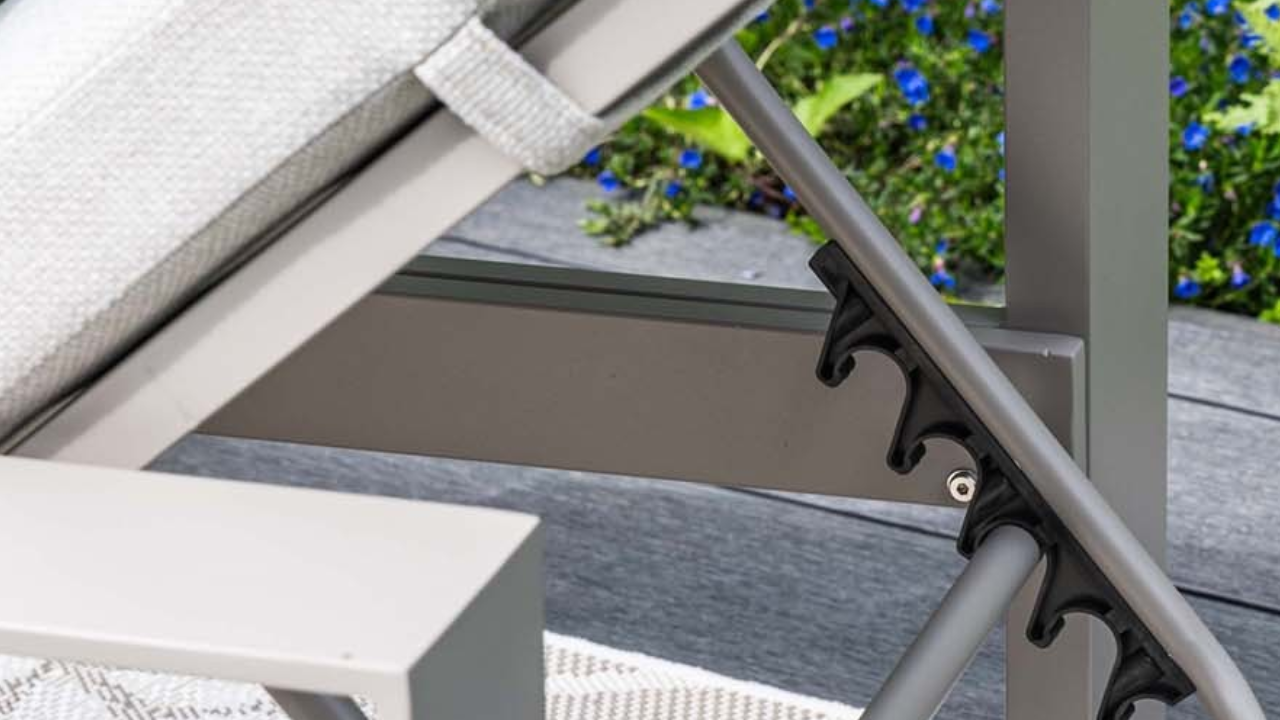
Aluminium is the most popular frame for sun loungers, and not without reason. It doesn't rust, is light enough to move and can stay outdoors all season. The frame is often powder-coated in a colour such as anthracite or taupe. One drawback: in strong sun the metal can get hot, so put a towel over the armrests if you lie there for a long time. You can read more about the material in what is aluminium.
Most sun loungers in this comparison have an aluminium frame, including those from Garden Impressions, Hartman and 4 Seasons Outdoor. For the Garden Impressions sun loungers, the difference lies in the lying surface: Textilene for the Limone, a cushion for the Levanto. The folding sun loungers from Lafuma, such as the Siesta, have a steel frame.
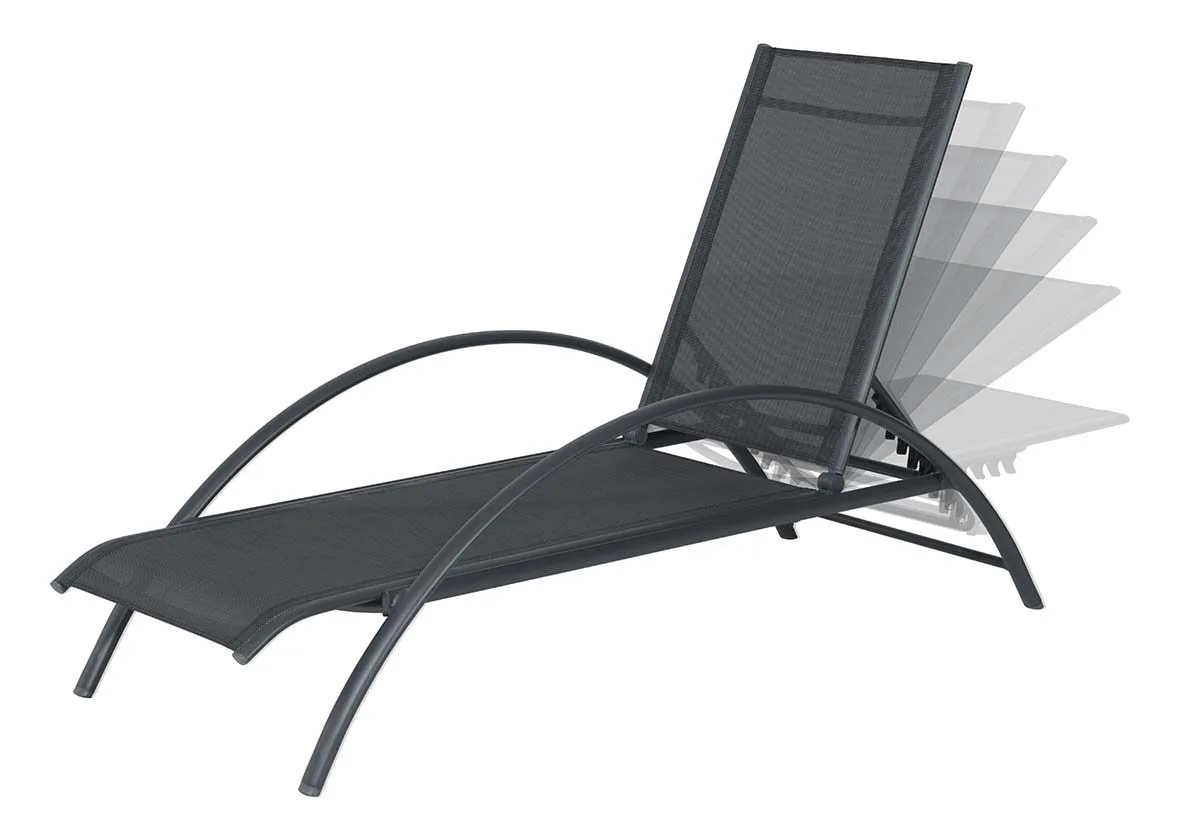
Limone sun lounger carbon black / anthracite
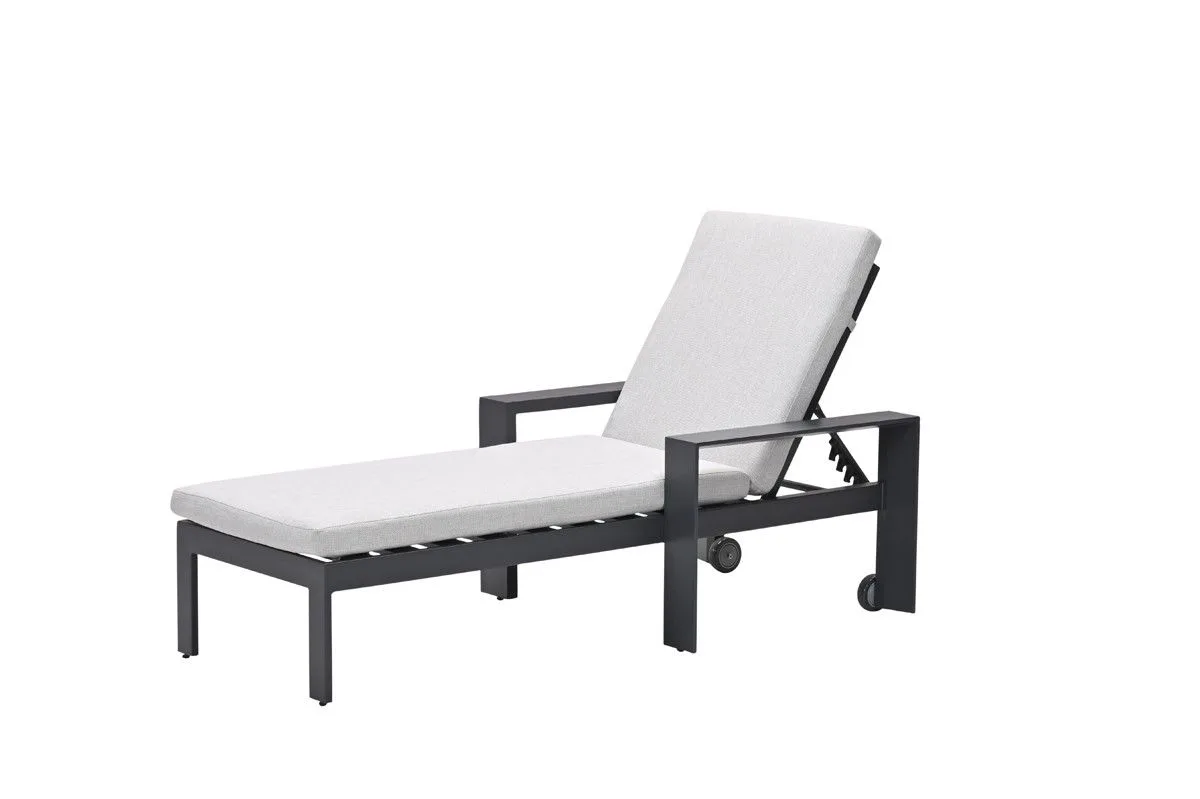
Levanto sun lounger carbon black / valley sand
You'll find more models under aluminium sun loungers. To find out whether an aluminium frame can rust, read can an aluminium garden set rust.
Textilene or cushion?
Textilene: quick-drying and pool-proof
Textilene is a sturdy, open-woven fabric made from coated polyester yarn. Water runs straight through it, so you're dry again quickly after a rain shower or a dip. The fabric is stretched across the frame, which keeps the sun lounger slim and light. Ideal by the pool or if the sun lounger stays outdoors. To find out exactly what it is, read what is Textilene.
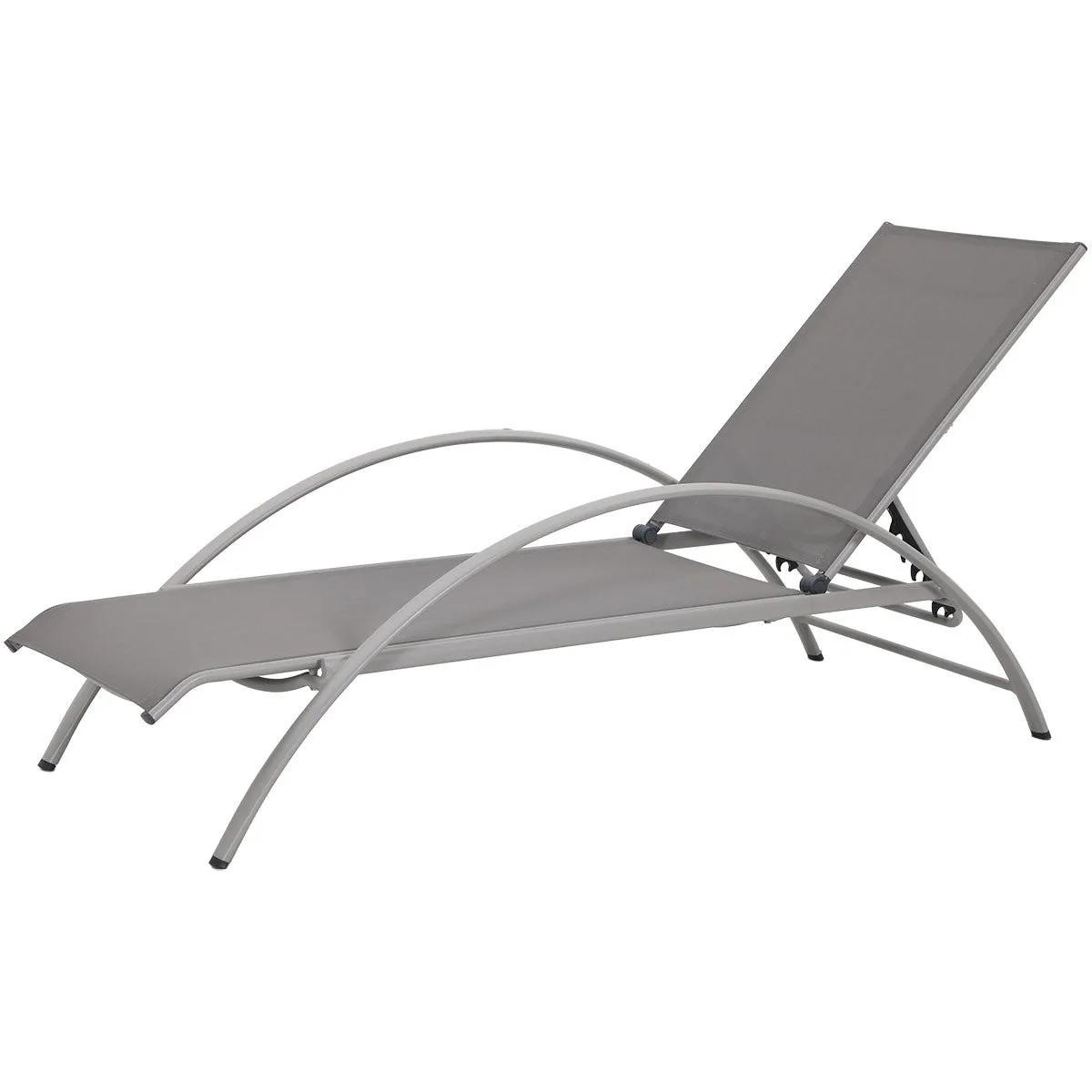
Limone aluminium sun lounger taupe
Please note: the retailer's specifications for the Limone also mention a sun lounger cushion. When ordering, check whether it's included with your version; then you won't need a separate cushion.
Cushion: the softest place to lie
A sun lounger with a cushion feels more like a lounge sofa. The Levanto has a sand-coloured polyester cushion 6 cm thick, armrests at 53 cm height and a seat height of 35 cm, so getting up is easy. According to the product information, it has wheels and the cushion is water-repellent. Even so, store the cushion dry if it rains for a long time.
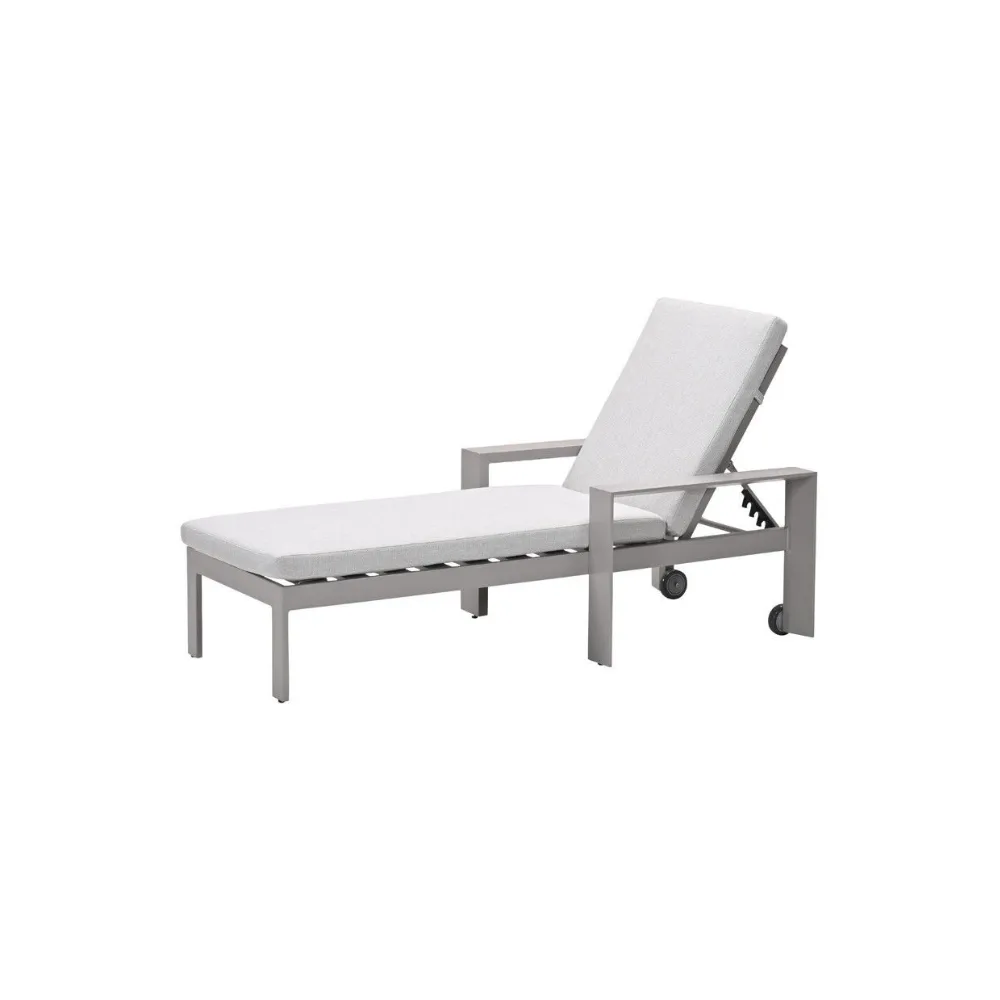
Levanto sun lounger with wheels taupe / valley sand
The best of both worlds
If you choose Textilene but sometimes want to lie more softly, place a loose sun lounger cushion on it. The Madison Outdoor+ cushion measures approx. 200 by 65 cm, is approx. 6 cm thick and is water-repellent. Always compare the size with your sun lounger. You'll find more choice under sun lounger cushions.
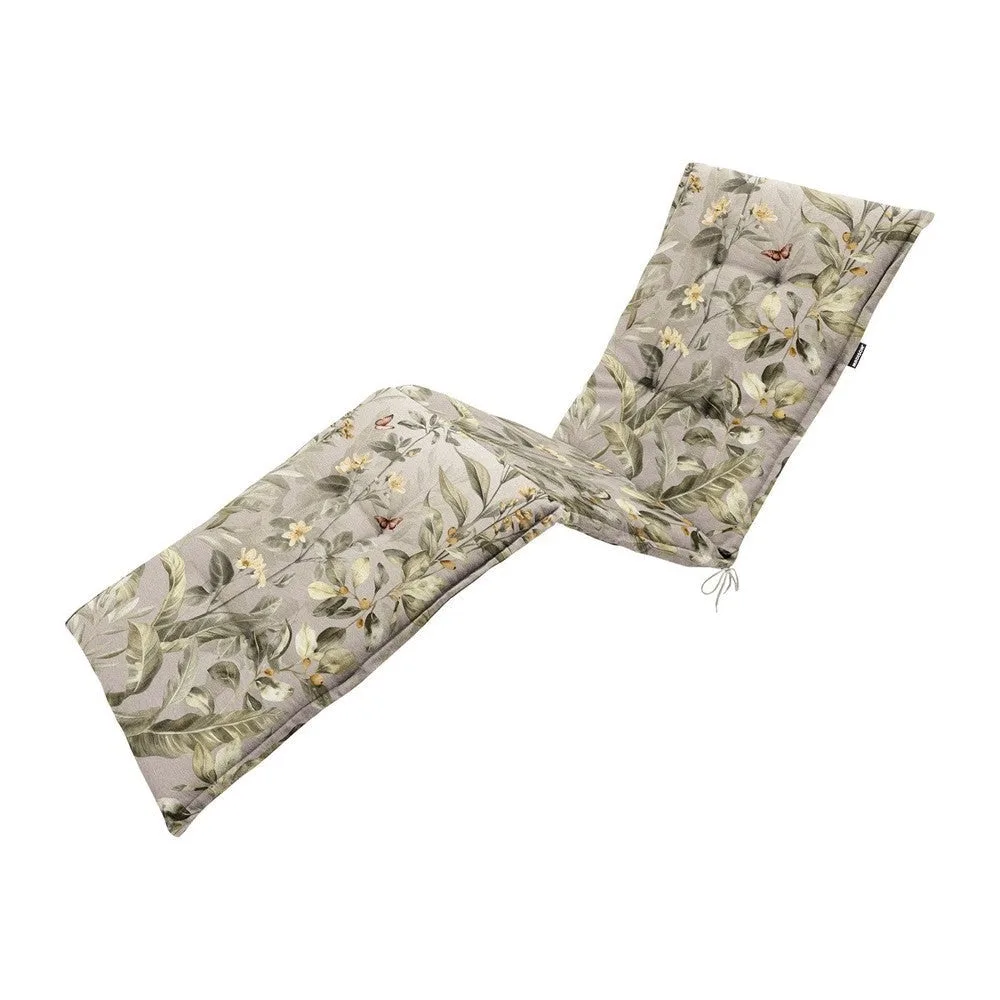
Madison sun lounger cushion 200x65 cm Outdoor+ Elisa natural
Torn between Textilene and a cushion? Look at where the sun lounger will stand. If it's in full sun and rain, or next to the pool, Textilene wins. If it stands under a canopy and you mainly lie there to read, the cushion wins.
Wood and teak: warm and natural
A wooden sun lounger instantly gives your garden a warm, natural feel. Teak is the best-known hardwood for outdoor use: the wood naturally contains oils, which help it resist moisture. If you leave teak untreated, it slowly weathers to a silvery grey tone. If you want to keep the honey-brown colour, clean the wood and treat it every year.
There are two drawbacks. Wood is heavier than aluminium, so moving it takes more effort. And wood without a cushion is hard to lie on, so you almost always need a sun lounger cushion. One example is the Lucas sun lounger from 4 Seasons Outdoor: according to the product information it is made of teak, has no adjustable backrest and comes without a cushion. Read more about the material in what is teak wood and popular wood types for garden furniture.

Wicker: soft-looking woven finish
Wicker is woven plastic, usually wrapped around an aluminium frame. It looks softer and more lounge-like than a sleek aluminium sun lounger and can withstand rain. The weave itself isn't soft, so here too you usually lie on a cushion. One thing to watch is cleaning: sand, pollen and leaves easily get stuck between the strands. For the difference with rattan, which is a natural material, read what is the difference between wicker and rattan. Wicker sun loungers are currently not available in our comparison either.
Plastic and polywood
Plastic sun loungers are lightweight, low-maintenance and easy to clean. You'll know them from campsites and swimming pools. They feel less luxurious, and cheap plastic can fade or become brittle in strong sunlight. Polywood is a sturdier variant: plastic planks with a wood-like look that you don't need to paint or oil. You can read more about it in what is polywood.
Choice test: which sun lounger suits you?
Answer four short questions and see which type of sun lounger suits you best.
Which sun lounger suits you?
Where will your sun lounger stand?
- By the pool or in full sun
- Under a canopy or veranda
- In a different spot all the time, following the sun
How do you prefer to lie?
- Firm and cool, even when I'm wet
- As soft as possible, like on a sofa
- I don't mind, as long as I'm in the sun
What's important to you when getting up?
- Nothing special, I like lying low
- Armrests to push up on
- A sun lounger I can easily wheel away
How much maintenance do you want?
- As little as possible, rinsing off is enough
- Storing a cushion when it rains is fine
- Little, but I do move it often
Aluminium with Textilene Lightweight, rust-free and quick-drying. Perfect by the pool and for anyone who wants little maintenance, such as the Limone.
Sun lounger with cushion and armrests You lie comfortably and get up easily. Store the cushion dry when it rains.
Sun lounger with wheels You can follow the sun without hauling it around. Choose a lightweight aluminium frame so rolling and lifting are easy.
Want to coordinate not just a sun lounger but your whole garden? Then use our selection guide. In a few steps, it helps you find garden furniture that suits your space and wishes.
Aluminium sun loungers
View sun loungers →With armrests
View sun loungers →
All sun loungers
View everything →Maintenance per material
A few minutes of maintenance a month will keep any sun lounger looking good for longer. Garden Impressions advises for the Limone and Levanto to clean the frame with a damp cloth, wash cushions with lukewarm water and let them dry completely before storing them.
Aluminium
Wipe the frame down with a damp cloth and a little mild soapy water. Don't use abrasive cleaners, as they damage the powder coating. More tips in maintaining aluminium garden furniture.
Textilene
Rinse the fabric off now and then with clean water and gently brush out stains. This prevents chlorine, suncream and sand from building up. Also read maintaining Textilene garden furniture.
Teak and wood
Clean the wood with a soft brush and water. If you want to keep the colour, treat it with teak oil or a teak protector on a dry day. See treating wooden garden furniture.
Wicker and plastic
Brush the weave clean and wipe it down with lukewarm water. Clean plastic with a bit of soapy water. More in maintaining wicker garden furniture.
During prolonged bad weather, store the sun lounger under a cover. The Coverit sun lounger cover measuring 210 x 76 x 40 cm is a good fit for a narrow sun lounger like the Limone at 203 x 70 cm. For the Levanto, which is 89.5 cm wide, it's too narrow; choose a larger cover under protective covers.
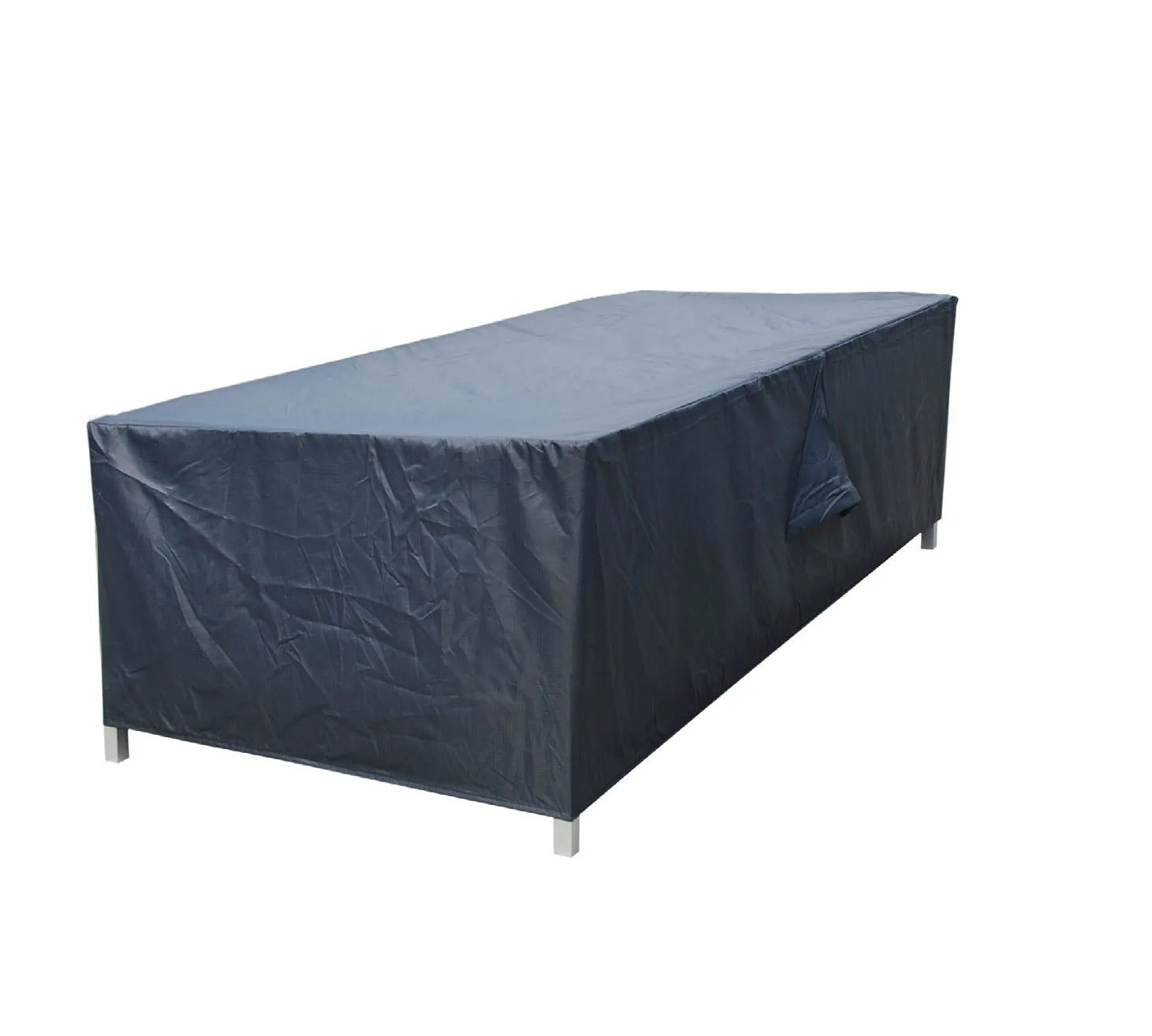
Coverit sun lounger cover 210x76x40 cm
Remove leaves, sand and dust from the frame and from the fabric or weave.
Use a soft cloth or brush with mild soapy water, then rinse with clean water.
Leave the sun lounger in the sun or wind until the frame, fabric and cushions are completely dry.
Cushions go indoors to dry; store the sun lounger itself in the shed or under a breathable cover.
You can read the full maintenance plan in maintaining a sun lounger.
Checklist before you order
What to look for in the material
- Frame: aluminium for low maintenance, teak for a warm look
- Lying surface: Textilene dries quickly, a cushion is softer to lie on
- Weight: the lighter it is, the easier it is to move
- Location: full sun and rain call for a quick-drying material
- Maintenance: work out how much time you want to spend on it each season
Tick off these points before you order:
- I have measured my space, with room to walk around it
- I know whether I want Textilene or a cushion
- I have compared the width with my patio or balcony
- I have checked the maximum load in the product information
- I know where I'll store the cushions dry
- I have a suitable cover in mind
Common mistakes
Choosing based on looks alone
A wooden sun lounger looks beautiful, but if you don't feel like doing maintenance, it will annoy you after a few seasons. Choose the material based on how much time you want to spend on it, too.
A cushioned sun lounger by the pool
If you lie wet on a cushion, it stays damp for a long time. By the pool, Textilene is a better choice.
Forgetting the weight
If you often want to move the sun lounger, a heavy wooden frame is awkward. In that case, choose aluminium or a sun lounger with wheels.
Leaving cushions outside
Even a water-repellent cushion gets wet after prolonged rain and then dries slowly. Store cushions dry in bad weather, for example in a storage box.
Frequently asked questions
Which material is best for a sun lounger?
For most gardens, an aluminium frame is the safest choice: it doesn't rust, is light enough to move around and needs little maintenance. Combine it with Textilene if you want a sun lounger that dries quickly, or with a cushion if you want something softer to lie on. Choose teak mainly for its warm, natural look.
Which is better: Textilene or a sun lounger with a cushion?
Textilene dries quickly after rain or a dip and can stay outdoors, but it is firmer to lie on. A cushion is softer, but it needs to be stored dry when it rains. If you want both, choose Textilene and add a loose sun lounger cushion when you want to lie down for a long time.
Which sun lounger is best for use by the pool?
By the pool, an aluminium sun lounger with Textilene works best. Aluminium doesn't rust and the open-weave fabric dries quickly, even if you lie down wet. Rinse the fabric with clean water now and then to remove chlorine and sun cream.
How much maintenance does a teak sun lounger need?
Teak can stand outdoors without treatment, but it will gradually turn grey. If you want to keep its warm colour, clean the wood and treat it with teak oil or teak protector. This takes more time than an aluminium sun lounger, which you simply clean with a damp cloth.
Is a wicker sun lounger suitable for leaving outdoors?
Plastic wicker can withstand rain, but dirt and leaves easily get caught in the weave. Clean it regularly with a soft brush and lukewarm water, and cover the sun lounger when you haven't used it for a long time.
Can a sun lounger stay outside in winter?
An aluminium frame can withstand rain and frost, but store the cushions somewhere dry. In case of prolonged bad weather, Garden Impressions advises keeping the sun lounger under a cover. Choose a breathable cover that fits the size of your sun lounger.